
Legal Risks in Influencer Marketing

Influencer marketing has become a powerful digital marketing strategy, but it also brings several legal and compliance risks for influencers, brands, and agencies. Failure to follow advertising, consumer protection, and intellectual property laws can lead to penalties and reputational damage. In India, influencer marketing is regulated under the Consumer Protection Act, 2019, along with guidelines issued by the Advertising […]
Employee Termination Laws in India

Employee termination in India is governed by a mix of labour laws, employment contracts, and company policies. Employers must follow due process, fairness, and legal compliance to avoid disputes and penalties. Key laws include the Industrial Disputes Act, 1947, Shops and Establishments Act (state-wise), and the Industrial Employment (Standing Orders) Act, 1946. What is Employee Termination? Employee termination means ending […]
Legal Mistakes Startups Must Avoid

Starting a business is exciting—but ignoring legal compliance can create serious problems later. Many startups fail not because of poor ideas, but due to avoidable legal mistakes. In India, startups must comply with laws like the Companies Act, 2013, Income Tax Act, 1961, and other regulatory frameworks. Why Legal Compliance is Important for Startups? Proper compliance helps: Common Legal Mistakes […]
GST Registration Threshold Limits (State-wise Clarity)

GST registration is mandatory once a business crosses prescribed turnover limits. These limits vary based on type of supply (goods/services) and state category (normal vs special category states). GST provisions are governed under the Central Goods and Services Tax Act, 2017. What is GST Registration Threshold? It is the minimum turnover limit beyond which a business must register under GST. Threshold Limits for […]
Corporate Social Responsibility (CSR) Compliance Basics

Corporate Social Responsibility (CSR) is a mandatory legal obligation for certain companies in India to contribute towards social, environmental, and community development. It ensures that businesses operate responsibly and give back to society. CSR provisions are governed under the Companies Act, 2013 (Section 135) along with related CSR Rules. What is CSR? CSR means: Applicability of CSR CSR applies to companies […]
Understanding Lump-Sum Consideration: A Comprehensive Guide

In the worlds of business, law, and real estate, the term lump-sum consideration refers to a single, one-time payment made in exchange for goods, services, or assets. Instead of breaking a payment down into installments or royalties over time, the entire agreed-upon value is settled in one go. Think of it as the “all-in” approach to a […]
The Blueprint of Business Transfers: Deep-Diving into the BTA

A Business Transfer Agreement (BTA) is often the unsung hero of corporate evolution. While Share Purchase Agreements (SPAs) get the headlines, the BTA is the heavy lifter used when a company needs to carve out a specific piece of itself or acquire a functional “limb” of another business. To execute a BTA effectively, one must look beyond the basic […]
Navigating the Transition: From Business Transfer to New Incorporation
Moving from a sole proprietorship, a partnership, or an existing entity into a newly incorporated company is a major milestone. Whether you are scaling up for investment or restructuring for tax efficiency, the transition involves more than just a new name—it requires a strategic transfer of business. Here is a breakdown of how to navigate this […]
How to Convert Proprietorship to Pvt Ltd
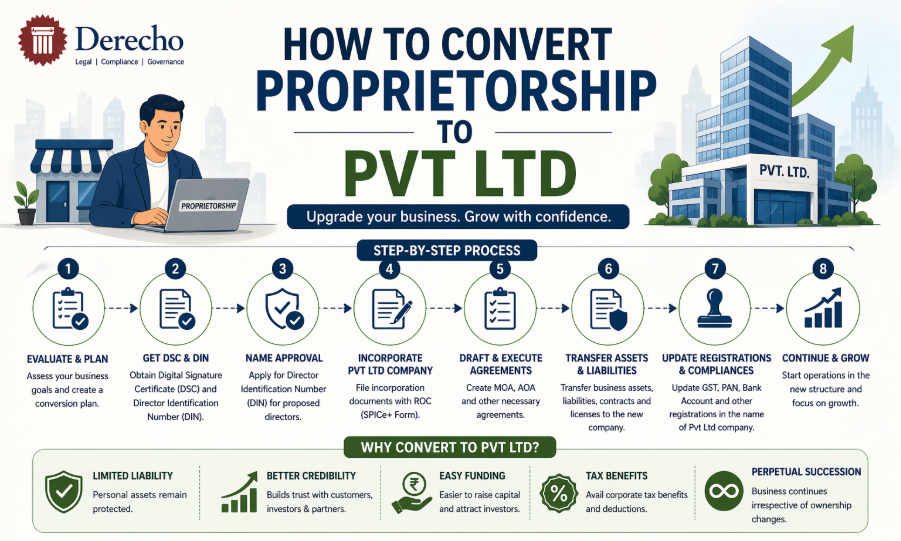
Converting a proprietorship firm into a Private Limited Company is a common step for businesses looking to scale, raise funds, and limit personal liability. Since a proprietorship and a company are legally different entities, the conversion is done through incorporation of a new company and transfer of business. This process is governed under the Companies Act, 2013 and applicable tax laws. […]
Tax Saving for Startups & Founders
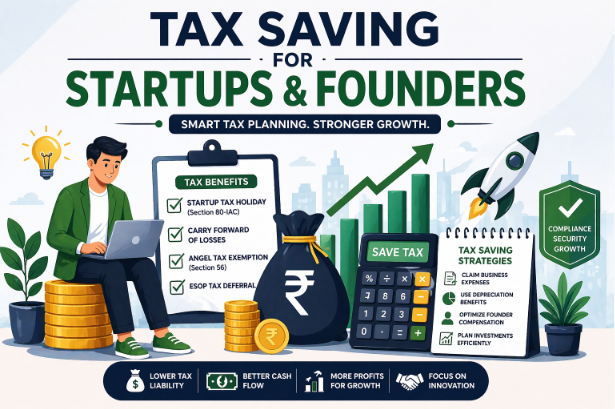
Tax planning is crucial for startups and founders to optimize cash flow, reduce liabilities, and reinvest profits for growth. India offers several tax benefits, deductions, and exemptions to support startups. These benefits are governed under the Income Tax Act, 1961 and startup-specific provisions under DPIIT recognition. Why Tax Planning is Important for Startups? Effective tax planning helps: Key Tax […]