
Starting a business is exciting—but ignoring legal compliance can create serious problems later. Many startups fail not because of poor ideas, but due to avoidable legal mistakes.
In India, startups must comply with laws like the Companies Act, 2013, Income Tax Act, 1961, and other regulatory frameworks.
Why Legal Compliance is Important for Startups?
Proper compliance helps:
- Avoid penalties and legal disputes
- Build investor confidence
- Ensure smooth operations
- Protect business interests
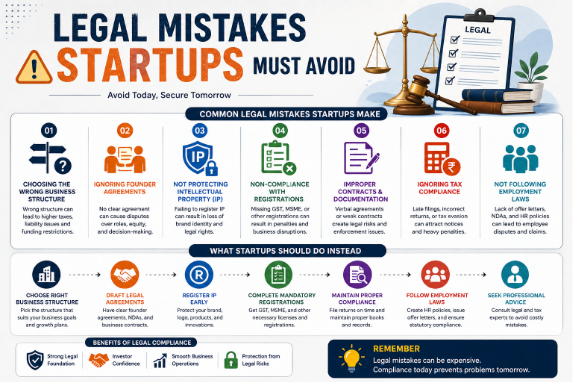
Common Legal Mistakes Startups Make
1. Choosing the Wrong Business Structure
Selecting the wrong structure (Proprietorship, LLP, Pvt Ltd) can impact taxes, liability, and funding.
2. Ignoring Founder Agreements
Not having a clear founder agreement leads to disputes over roles, equity, and decision-making.
3. Not Protecting Intellectual Property (IP)
Failing to register trademarks, patents, or copyrights can lead to loss of brand identity.
4. Non-Compliance with Registrations
Missing GST, MSME, or other registrations can result in penalties.
5. Improper Contracts & Documentation
Using verbal agreements instead of written contracts creates legal risks.
6. Ignoring Tax Compliance
Late filings, incorrect returns, or tax evasion can attract notices and penalties.
7. Not Following Employment Laws
Lack of offer letters, NDAs, and HR policies can lead to employee disputes.
Step-by-Step Approach to Avoid Legal Mistakes
Step 1: Choose the Right Business Structure
Select a structure based on growth plans and funding needs.
Step 2: Draft Legal Agreements
Prepare founder agreements, NDAs, and contracts.
Step 3: Register IP Early
Protect brand name, logo, and innovations.
Step 4: Complete Mandatory Registrations
Obtain GST, MSME, and other required licenses.
Step 5: Maintain Proper Compliance
File returns and maintain records regularly.
Step 6: Follow Employment Laws
Ensure proper HR policies and documentation.
Step 7: Seek Professional Advice
Consult legal and tax experts for guidance.
Benefits of Avoiding Legal Mistakes
- Strong legal foundation
- Better investor trust
- Smooth business operations
- Reduced risk of penalties
Advantages
- Improved scalability
- Better valuation
- Legal protection
- Professional credibility
Consequences of Legal Mistakes
- Legal disputes
- Financial losses
- Penalties and notices
- Business failure
Conclusion
Legal compliance is not optional—it is essential for startup success. Avoiding common legal mistakes helps build a strong foundation, attract investors, and ensure long-term growth.
Startups should proactively manage legal requirements and seek expert advice to stay compliant and secure.