
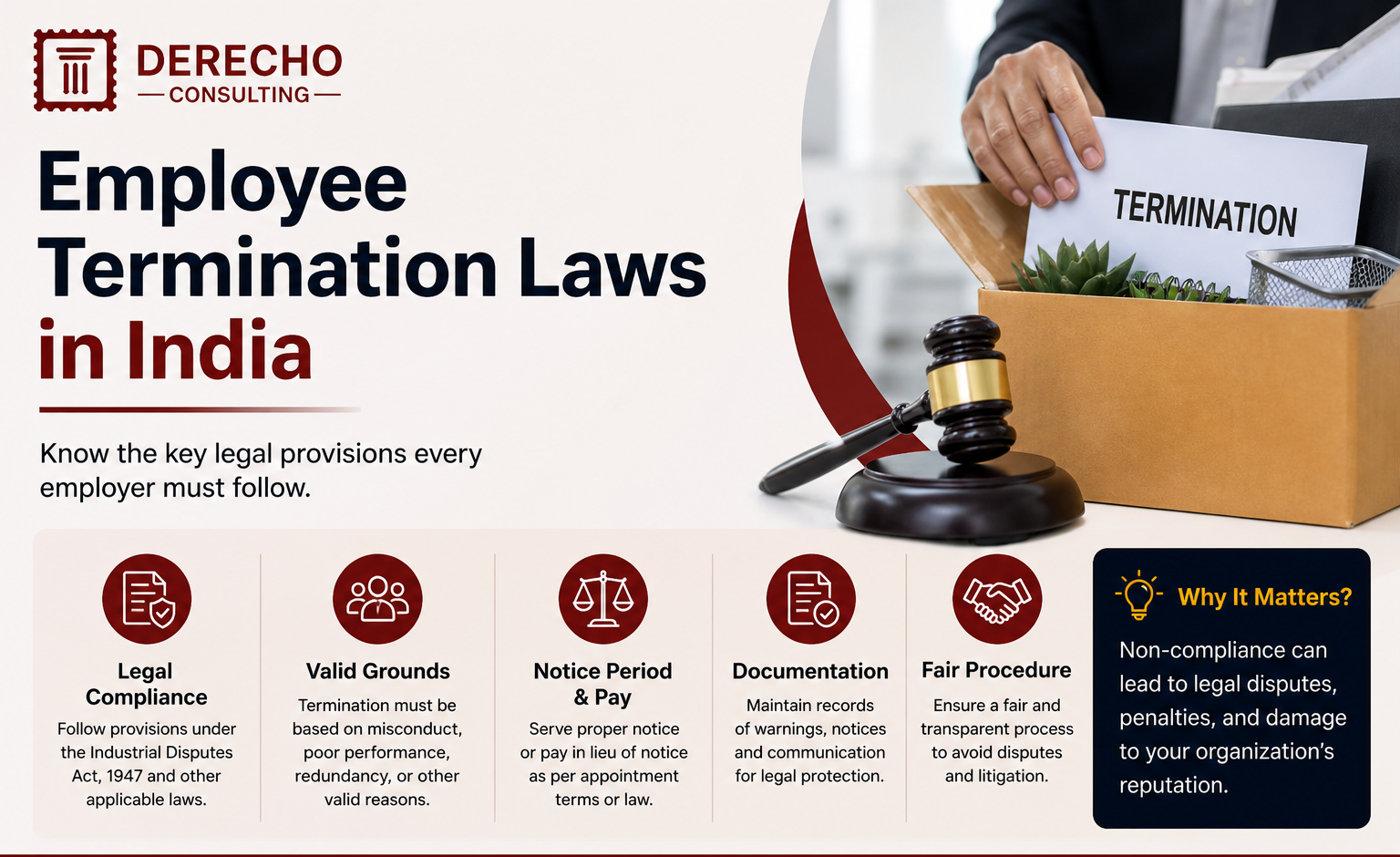
Employee termination in India is governed by a mix of labour laws, employment contracts, and company policies. Employers must follow due process, fairness, and legal compliance to avoid disputes and penalties.
Key laws include the Industrial Disputes Act, 1947, Shops and Establishments Act (state-wise), and the Industrial Employment (Standing Orders) Act, 1946.
What is Employee Termination?
Employee termination means ending the employment relationship between employer and employee due to:
- Performance issues
- Misconduct
- Redundancy (layoffs)
- Resignation or mutual agreement
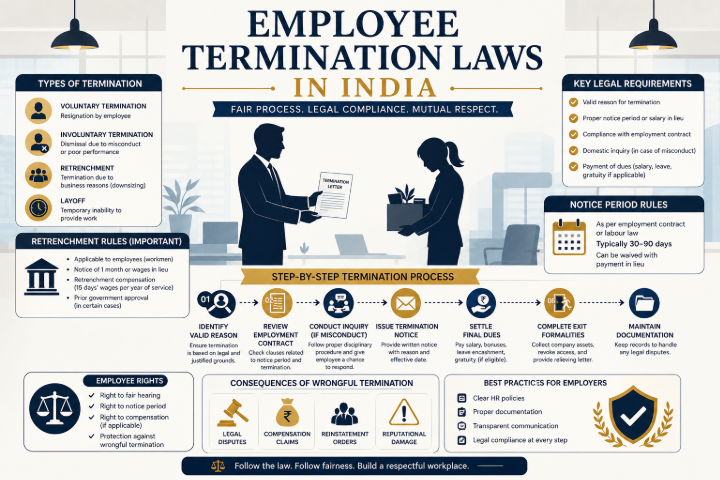
Types of Termination
Voluntary Termination
- Resignation by employee
Involuntary Termination
- Dismissal due to misconduct or poor performance
Retrenchment
- Termination due to business reasons (downsizing)
Layoff
- Temporary inability to provide work
Key Legal Requirements
- Valid reason for termination
- Proper notice period or salary in lieu
- Compliance with employment contract
- Domestic inquiry (in case of misconduct)
- Payment of dues (salary, leave, gratuity if applicable)
Notice Period Rules
- As per employment contract or labour law
- Typically 30–90 days
- Can be waived with payment in lieu
Retrenchment Rules (Important)
Under the Industrial Disputes Act:
- Applicable to employees (workmen)
- Notice of 1 month or wages in lieu
- Retrenchment compensation (15 days’ wages per year of service)
- Prior government approval (in certain cases)
Step-by-Step Termination Process
Step 1: Identify Valid Reason
Ensure termination is based on legal and justified grounds.
Step 2: Review Employment Contract
Check clauses related to notice period and termination.
Step 3: Conduct Inquiry (If Misconduct)
Follow proper disciplinary procedure and give employee a chance to respond.
Step 4: Issue Termination Notice
Provide written notice with reason and effective date.
Step 5: Settle Final Dues
Pay salary, bonuses, leave encashment, gratuity (if eligible).
Step 6: Complete Exit Formalities
Collect company assets, revoke access, and provide relieving letter.
Step 7: Maintain Documentation
Keep records to handle any legal disputes.
Employee Rights
- Right to fair hearing
- Right to notice period
- Right to compensation (if applicable)
- Protection against wrongful termination
Consequences of Wrongful Termination
- Legal disputes
- Compensation claims
- Reinstatement orders
- Reputational damage
Best Practices for Employers
- Clear HR policies
- Proper documentation
- Transparent communication
- Legal compliance at every step
Conclusion
Employee termination must be handled carefully to ensure legal compliance and fairness. Following proper procedures protects both the employer and employee while avoiding legal complications.
Businesses should always align termination practices with applicable labour laws and contractual obligations.