
Influencer marketing has become a powerful digital marketing strategy, but it also brings several legal and compliance risks for influencers, brands, and agencies. Failure to follow advertising, consumer protection, and intellectual property laws can lead to penalties and reputational damage.
In India, influencer marketing is regulated under the Consumer Protection Act, 2019, along with guidelines issued by the Advertising Standards Council of India (ASCI).
What is Influencer Marketing?
Influencer marketing involves:
- Promoting products or services through social media creators
- Paid collaborations, sponsorships, or endorsements
- Content on platforms like Instagram, YouTube, and Facebook
Why Legal Compliance Matters?
Proper compliance helps:
- Maintain consumer trust
- Avoid misleading advertisements
- Protect brand reputation
- Prevent legal penalties
Major Legal Risks in Influencer Marketing
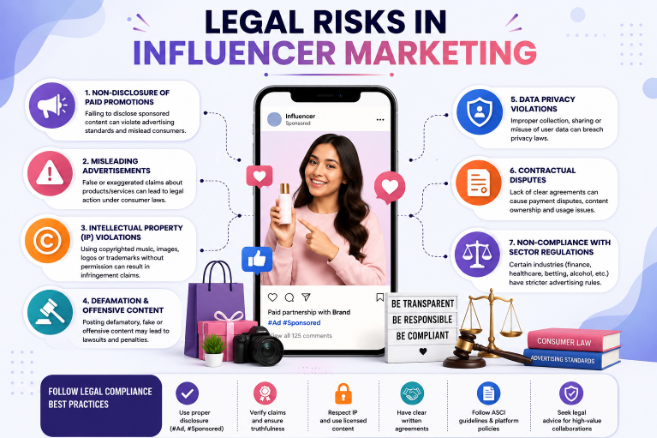
1. Non-Disclosure of Paid Promotions
Influencers must clearly disclose sponsored content using labels like:
- #Ad
- #Sponsored
- Paid Partnership
Failure to disclose can violate ASCI guidelines.
2. Misleading Advertisements
False claims about products/services may attract legal action under consumer laws.
3. Intellectual Property (IP) Violations
Using copyrighted music, logos, images, or trademarks without permission can lead to infringement claims.
4. Defamation & Offensive Content
Posting defamatory or harmful content may result in lawsuits.
5. Data Privacy Violations
Improper collection or sharing of user data can create compliance risks.
6. Contractual Disputes
Lack of clear agreements may lead to payment disputes and ownership issues.
7. Non-Compliance with Sector Regulations
Special sectors like finance, healthcare, betting, and alcohol have stricter advertising rules.
Step-by-Step Compliance Approach
Step 1: Use Proper Disclosure
Clearly mention sponsored partnerships and advertisements.
Step 2: Verify Product Claims
Ensure all promotional claims are truthful and substantiated.
Step 3: Protect Intellectual Property
Use licensed content, music, and visuals only.
Step 4: Draft Clear Contracts
Create agreements covering payment, usage rights, and obligations.
Step 5: Follow Platform & ASCI Guidelines
Comply with advertising standards and social media policies.
Step 6: Respect Data Privacy
Avoid misuse of audience data or unauthorized promotions.
Step 7: Seek Legal Review
Consult professionals before high-value campaigns.
Benefits of Legal Compliance
- Builds audience trust
- Protects brand reputation
- Avoids penalties
- Strengthens partnerships
Advantages
- Transparent marketing
- Reduced legal disputes
- Long-term credibility
- Safer collaborations
Consequences of Non-Compliance
- Consumer complaints
- Regulatory penalties
- Account suspension
- Reputation damage
Conclusion
Influencer marketing is highly effective, but legal compliance is essential for sustainable growth. Brands and influencers should follow disclosure norms, protect intellectual property, and maintain transparency in promotions.
A legally compliant campaign not only reduces risks but also builds long-term trust and credibility.