
We’ve all seen the headlines: major brands facing massive fines or class-action lawsuits over a marketing slip-up or a hidden fee. But here is the reality check—you don’t have to be a multinational corporation to attract legal action under consumer laws.
Small to medium-sized businesses are just as vulnerable, and a single violation can cost you more than just hefty legal fees; it can permanently damage your brand’s reputation and erode customer trust.
Whether you are launching a new marketing campaign, drafting a service agreement, or updating your return policy, consumer protection must be front and center. Here are the most common traps businesses fall into and how you can steer clear of them.
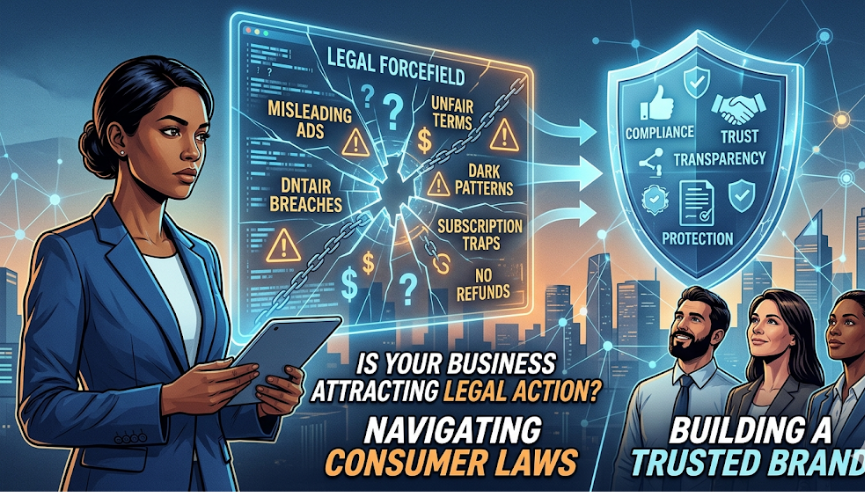
🚩 1. Misleading or Deceptive Advertising
This is the most common trigger for consumer lawsuits. It happens when a business makes claims about a product or service that aren’t entirely true, or leaves out crucial information.
- The Trap: Advertising a product as “Free” but hiding mandatory subscription fees in the fine print, or using exaggerated claims (“Guaranteed to make you lose 10 pounds in a day!”).
- The Fix: Be transparent. Ensure your marketing copy matches the actual capabilities of your product. If a claim requires context or a disclaimer, make it clear and highly visible, not buried at the bottom of the page in size 6 font.
🚩 2. Unfair Contract Terms
Consumers rarely read the Terms and Conditions, but consumer protection agencies certainly do. Courts increasingly strike down contracts that heavily favor the business at the expense of the consumer.
- The Trap: Including clauses that allow you to change the price without notifying the customer, or making it nearly impossible for a customer to cancel a subscription.
- The Fix: Keep your contracts balanced and written in plain language. If a term significantly penalizes the consumer, it is likely unenforceable and a legal liability.
🚩 3. Ignoring Consumer Guarantees and Warranties
In most jurisdictions, consumers have automatic rights when they buy a product or service, regardless of what your store policy says.
- The Trap: Refusing a refund for a fundamentally defective product by citing a strict “No Refunds” policy.
- The Fix: Understand the implied warranties in your region. Your internal return policies can never override the basic legal rights of a consumer to receive a product that is safe, matches its description, and is fit for purpose.
🚩 4. Dark Patterns in E-Commerce
Regulators are aggressively cracking down on “dark patterns”—user interface designs crafted to trick users into doing things they didn’t intend to do.
- The Trap: Adding unauthorized items to a shopping cart at checkout, or creating an intentionally confusing maze just to unsubscribe from an email list.
- The Fix: Audit your customer journey. The process to cancel a service or decline an offer should be just as easy as the process to sign up.
🛡️ How to Protect Your Business
Compliance shouldn’t be an afterthought; it should be baked into your operational strategy.
- Audit Your Marketing: Have a second set of eyes (preferably a legal or compliance officer) review all campaigns before they go live.
- Train Your Team: Ensure your sales and customer service teams understand what they can and cannot promise to customers.
- Seek Proactive Counsel: Don’t wait for a cease-and-desist letter. Consult with legal professionals to ensure your terms, conditions, and policies are compliant with local laws.
🚩 5. Mishandling Consumer Data and Privacy
In the modern digital economy, data is a commodity, and consumers are increasingly protective of their digital rights. Regulators are now heavily prosecuting data mismanagement under the umbrella of consumer protection and unfair trade practices.
- The Trap: Collecting more personal data than necessary, quietly sharing user data with third-party brokers without explicit consent, or failing to implement standard cybersecurity protocols resulting in a data breach.
- The Fix: Treat data privacy as an ethical obligation, not just a technical IT requirement. Be entirely transparent about what data you collect and why, and ensure your privacy policy is both up-to-date and accessible.
🚩 6. Algorithmic Pricing and AI-Driven Bias
As businesses integrate artificial intelligence into their operations, the intersection of technology, law, and ethics becomes a critical minefield. Automated decision-making can inadvertently violate consumer laws if it leads to unfair or deceptive outcomes.
- The Trap: Using opaque algorithms for “dynamic pricing” that unfairly surge prices based on a user’s hidden digital profile, or utilizing AI customer service bots that trap frustrated consumers in an endless loop when they try to lodge a legitimate complaint.
- The Fix: Maintain strict human oversight over automated systems. Ensure your pricing models do not run afoul of anti-discrimination or price-gouging laws, and guarantee that consumers always have a clear, accessible path to human support.
🚩 7. The Subscription Trap (Negative Option Billing)
Regulators worldwide are aggressively targeting business models that rely on consumer inertia and complex cancellation processes.
- The Trap: Offering a “free trial” that automatically converts into a paid, recurring subscription, but making the cancellation process require a phone call during limited hours, a physical letter, or navigating a labyrinth of confusing web pages.
- The Fix: Implement “click-to-cancel” mechanisms. A good rule of thumb: if a consumer can subscribe to your service online with a single click, they must be legally able to cancel it just as easily.
💡 Final Thought: Compliance as a Competitive Advantage
It is easy for business leaders to view consumer protection laws as a burden—a set of bureaucratic hurdles and legal red tape designed to slow down innovation and sales. But this perspective misses the bigger picture.