
Corporate Compliance Simplification in India: What Businesses Need to Prepare for in 2026

Introduction Corporate Compliance Simplification is becoming an important development for businesses operating in India. Companies are dealing with a growing number of filings, approvals, registers, disclosures, and regulatory requirements. At the same time, the Government is working to simplify some of these processes and reduce unnecessary compliance burdens. The Ministry of Corporate Affairs (MCA) has […]
Legal Risks of AI Agents Making Business Purchases and Payments

Introduction AI Agent Payments are becoming an emerging issue for Indian businesses as artificial intelligence systems move beyond answering questions and begin performing tasks on behalf of users. An AI agent may be able to search for products, compare prices, place orders, manage subscriptions, or initiate payments based on instructions and predefined rules. This creates […]
Legal Compliance for Account Aggregator Ecosystems in India
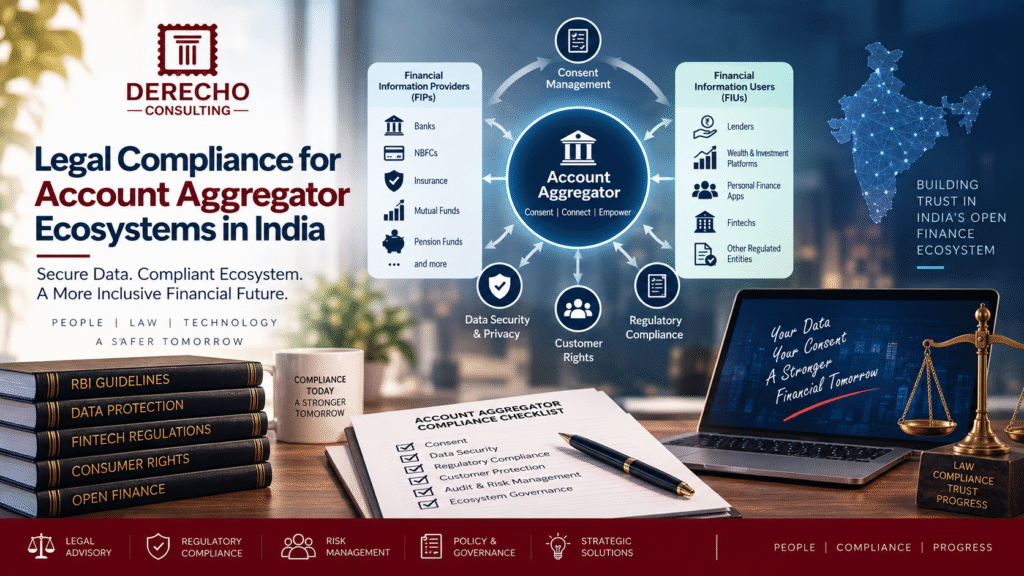
Introduction Account Aggregator Compliance is becoming increasingly important as India’s Account Aggregator ecosystem enables customers to share financial information electronically, securely, and with their explicit consent. Account Aggregators (AAs) act as consent managers and facilitate the movement of financial information between Financial Information Providers (FIPs) and Financial Information Users (FIUs). The Reserve Bank of India’s […]
Board-Level Technology Risk Governance for Indian Companies

Introduction Technology Risk Governance is becoming an important part of corporate governance in India. Businesses now depend on cloud services, software, artificial intelligence, digital platforms, data systems, payment technology, and external technology vendors. When technology fails, the impact can go beyond the IT department. A cyberattack can stop business operations. A cloud outage can affect […]
AI Audit and Accountability for Indian Businesses: A 2026 Legal Guide
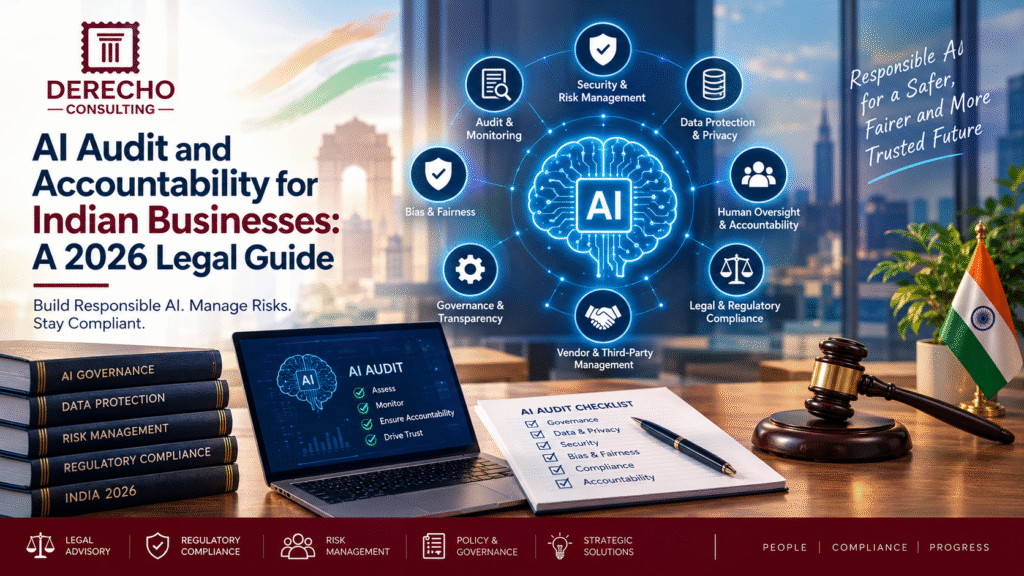
Introduction AI Audit is becoming an increasingly important part of responsible artificial intelligence governance as Indian businesses use AI for customer service, recruitment, marketing, financial analysis, software development, decision-making, fraud detection, and other business functions. As AI systems become more integrated into business operations, organisations need practical processes for reviewing how these systems are designed, […]
Platform Accountability for Synthetic and AI-Generated Content
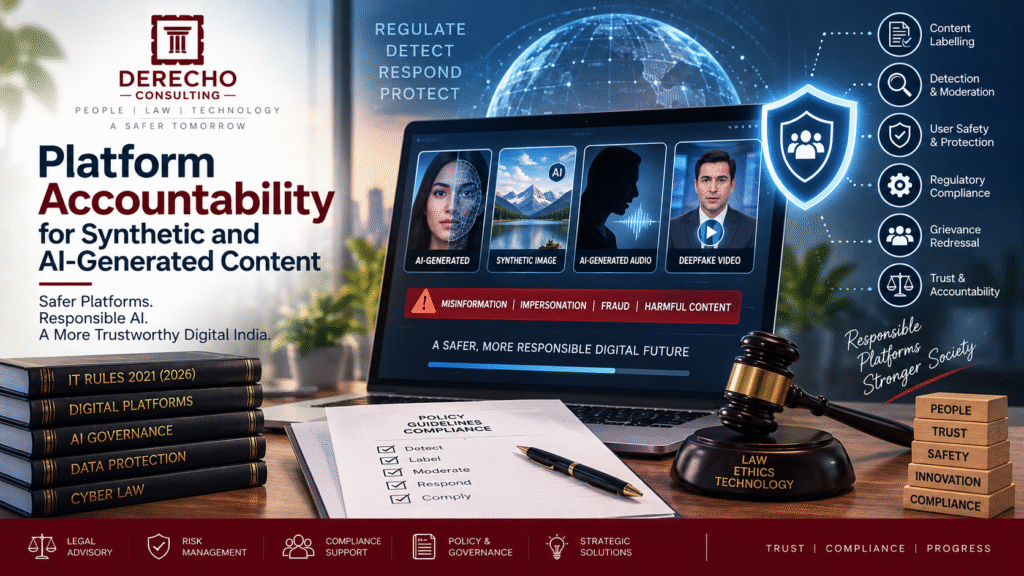
Introduction Platform Accountability is becoming increasingly important as social media platforms, digital intermediaries, content-sharing services, and other online services deal with the rapid growth of synthetic and AI-generated content. Artificial intelligence can now create realistic text, images, audio, and video, including deepfakes and other manipulated material that may be difficult for users to distinguish from […]
Legal Risks of Informal Business Arrangements Between Founders

Introduction Founder Agreement Risks can become a serious concern when business partners start operating a company based mainly on verbal promises, informal messages, personal understandings, or undocumented arrangements. In the early stages of a startup, founders may rely on trust and friendship instead of formally documenting ownership, responsibilities, decision-making authority, investments, intellectual property, and exit […]
AI Vulnerability Compliance for Indian Technology Companies
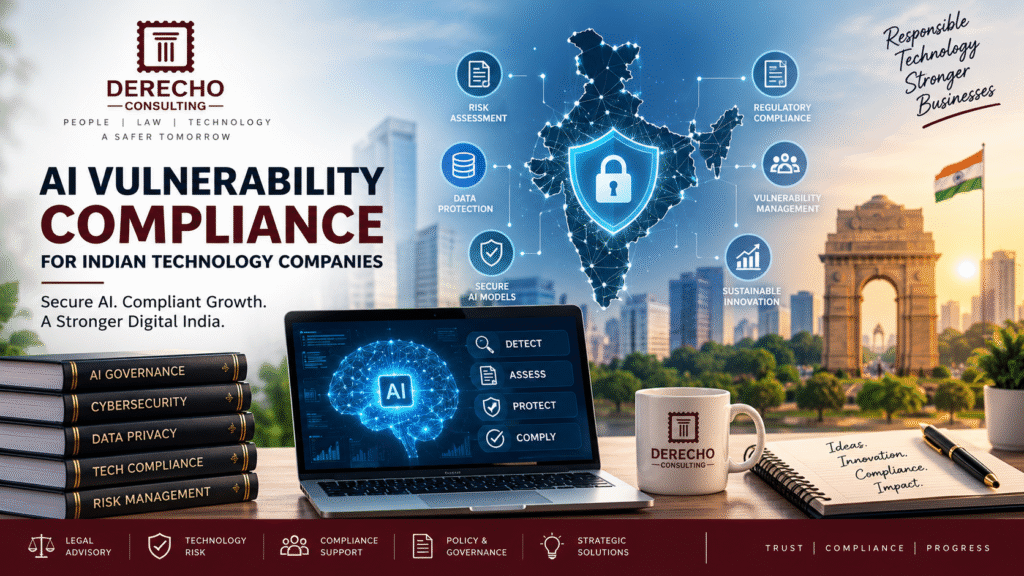
Introduction AI Vulnerability Compliance is becoming an important consideration for Indian technology companies that develop, deploy, integrate, or provide artificial intelligence and machine-learning systems. As AI becomes increasingly connected to applications, APIs, cloud infrastructure, software development environments, enterprise systems, and customer-facing platforms, vulnerabilities in AI systems can create cybersecurity, data-protection, intellectual-property, contractual, and operational risks. […]
Copyright Licensing for Mobile Apps and Digital Platforms in India

Introduction Copyright Licensing is an important legal consideration for mobile apps and digital platforms that create, host, distribute, display, stream, store, or commercialise digital content. Mobile applications and online platforms may use software, photographs, videos, music, illustrations, articles, databases, graphics, icons, user-generated content, and other copyrighted materials. Businesses need to ensure that they have the […]
Regulatory Compliance for Digital Identity and Verification Services
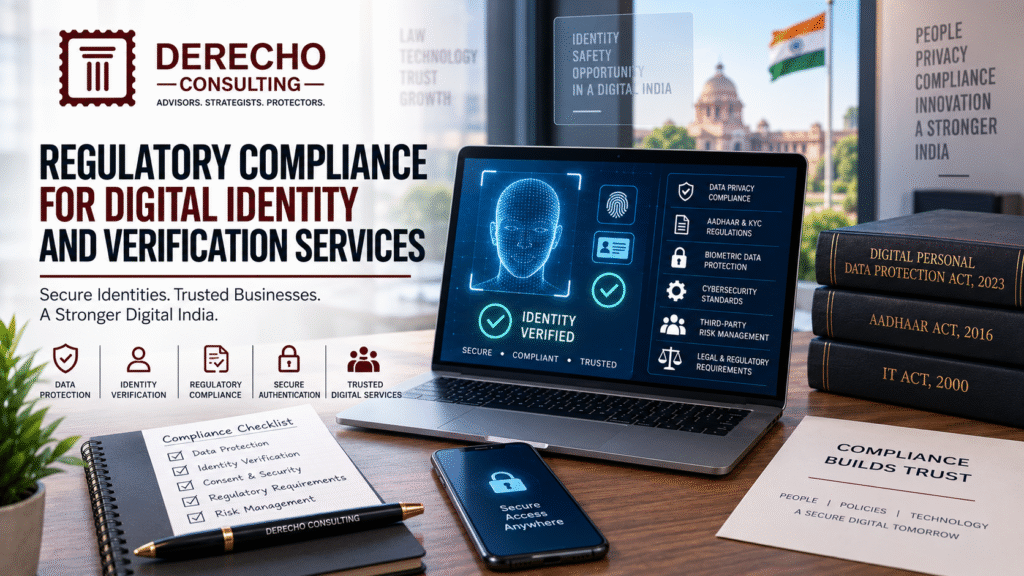
Introduction Digital Identity Compliance is becoming increasingly important for businesses that provide or use digital identity and verification services for customer onboarding, authentication, KYC, employee verification, account access, financial transactions, and other digital services. As organisations increasingly rely on identity documents, biometrics, electronic authentication, and digital verification systems, they need to consider privacy, security, consent, […]