
Introduction
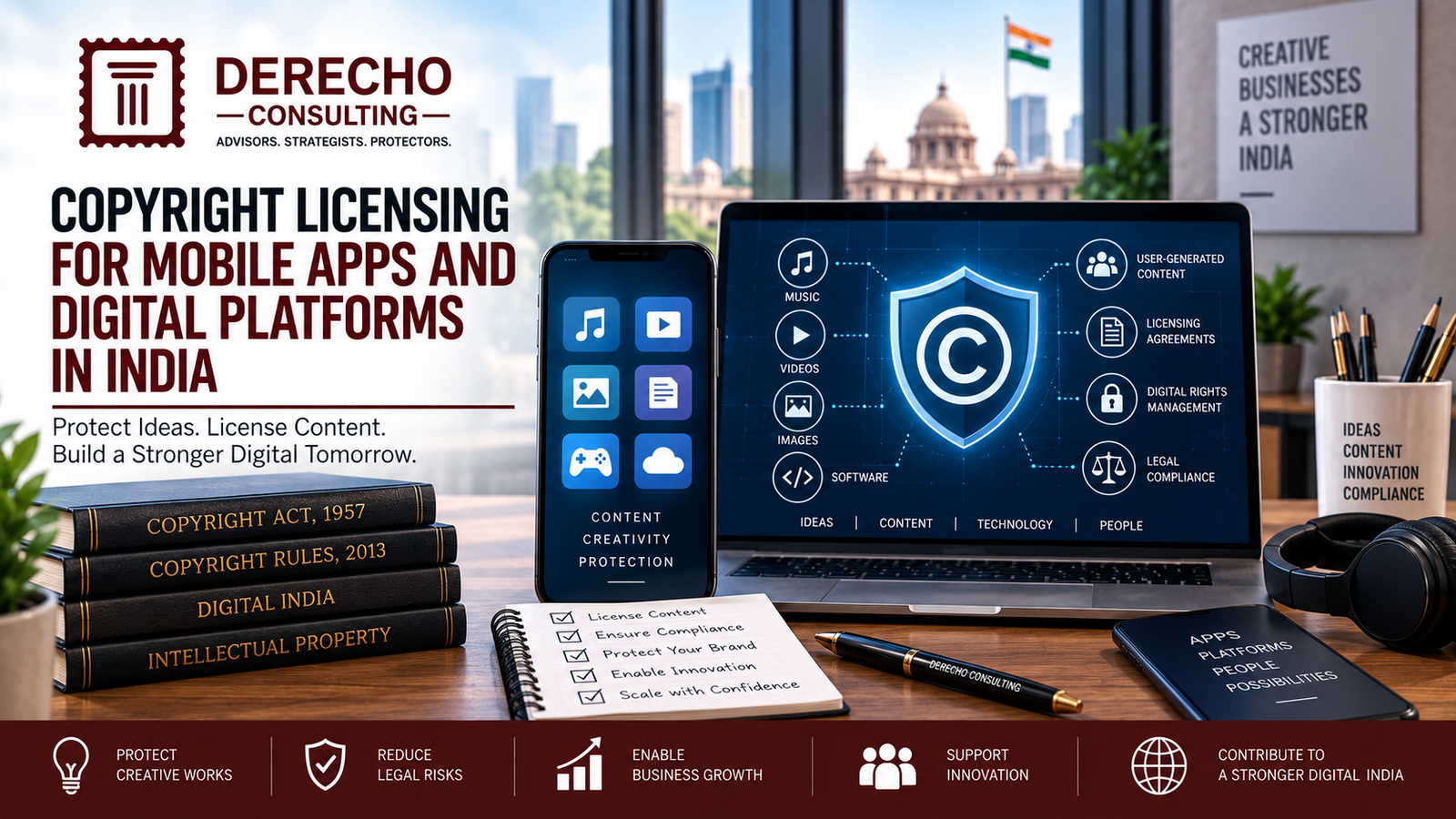
Copyright Licensing is an important legal consideration for mobile apps and digital platforms that create, host, distribute, display, stream, store, or commercialise digital content. Mobile applications and online platforms may use software, photographs, videos, music, illustrations, articles, databases, graphics, icons, user-generated content, and other copyrighted materials. Businesses need to ensure that they have the appropriate rights to use, reproduce, distribute, communicate, modify, or commercialise these works.
India’s Copyright Act, 1957 provides the principal legal framework for copyright protection. The Copyright Office notes that the 2012 amendments strengthened protection in the digital environment, including provisions concerning technological protection measures, rights-management information, internet-service-provider liability, and statutory licensing.
The Act also recognises computer programmes within the copyright framework, making software-related rights particularly relevant to mobile applications and technology platforms.
The Copyright Rules, 2013 further provide procedures relating to licensing and copyright societies, including licensing processes and administration of copyright licences.
This guide explains Copyright Licensing for Mobile Apps and Digital Platforms in India, including software licensing, digital content rights, third-party content, music and images, user-generated content, licence agreements, territorial rights, platform distribution, copyright infringement, content takedown procedures, and practical compliance measures for 2026.
Why Copyright Licensing Matters
Mobile apps and digital platforms often combine content from multiple sources. A single application may contain software code, images, videos, music, fonts, illustrations, advertisements, APIs, and third-party content, each of which may involve separate intellectual-property rights.
Understanding Copyright Licensing can help businesses:
- Verify ownership of digital content.
- Obtain appropriate rights before using third-party material.
- Clearly define the scope of licences.
- Protect software and digital assets.
- Manage third-party content.
- Reduce copyright infringement risks.
- Track licence periods and restrictions.
- Establish clear commercial usage rights.
- Manage user-generated content.
- Strengthen agreements with creators and vendors.
- Support compliant digital distribution.
A structured licensing framework can help mobile apps and digital platforms use digital content while reducing legal uncertainty and infringement exposure.
Key Areas of Copyright Licensing
1. Software and Mobile Application Licensing
Software is a central component of most mobile applications and digital platforms. Businesses should establish who owns the software and what rights are available for its use, modification, distribution, and commercialisation.
The review may include:
- Source code ownership.
- Object code.
- Software development agreements.
- Developer contracts.
- Copyright ownership.
- Software licences.
- Modification rights.
- Distribution rights.
- Commercialisation rights.
- Open-source components.
- Third-party libraries.
The Copyright Act, 1957 specifically recognises a computer programme within the copyright framework.
Businesses should therefore maintain clear documentation showing how the software was developed and who owns or is licensed to use the relevant rights.
2. Third-Party Digital Content
Mobile apps and digital platforms frequently use content acquired from third parties.
This may include:
- Photographs.
- Videos.
- Illustrations.
- Articles.
- Graphics.
- Music.
- Animations.
- Fonts.
- Templates.
- Stock content.
- Digital publications.
Businesses should verify the ownership of such material and obtain appropriate permissions or licences before incorporating it into their applications or platforms.
A business should not assume that content available online is automatically free for commercial use.
3. Copyright Licensing Agreements
A properly drafted Copyright Licensing agreement should clearly define the rights being granted.
The agreement may address:
- Copyrighted work.
- Licensor and licensee.
- Rights granted.
- Permitted uses.
- Duration.
- Territory.
- Platform or medium.
- Exclusivity.
- Modification rights.
- Reproduction rights.
- Distribution rights.
- Communication to the public.
- Sub-licensing.
- Fees and royalties.
- Termination.
- Renewal.
The Copyright Rules, 2013 contain procedures and forms concerning various licensing matters, demonstrating the importance of formally documenting licensing arrangements.
Clear drafting can help prevent disputes over how digital content may be used.
4. Music and Audio Licensing
Music used within mobile applications and digital platforms can involve multiple rights.
Businesses should consider rights relating to:
- Musical compositions.
- Lyrics.
- Sound recordings.
- Performers.
- Background music.
- Synchronisation.
- Public performance.
- Digital communication to the public.
A platform should therefore verify the relevant rights instead of assuming that one music licence automatically covers every intended use.
5. Images, Videos and Creative Content
Visual content used in apps and digital platforms should also be reviewed from a copyright perspective.
Potential materials may include:
- Product photographs.
- Promotional videos.
- Illustrations.
- Infographics.
- UI graphics.
- Marketing creatives.
- Social-media content.
- Editorial images.
- Stock photographs.
Businesses should maintain records of the source, licence, permitted use, and applicable restrictions for important visual assets.
6. User-Generated Content
Digital platforms may allow users to upload:
- Photographs.
- Videos.
- Reviews.
- Articles.
- Audio.
- Illustrations.
- Social posts.
- Comments.
Platforms should establish appropriate terms that address the rights granted by users and should avoid assuming that user uploads automatically transfer copyright ownership to the platform.
The platform should also establish procedures for responding to complaints involving allegedly infringing user content.
India’s copyright framework provides exceptions to infringement in specified circumstances, but businesses should not treat those limited exceptions as a substitute for obtaining appropriate licences where a commercial licence is required.
7. Territorial and Platform Restrictions
Licences may contain restrictions regarding where and how content can be used.
A licence may be limited to:
- India.
- Specific countries.
- Worldwide use.
- Particular application stores.
- A specific mobile application.
- A website.
- A streaming platform.
- Social-media channels.
- Specific devices.
Businesses should monitor these restrictions and ensure content is not distributed outside the rights granted by the licensor.
8. Open-Source and Third-Party Software
Mobile applications frequently include open-source libraries and third-party software components.
Businesses should review:
- Applicable open-source licences.
- Attribution requirements.
- Modification requirements.
- Distribution conditions.
- Source-code obligations.
- Commercial-use restrictions.
- Compatibility of different licences.
Using open-source software does not mean that no compliance obligations apply. Developers and legal teams should understand the licence conditions associated with important components.
9. Digital Rights Management and Content Protection
Technology can help businesses protect licensed digital content.
Businesses may use:
- Access controls.
- Encryption.
- Digital rights management.
- Download restrictions.
- Copy restrictions.
- Authentication.
- Watermarking.
- Content-monitoring systems.
The Copyright Act’s digital-environment framework includes protections relating to technological protection measures and rights-management information.
These controls can complement contractual and legal measures for protecting digital content.
10. Copyright Infringement and Takedown Procedures
Mobile apps and digital platforms should maintain procedures for receiving and responding to copyright complaints.
The process may cover:
- Submission of complaints.
- Information from the claimant.
- Verification of ownership.
- Internal assessment.
- Temporary restriction of content.
- Removal where appropriate.
- Communication with affected parties.
- Record keeping.
- Appeals or escalation.
- Repeat infringement management.
Platforms should ensure that their copyright-complaint procedures are consistent with applicable legal and platform requirements.
Common Copyright Licensing Risks for Mobile Apps and Digital Platforms
Businesses may face Copyright Licensing risks due to:
- Using third-party content without appropriate permission.
- Unclear software ownership.
- Missing copyright licences.
- Expired licences.
- Content used outside the licensed territory.
- Unauthorised music usage.
- Unclear rights for user-generated content.
- Inadequate developer IP assignments.
- Open-source compliance failures.
- Unauthorised modification of licensed content.
- Missing records of licence terms.
- Unclear sub-licensing rights.
- Weak copyright complaint procedures.
- Unauthorised redistribution.
- Failure to monitor licensing restrictions.
These issues can result in copyright disputes, content removal, financial losses, rebranding or redevelopment costs, and reputational damage.
Best Practices for Copyright Licensing
Mobile apps and digital platforms should consider the following practices:
- Verify copyright ownership before using third-party content.
- Maintain a centralised copyright and licence database.
- Use written licensing agreements for important content.
- Clearly define rights, territory, duration, and permitted uses.
- Track licence expiry and renewal dates.
- Document software ownership and developer assignments.
- Conduct open-source software reviews.
- Maintain records for music and creative-content licences.
- Establish clear user-generated-content terms.
- Implement appropriate digital rights management.
- Maintain copyright complaint and takedown procedures.
- Train content and product teams on copyright requirements.
- Conduct periodic copyright audits.
- Coordinate legal, technology, product, and content teams.
A structured approach can help businesses strengthen Copyright Licensing practices and reduce avoidable infringement risks.
2026 Copyright Licensing Considerations
Copyright Licensing remains particularly important in 2026 as mobile apps and digital platforms increasingly use AI-assisted content, streaming, creator-generated materials, user-generated content, software-as-a-service models, digital marketplaces, and cross-platform distribution.
Businesses should therefore pay particular attention to:
- Licensing AI-assisted and AI-generated content.
- Ownership of software and digital assets.
- Third-party content agreements.
- Open-source software compliance.
- Music and video licensing.
- User-generated content.
- Digital rights management.
- Cross-border licensing.
- Automated content distribution.
- Licence tracking and renewal.
- Copyright complaint procedures.
- Platform-specific content restrictions.
The Copyright Office continues to identify the 2012 amendments to the Copyright Act as particularly relevant to the digital environment, including technological protection measures and rights-management information.
Digital platforms should also monitor India’s evolving technology framework. MeitY’s current IT Rules page records an update dated 10 February 2026, while 2026 materials include further developments concerning intermediary compliance and digital content.
Businesses should therefore regularly review their content-licensing arrangements, platform terms, software licences, copyright policies, and content-management procedures.
How Derecho Consulting Can Help
Derecho Consulting can help mobile app businesses and digital platforms manage Copyright Licensing and related intellectual-property risks through copyright audits, software licensing reviews, digital-content licensing, contract drafting and review, IP ownership assessment, open-source compliance reviews, user-generated-content policy analysis, takedown-process reviews, and copyright risk assessments.
A proactive approach can help businesses:
- Identify copyright ownership issues.
- Review software and content licences.
- Strengthen licensing agreements.
- Manage territorial and platform restrictions.
- Protect digital assets.
- Review third-party content arrangements.
- Establish copyright complaint procedures.
- Reduce infringement and contractual risks.
Derecho Consulting can also support businesses in developing practical copyright-management processes as their digital products and content libraries grow.
Conclusion
Copyright Licensing for Mobile Apps and Digital Platforms in India is an important part of protecting digital businesses and maintaining lawful access to software, content, and creative works. Mobile applications and online platforms often depend on multiple categories of copyrighted material, making clear ownership and licensing arrangements essential.
By verifying rights, using appropriate licensing agreements, documenting software ownership, managing third-party content, reviewing open-source components, monitoring territorial restrictions, and establishing effective copyright-complaint procedures, businesses can reduce intellectual-property risks.
A proactive and well-documented approach to Copyright Licensing can help mobile apps and digital platforms protect valuable content, strengthen contractual relationships, reduce infringement exposure, and support sustainable digital growth in India.