
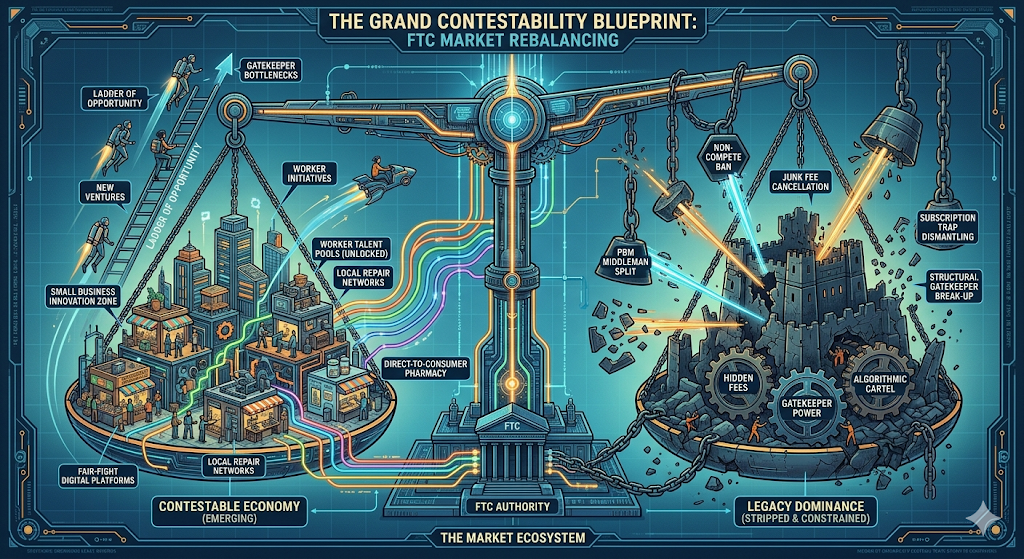
In 2026, the Federal Trade Commission (FTC) is no longer just a “referee” watching from the sidelines—it has become the lead architect of a new economic blueprint. The recurring theme? Leveling the playing field.
By aggressively targeting “middleman” power and restrictive corporate habits, the FTC is effectively forcing a “fair fight” for small businesses, workers, and consumers alike. If you’re following the headlines, here are five critical ways the Commission is reshaping the rules of engagement.
1. Ending the “Subscription Trap” (Click-to-Cancel)
We’ve all been there: signing up for a service takes two seconds, but canceling it requires a 40-minute phone call and a quest through five sub-menus.
- The Fair Fight: The FTC’s “Click-to-Cancel” rule mandates that canceling a subscription must be as easy as signing up.
- Why it Matters: This isn’t just about convenience; it’s about preventing “negative option” billing where companies profit from customer friction rather than product value.
2. A New Era for Worker Mobility
While the sweeping national ban on non-competes faced significant legal hurdles in the courts, the FTC has pivoted to a case-by-case enforcement strategy, specifically targeting “pernicious” agreements in high-impact sectors.
- The Fair Fight: By suing companies that lock low-to-mid-level employees into restrictive contracts, the FTC is restoring the worker’s right to take their talents to the highest bidder.
- The Impact: When workers can move freely, wages go up, and small businesses can actually compete for talent that was previously “locked away” by corporate giants.
3. Targeting “Junk Fees” and Hidden Costs
From “convenience fees” on concert tickets to “resort fees” added at the final checkout screen, hidden costs have become a multi-billion dollar drain on the economy.
- The Fair Fight: Recent rulings aim to mandate all-in pricing.
- The Strategy: By forcing companies to show the full price upfront, the FTC ensures that the company with the best value wins, not the one with the best deception.
4. Reining in the “Pharmacy Middlemen”
One of the most significant “fair fights” is happening in healthcare. The FTC has launched intensive investigations into Pharmacy Benefit Managers (PBMs).
- The Fair Fight: PBMs often squeeze independent pharmacies out of the market and hike prices for life-saving drugs.
- The Goal: Restoring transparency to drug pricing so that independent pharmacies can survive and patients aren’t overpaying for essential care.
5. Structural Challenges to “Gatekeeping”
The FTC’s ongoing litigation against Big Tech isn’t just about “being big”—it’s about the dual role of being both the marketplace and a competitor on that marketplace.
- The Fair Fight: The FTC argues that when a platform owner competes against its own third-party sellers, it has an unfair advantage.
- The Shift: By challenging these structures, the FTC is trying to ensure that a small business with a better product can actually beat a house brand on merit.
6. Fighting “Fake Reviews” and AI Manipulation
In an era where consumer trust is a currency, the FTC has cracked down on the “reputation-for-sale” industry.
- The Fair Fight: New rules prohibit companies from using AI-generated reviews, buying “likes,” or suppressing negative feedback through intimidation.
- The Impact: This protects the honest business owner who earns their 5-star rating through hard work, rather than a deep marketing budget for bot farms.
7. The “Right to Repair” Movement
For years, manufacturers have restricted access to the parts, tools, and software needed to fix everything from smartphones to tractors.
- The Fair Fight: The FTC is pushing for a world where you own the products you buy—literally. They are challenging “repair monopolies” that force consumers back to the original manufacturer for expensive fixes.
- The Shift: This opens the door for local repair shops to compete, creates a more sustainable “circular economy,” and puts money back in the pockets of consumers.
8. Scrutinizing Algorithmic Price Fixing
We’ve entered a world where software, rather than humans, often sets prices. The FTC is now investigating how companies use third-party algorithms to “sync” prices across an industry, effectively creating a digital cartel.
- The Fair Fight: Whether it’s rental housing or retail, the FTC is signaling that “the algorithm did it” is not a valid defense for price-fixing.
- The Goal: Ensuring that prices are dictated by supply and demand, not by a shared piece of code that eliminates the need for companies to compete on price.
Final Thought: Reclaiming the Spirit of Enterprise
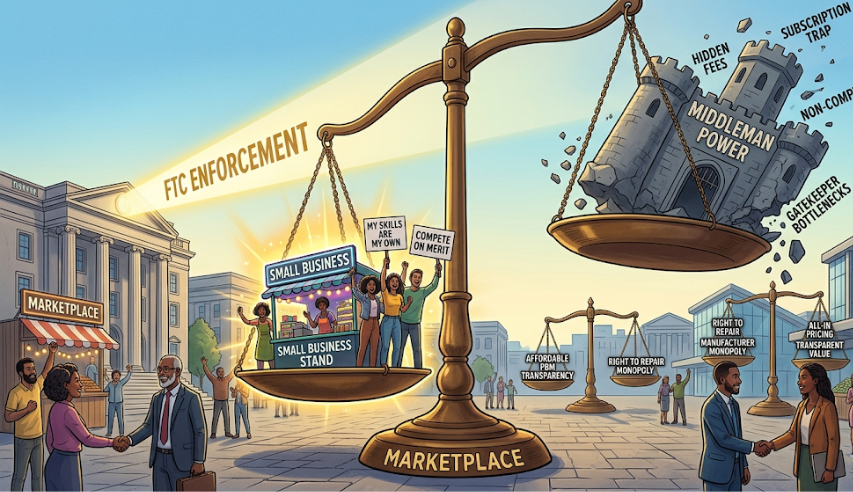
The flurry of activity from the FTC signals a fundamental shift in how we view the American market. For decades, the prevailing philosophy was that “bigness” equaled efficiency. Today, the focus has shifted toward contestability.
A “Fair Fight” doesn’t guarantee that every business will succeed—it simply guarantees that they won’t be sabotaged before they get the chance to try. By removing the “invisible taxes” of junk fees, non-competes, and gatekeeper bottlenecks, the FTC is attempting to restore a market where the best idea wins, not the biggest legal team.