
Introduction
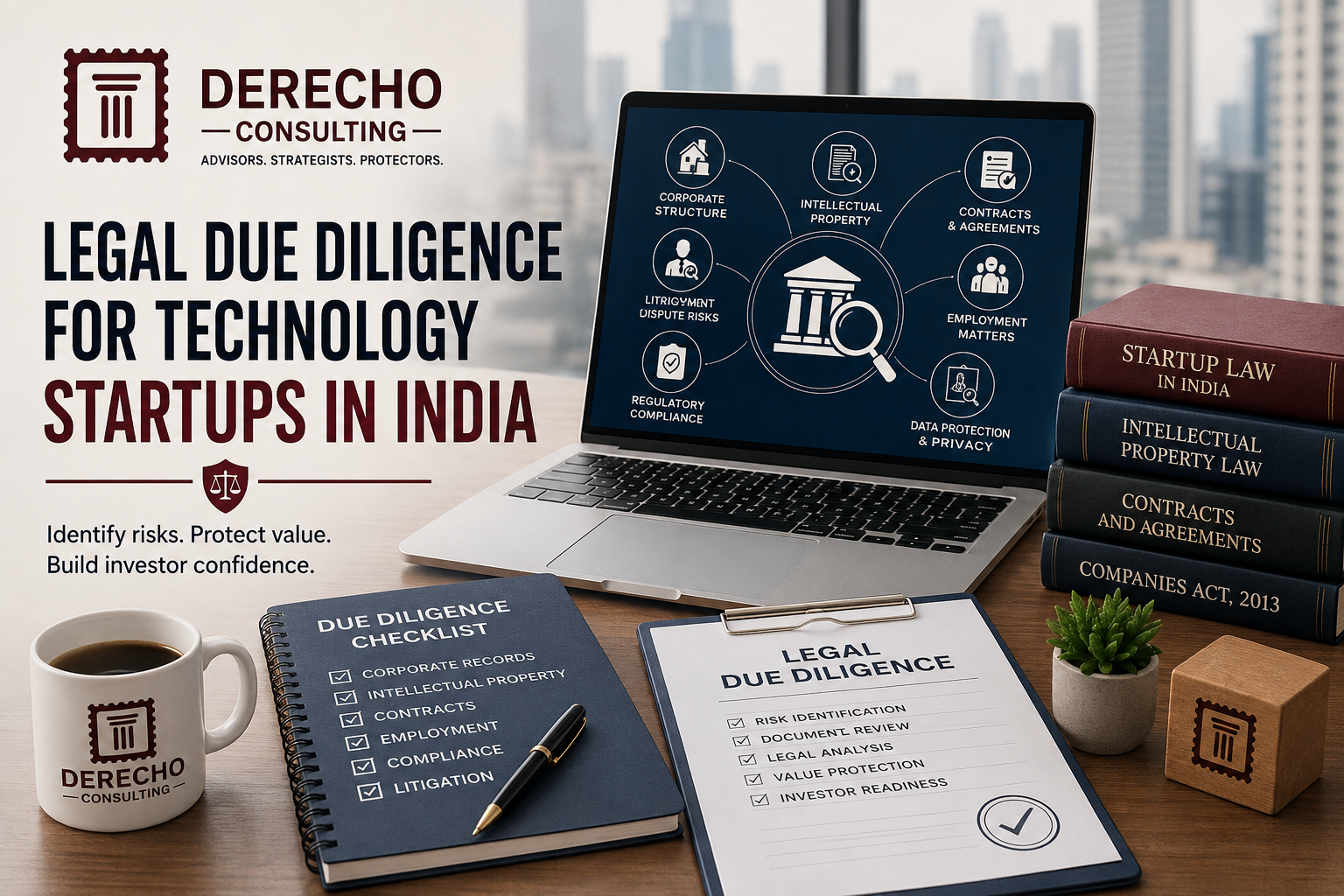
Legal Due Diligence is an important process for technology startups in India that are preparing for fundraising, acquisitions, strategic partnerships, expansion, or other major business transactions. Startups need to ensure that their corporate records, ownership structure, intellectual property, contracts, employment arrangements, regulatory compliance, and other legal matters are properly documented and managed.
A technology startup may depend on software, source code, trademarks, patents, databases, confidential information, technology licences, customer contracts, and third-party service providers. Any uncertainty regarding ownership, contractual rights, compliance, or liabilities can create legal and commercial risks for the business.
Startup India identifies areas such as business structure, co-founder arrangements, intellectual property, contracts, privacy, regulatory requirements, and compliance as important legal considerations for startups.
This guide explains Legal Due Diligence for Technology Startups in India, including corporate records, founder arrangements, intellectual property, technology agreements, commercial contracts, employment matters, data protection, regulatory compliance, funding documents, litigation risks, and practical compliance measures for 2026.
Why Legal Due Diligence Matters
Technology startups can face legal risks when important business arrangements are undocumented, intellectual property ownership is unclear, contracts are incomplete, or regulatory requirements are not properly addressed.
Effective Legal Due Diligence can help technology startups:
- Verify corporate ownership and company records.
- Identify potential legal and regulatory risks.
- Confirm ownership of intellectual property.
- Review important customer and vendor contracts.
- Identify gaps in employment documentation.
- Assess data protection and privacy practices.
- Review funding and shareholder arrangements.
- Identify pending or potential disputes.
- Prepare for fundraising and investment transactions.
- Strengthen overall legal and compliance readiness.
A structured legal review can also help startups identify issues early and address them before they affect investment, expansion, or strategic transactions.
Key Areas of Legal Due Diligence
1. Corporate Structure and Company Records
The first step in Legal Due Diligence is reviewing the startup’s legal structure and corporate records.
The review may include:
- Certificate of incorporation.
- Memorandum and Articles of Association.
- Board resolutions.
- Shareholder records.
- Share allotments and transfers.
- Capitalisation table.
- Statutory registers.
- Annual filings.
- Details of subsidiaries or related entities.
- Corporate approvals and authorisations.
The Companies Act, 2013 provides requirements concerning corporate records, statutory registers, annual returns, and other company-related documentation.
Proper corporate record-keeping can help establish the startup’s ownership structure and identify inconsistencies before a major transaction.
2. Founder and Shareholder Arrangements
Founder and shareholder relationships are an important part of Legal Due Diligence for technology startups.
The review may include:
- Founders’ agreements.
- Shareholders’ agreements.
- Equity ownership.
- Founder responsibilities.
- Vesting arrangements.
- Founder exit provisions.
- Share transfer restrictions.
- Rights of first refusal.
- Tag-along and drag-along rights.
- Investor rights.
- Dispute-resolution provisions.
Startup India’s legal guidance identifies co-founder agreements as an important mechanism for documenting equity ownership, responsibilities, investments, and obligations between founders.
Clear founder and shareholder arrangements can help reduce disputes and provide greater certainty regarding ownership and decision-making.
3. Intellectual Property Due Diligence
For technology startups, intellectual property can be one of the most valuable business assets.
The review may include:
- Trademarks.
- Patents and patent applications.
- Copyrights.
- Software and source code.
- Domain names.
- Product designs.
- Algorithms.
- Databases.
- Trade secrets.
- Technology licences.
- Open-source software.
- Intellectual property assignment agreements.
Startups should verify that intellectual property developed by founders, employees, consultants, and contractors is appropriately owned, assigned, or licensed to the business. Startup India also identifies trademarks, patents, copyrights, and other intellectual property as important areas for startups.
4. Technology and Software Agreements
Technology startups often depend on third-party software, cloud services, APIs, SaaS platforms, technology vendors, and other digital infrastructure.
Due diligence should review:
- Software licence agreements.
- SaaS agreements.
- Cloud service agreements.
- API agreements.
- Technology vendor contracts.
- Software development agreements.
- Maintenance agreements.
- Open-source licences.
- Technology ownership provisions.
- Restrictions on technology usage.
A proper review can help determine whether the startup has the necessary rights to use the technology supporting its products and services.
5. Customer and Vendor Contracts
Important commercial contracts should be reviewed to identify rights, obligations, liabilities, and potential restrictions.
The review may include:
- Customer agreements.
- Vendor agreements.
- Service agreements.
- Payment terms.
- Service-level obligations.
- Intellectual property provisions.
- Confidentiality clauses.
- Indemnification provisions.
- Limitation of liability.
- Termination rights.
- Renewal provisions.
- Exclusivity requirements.
- Dispute-resolution clauses.
Clear and properly executed contracts can help startups reduce uncertainty and protect important commercial relationships.
6. Employment and Consultant Agreements
Technology startups frequently depend on developers, engineers, designers, consultants, sales teams, and other specialised personnel.
The review may include:
- Employment agreements.
- Consultant agreements.
- Confidentiality agreements.
- Intellectual property assignment clauses.
- Employee benefits.
- Incentive arrangements.
- ESOP documentation.
- Termination provisions.
- Workplace policies.
- Contractor arrangements.
It is particularly important to confirm that employees and contractors have appropriate confidentiality and intellectual property obligations where they create software, inventions, designs, content, or other valuable business assets.
7. Data Protection and Privacy Compliance
Technology startups often collect and process customer, employee, user, and business information.
Due diligence should review:
- Privacy policies.
- Data collection practices.
- Consent mechanisms.
- Data-processing arrangements.
- Data-sharing practices.
- Data retention procedures.
- Security measures.
- Third-party data processors.
- Customer data agreements.
- Incident-response procedures.
India’s Ministry of Electronics and Information Technology has published the Digital Personal Data Protection Rules, 2025 and continues to maintain the wider digital regulatory framework, making data protection an important area for technology startups to review.
8. Regulatory and Licensing Compliance
Depending on the startup’s industry and business model, specific licences, registrations, approvals, and regulatory obligations may apply.
The review may cover:
- Industry-specific licences.
- GST registration and compliance.
- Tax-related obligations.
- Labour-related registrations.
- Import and export requirements.
- Consumer protection requirements.
- Data protection obligations.
- Sector-specific regulations.
- Advertising and marketing requirements.
- Government registrations.
Startup India’s current legal and regulatory checklist highlights company registration, tax compliance, GST, labour requirements, licences, intellectual property, contracts, and data protection as key areas for Indian startups.
9. Funding and Investment Documents
Startups that have previously raised capital should review their historical funding documentation.
Important documents may include:
- Term sheets.
- Share subscription agreements.
- Shareholders’ agreements.
- Convertible instrument documents.
- Preference share terms.
- Investor rights.
- Board rights.
- Information rights.
- Exit rights.
- Anti-dilution provisions.
- Previous share issuances.
The startup should ensure that its capitalisation table accurately reflects all previous investments, share issuances, options, and other ownership interests.
10. Litigation and Dispute Review
Pending or potential disputes can affect a startup’s financial position, reputation, and future transactions.
The review may include:
- Pending litigation.
- Legal notices.
- Intellectual property disputes.
- Employment disputes.
- Contractual disputes.
- Tax disputes.
- Regulatory proceedings.
- Consumer complaints.
- Arbitration proceedings.
- Potential claims against the company.
Identifying these matters during Legal Due Diligence can help founders and investors understand potential liabilities and determine whether further legal action is required.
Common Legal Due Diligence Risks for Technology Startups
Technology startups may face legal risks due to:
- Incomplete corporate records.
- Unclear founder ownership.
- Inaccurate capitalisation tables.
- Missing intellectual property assignments.
- Unregistered or inadequately protected IP.
- Unclear ownership of source code.
- Unexecuted customer or vendor agreements.
- Unclear technology licensing rights.
- Open-source software compliance issues.
- Weak employment documentation.
- Inadequate privacy documentation.
- Regulatory compliance gaps.
- Undisclosed litigation.
- Unresolved legal notices.
- Incomplete statutory filings.
- Inconsistent shareholder records.
These issues can create delays and additional legal costs during fundraising, mergers, acquisitions, or strategic partnerships.
Best Practices for Legal Due Diligence
Technology startups should consider the following practices:
- Maintain a centralised corporate document repository.
- Keep the capitalisation table updated.
- Maintain properly executed founder and shareholder agreements.
- Document intellectual property ownership.
- Execute IP assignment agreements with employees and contractors.
- Maintain detailed technology and software licences.
- Review important customer and vendor contracts.
- Maintain employment and consultant documentation.
- Review privacy and data-protection practices.
- Track regulatory and statutory compliance obligations.
- Maintain records of licences and registrations.
- Document previous funding transactions.
- Maintain a litigation and legal-notice register.
- Conduct periodic legal audits.
- Prepare a secure legal data room before fundraising or transactions.
Maintaining these records can make future legal reviews more efficient and help demonstrate that the startup has established appropriate legal and compliance processes. Startup India’s current guidance similarly emphasises contracts, IP protection, regulatory compliance, privacy, and corporate structuring as important areas for startup legal readiness.
2026 Legal Due Diligence Considerations
Legal Due Diligence remains particularly important in 2026 as technology startups increasingly operate across AI, cloud computing, digital platforms, fintech, SaaS, data-driven services, and other technology-intensive sectors.
Startups should therefore pay particular attention to:
- AI-related legal and contractual risks.
- Ownership of AI-assisted technology and content.
- Data used by AI and technology systems.
- Data protection and privacy requirements.
- Cybersecurity practices.
- Third-party SaaS and cloud dependencies.
- Software and open-source licensing.
- Employee use of AI tools.
- Digital intellectual property.
- Technology vendor agreements.
- Sector-specific regulatory requirements.
The Ministry of Electronics and Information Technology’s current policy resources include the Digital Personal Data Protection Rules, 2025, the IT Rules, 2021, and proposed amendments concerning intermediary compliance and synthetically generated information.
Startups should therefore regularly review their legal documentation and compliance framework instead of waiting until an investor, acquirer, or strategic partner begins the due-diligence process.
How Derecho Consulting Can Help
Derecho Consulting can help technology startups identify and manage legal risks through structured Legal Due Diligence, corporate advisory, intellectual-property review, contract analysis, regulatory compliance assessment, data-protection review, employment documentation review, funding-document analysis, and litigation risk assessment.
A proactive approach to Legal Due Diligence can help startups verify ownership, identify legal gaps, strengthen documentation, address compliance risks, and prepare for fundraising, investment, partnerships, acquisitions, and business expansion.