
Introduction
Employee Data Protection in India is becoming an important compliance issue for employers. Businesses collect and process large amounts of employee information during recruitment, employment, payroll, benefits, performance management, and termination.
Employee information can include names, contact details, identification documents, financial information, attendance records, employment records, and other personal data. Modern workplaces may also process employee information through HR software, cloud platforms, biometric systems, payroll providers, and workplace-monitoring tools.
India’s Digital Personal Data Protection Act, 2023 (DPDP Act) establishes a framework for processing digital personal data. The Central Government notified the Digital Personal Data Protection Rules, 2025 on 13 November 2025. The framework uses a phased commencement timeline, making preparation important for organisations.
For employers, privacy compliance is not limited to having a privacy policy. Businesses should understand what employee data they collect, why they collect it, who can access it, how long it is retained, and how it is protected.
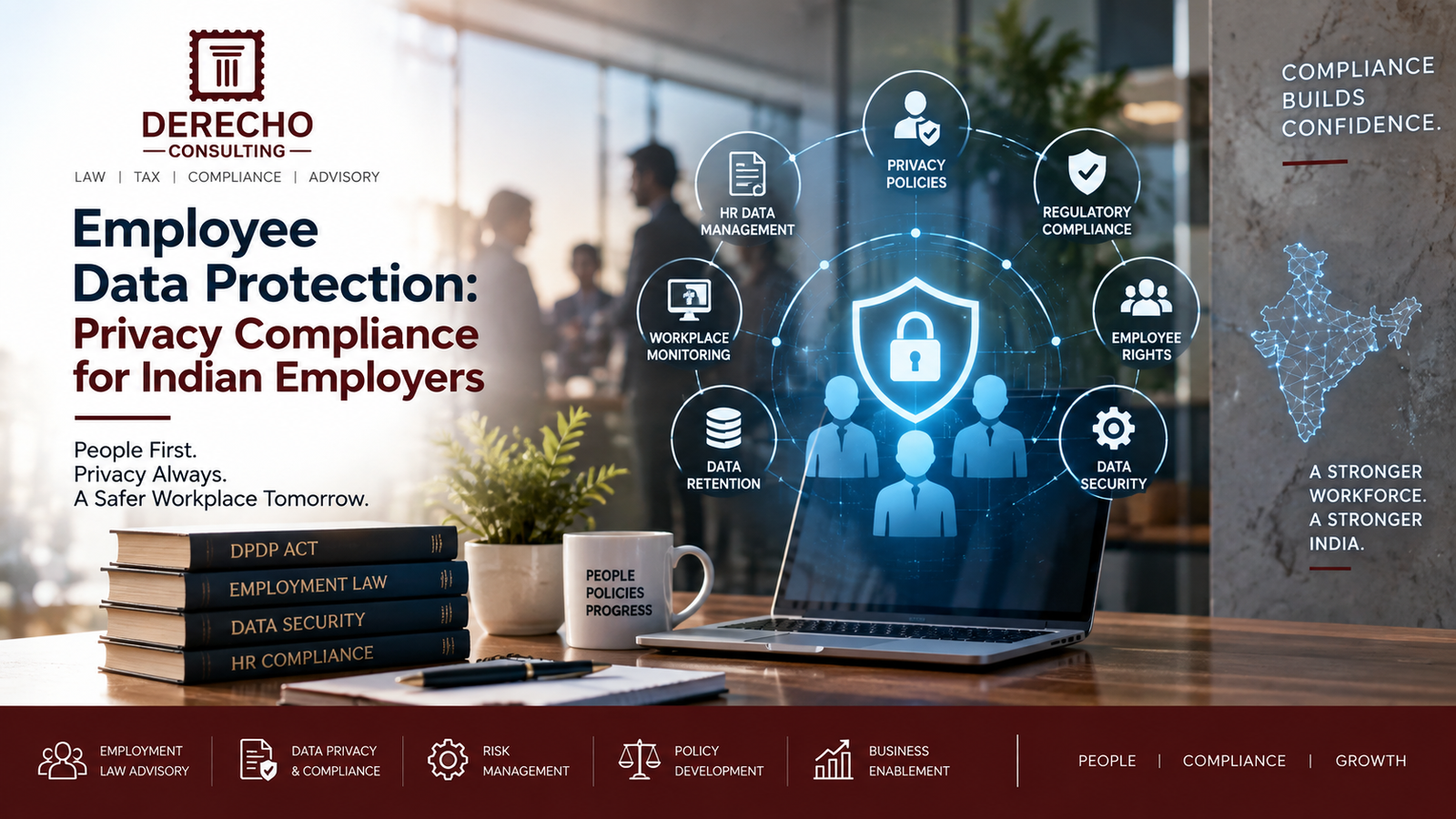
This guide explains Employee Data Protection in India, including employee information, privacy notices, lawful processing, HR systems, access controls, data retention, third-party processors, employee rights, data breaches, and practical compliance measures.
Why Employee Data Protection Matters
Employers handle personal data throughout the employee lifecycle. This begins during recruitment and can continue after employment ends where records need to be retained for legal or business purposes.
Understanding Employee Data Protection in India can help employers:
- Identify the employee data they collect.
- Understand the purpose of processing.
- Limit unnecessary data collection.
- Improve HR data security.
- Control access to employee information.
- Manage third-party HR providers.
- Establish appropriate retention practices.
- Prepare for personal data breaches.
- Strengthen privacy governance.
- Reduce legal and compliance risks.
Key Areas of Employee Data Protection in India
1. Employee Data Inventory
The first step is to identify the personal data collected by the organisation.
An employer may process information such as:
- Name and contact details.
- Identity documents.
- Employment records.
- Salary and payroll information.
- Bank account details.
- Attendance records.
- Leave records.
- Performance information.
- Recruitment information.
- Benefits information.
- Tax-related information.
- IT and access records.
Employers should maintain an inventory of the employee data they process and identify where that information is stored.
2. Purpose of Data Collection
Employee data should be collected for clear and defined purposes.
For example, an employer may need personal data for:
- Recruitment.
- Payroll processing.
- Employee benefits.
- Attendance management.
- Performance assessment.
- Workplace administration.
- Legal compliance.
- Security and access management.
Businesses should review whether the information collected is actually required for the stated purpose.
3. Privacy Notices for Employees
Employers should provide employees with clear information about how their personal data is processed.
A privacy notice can explain:
- What personal data is collected.
- Why the data is processed.
- How the data is used.
- Who may receive the data.
- How long the data may be retained.
- How employees can exercise applicable rights.
- How employees can contact the organisation about privacy issues.
The DPDP Rules, 2025 require notices to be understandable and to provide relevant information about the personal data and specified purposes of processing.
4. Lawful Processing of Employee Data
Employers should identify the appropriate legal basis for processing personal data.
The DPDP Act provides for processing based on consent and certain legitimate uses specified by the Act. The employment relationship can involve several types of processing, so employers should assess each activity according to the applicable framework rather than relying on a single approach for every type of employee data.
This assessment is particularly important for activities such as payroll, benefits, attendance, recruitment, performance management, and legal compliance.
5. HR Systems and Employee Privacy
Most organisations now use digital HR systems to manage employee information.
These systems may include:
- HR management platforms.
- Payroll software.
- Recruitment platforms.
- Attendance systems.
- Cloud storage.
- Employee portals.
- Performance-management systems.
- Benefits platforms.
Employers should review the privacy and security controls of these systems. Access should be limited to people who need the information for legitimate business purposes.
6. Employee Monitoring and Workplace Technology
Employers may use technology to monitor attendance, access systems, productivity, security events, or workplace activities.
Examples include:
- Biometric attendance systems.
- CCTV systems.
- Device monitoring.
- Email monitoring.
- Access logs.
- Location-based systems.
- Security monitoring tools.
Such practices should be reviewed carefully. Employers should consider the purpose of monitoring, the information collected, access controls, retention periods, and applicable legal requirements.
7. Access Control and Data Security
Employee information should be protected against unauthorised access, alteration, disclosure, and loss.
Employers should consider:
- Role-based access.
- Strong authentication.
- Multi-factor authentication.
- Encryption.
- Access logging.
- Secure backups.
- Password controls.
- Device security.
- Regular access reviews.
The DPDP Rules, 2025 provide for reasonable security safeguards, including measures such as encryption, access controls, monitoring, and backups.
8. Third-Party HR Service Providers
Employers often share employee information with external service providers.
These may include:
- Payroll providers.
- Recruitment agencies.
- HR software providers.
- Benefits providers.
- Cloud-storage providers.
- Background-verification providers.
- IT service providers.
Businesses should understand what information is shared and why. Contracts should also address appropriate security, confidentiality, processing responsibilities, and data handling requirements.
9. Employee Data Retention
Employee information should not be retained without a clear reason.
Different records may have different retention requirements. For example, payroll, tax, employment, and statutory records may need to be maintained for specific periods.
Employers should establish a data-retention policy covering:
- Recruitment records.
- Employee records.
- Payroll records.
- Performance records.
- Attendance records.
- Former employee records.
- Data stored by third-party providers.
Retention practices should also take account of applicable legal obligations.
10. Employee Data Breaches
Employee data can be exposed through phishing, malware, unauthorised access, lost devices, weak passwords, misconfigured cloud systems, or third-party incidents.
Employers should establish a data-breach response process covering:
- Detection.
- Containment.
- Investigation.
- Evidence preservation.
- Risk assessment.
- Internal escalation.
- Required notifications.
- Remediation.
- Preventive measures.
The DPDP Rules, 2025 contain requirements concerning notification of personal data breaches, including notification to affected Data Principals and the Board in specified circumstances.
Common Employee Data Protection Risks
Employers may face privacy and compliance risks due to:
- Excessive data collection.
- Unclear processing purposes.
- Poor access controls.
- Unsecured HR systems.
- Excessive employee monitoring.
- Unauthorised data sharing.
- Weak third-party contracts.
- Long or unclear retention periods.
- Lost employee devices.
- Phishing attacks.
- Insider access.
- Cloud-security failures.
- Inadequate breach-response procedures.
These issues can create privacy, cybersecurity, contractual, regulatory, and reputational risks.
Best Practices for Employee Data Protection in India
Employers should consider the following practices:
- Maintain an employee-data inventory.
- Identify the purpose of each processing activity.
- Review applicable legal requirements.
- Provide clear privacy notices.
- Limit unnecessary data collection.
- Implement role-based access controls.
- Protect HR systems and databases.
- Review third-party data processors.
- Establish retention and deletion procedures.
- Conduct periodic privacy assessments.
- Train HR and management teams.
- Maintain a data-breach response procedure.
- Review employee-monitoring practices.
- Maintain appropriate compliance documentation.
A structured privacy programme can help organisations manage employee information more responsibly.
2026 Employee Data Protection Considerations
Employee privacy is becoming more important as businesses adopt cloud HR platforms, artificial intelligence, workplace analytics, biometric systems, and automated decision-making tools.
Employers should therefore review:
- AI-based recruitment tools.
- Automated employee assessments.
- Employee-monitoring software.
- Cloud HR platforms.
- Biometric systems.
- Remote-work technologies.
- Third-party HR applications.
- Cross-border data processing.
- Employee cybersecurity training.
The DPDP Rules, 2025 provide a framework for implementing the DPDP Act and introduce a phased commencement timeline. Employers should therefore use 2026 to assess their existing HR-data practices and prepare for the provisions that become applicable according to that timeline.
How Derecho Consulting Can Help
Derecho Consulting can assist Indian employers with Employee Data Protection in India through privacy compliance assessments, employee-data reviews, HR privacy policies, contractual reviews, data-processing assessments, third-party due diligence, data-breach response planning, and compliance documentation.
A proactive approach can help employers:
- Identify employee-data risks.
- Review HR data-processing activities.
- Develop privacy policies and notices.
- Assess third-party HR providers.
- Review employee-monitoring practices.
- Strengthen contractual protections.
- Improve data-security governance.
- Establish retention procedures.
- Prepare data-breach response processes.
- Support broader DPDP compliance.
Derecho Consulting can also assist businesses in periodically reviewing their employee-data practices as India’s privacy framework and workplace technologies continue to evolve.
Conclusion
Employee Data Protection in India is becoming an important part of modern employment and privacy compliance. Employers collect employee information across recruitment, payroll, benefits, performance management, workplace security, and other HR activities.
Businesses should understand what employee data they collect and why they process it. They should also establish appropriate controls for access, security, retention, third-party sharing, and data-breach response.
With India’s DPDP framework moving through its phased implementation, employers should review their HR-data practices and prepare their policies, systems, contracts, and governance processes accordingly.
A structured approach to Employee Data Protection in India can help organisations strengthen privacy governance while supporting responsible and secure management of employee information.