
Introduction
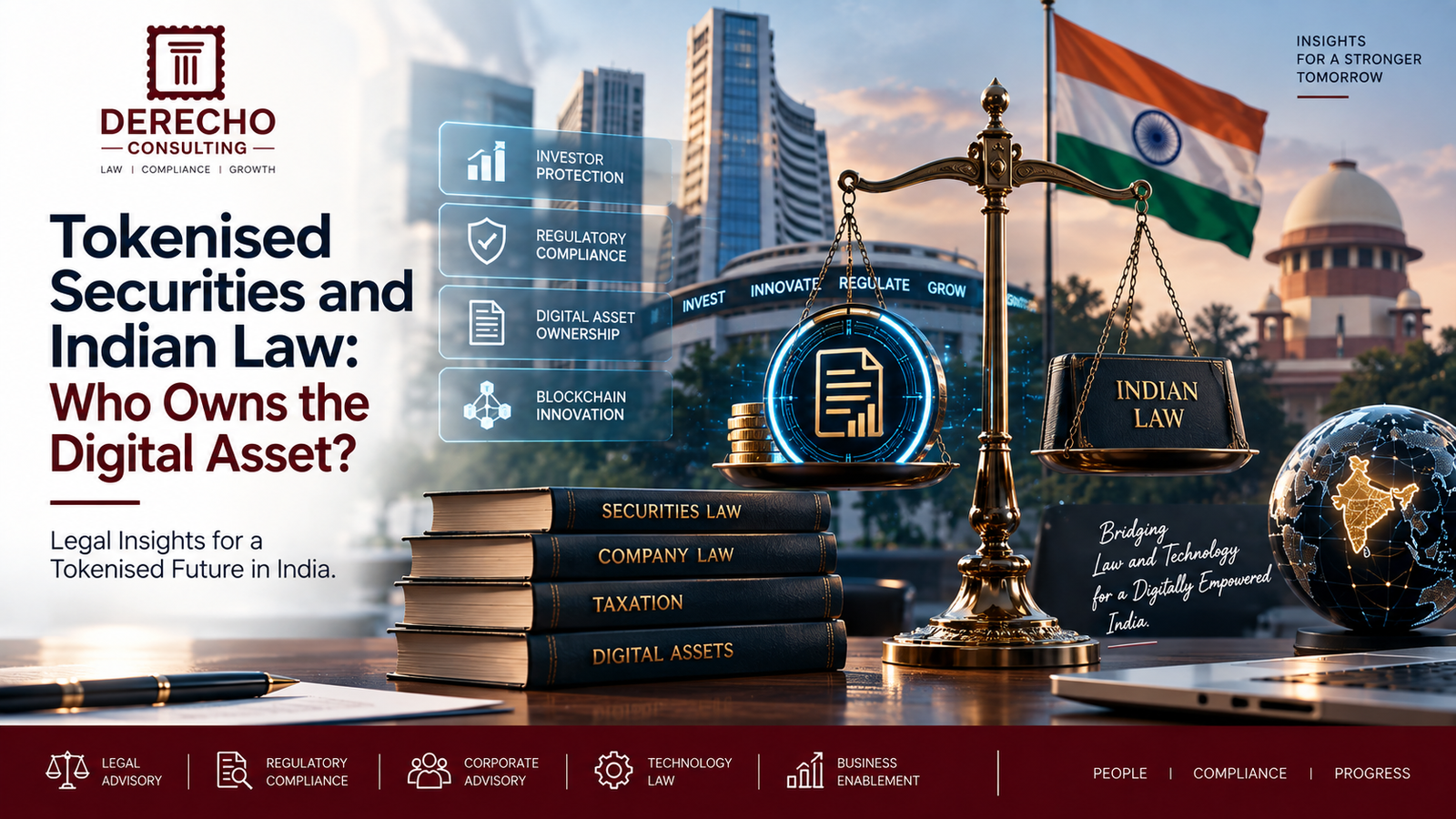
Tokenised Securities in India are becoming an important topic in the financial and technology sectors. Blockchain technology allows certain financial interests to be represented through digital tokens. These tokens can represent securities, investment interests, or contractual rights.
Tokenisation can make the recording and transfer of assets more digital. It can also create new opportunities for businesses and investors. However, it raises an important legal question: who owns the digital asset?
A person may control a token through a digital wallet. This does not always mean that the person legally owns the underlying security. The legal position depends on the structure of the token and the rights attached to it.
Indian law may also apply to different parts of a tokenised transaction. Securities regulation, company law, contract law, taxation, and other compliance requirements may need to be considered.
This guide explains Tokenised Securities in India, digital asset ownership, investor rights, blockchain records, transferability, custody, legal documentation, and key compliance considerations.
Why Tokenised Securities in India Matter
Tokenisation can change how financial assets are represented and transferred. Blockchain technology can create a record of token transactions. However, a blockchain record alone does not always establish legal ownership of the underlying asset.
Understanding Tokenised Securities in India can help businesses and investors:
- Understand what a token represents.
- Identify the rights attached to a token.
- Distinguish token control from legal ownership.
- Review applicable Indian laws.
- Understand investor rights.
- Review custody arrangements.
- Assess transfer restrictions.
- Identify legal and compliance risks.
- Maintain appropriate ownership records.
Key Legal Areas for Tokenised Securities in India
1. What Does a Token Represent?
The first step is to understand what the token represents. A token may represent an asset, an economic interest, or a contractual right.
The legal review should consider:
- The underlying asset.
- The purpose of the token.
- The rights attached to the token.
- The rights of the token holder.
- The obligations of the issuer.
- The terms of transfer.
- The supporting legal documents.
The technical design of a token should therefore be reviewed together with its legal structure.
2. Digital Token Ownership vs Legal Ownership
One of the main issues with Tokenised Securities in India is the difference between token control and legal ownership.
A person may hold a token in a digital wallet. The person may also control the private key linked to that wallet. However, this does not automatically establish legal title to the underlying asset.
Depending on the structure, a token holder may have:
- Direct ownership rights.
- Economic rights.
- Contractual rights.
- Beneficial interests.
- Rights against an issuer.
- Rights connected with an underlying asset.
The legal documents should clearly explain what the token holder owns.
3. Securities Law and Tokenised Assets
Where a token represents a security or an interest connected with a security, Indian securities laws may become relevant.
The applicable requirements can depend on the nature of the instrument and the way it is issued. The identity of the issuer and the rights given to investors may also be important.
Using blockchain technology does not, by itself, determine the legal classification of an asset.
Businesses should therefore examine the underlying transaction before creating or offering a tokenised security.
4. Company Law and Ownership Records
Tokenisation may also involve company-law considerations when shares or other corporate interests are represented digitally.
A blockchain may show that a particular wallet holds a token. However, formal ownership of shares may depend on applicable corporate and securities records.
Businesses should examine how the blockchain record connects with the legally recognised ownership record.
This connection is important when tokens are issued, transferred, or cancelled.
5. Contractual Rights of Token Holders
Contracts can define the rights and obligations connected with a tokenised security.
The documents may cover:
- Ownership rights.
- Economic rights.
- Voting rights.
- Redemption rights.
- Distribution rights.
- Transfer restrictions.
- Custody arrangements.
- Issuer obligations.
- Dispute resolution.
- Governing law.
Clear contracts can help reduce uncertainty about the rights of token holders.
6. Transfer of Tokenised Securities
Blockchain technology can allow tokens to move between digital wallets. However, transferring a token does not always mean that the underlying legal ownership has been transferred.
Businesses should consider:
- Whether the token can be legally transferred.
- Whether the underlying security can be transferred.
- Whether regulatory restrictions apply.
- Whether the recipient receives the intended rights.
- Whether an intermediary or custodian is required.
- Whether ownership records must be updated.
The technical transfer process should match the intended legal transfer.
7. Custody and Digital Wallets
Custody is another important consideration for Tokenised Securities in India.
Tokenised assets may be held through wallets, platforms, custodians, or other intermediaries.
Businesses should clearly establish:
- Who controls the private keys.
- Who can transfer the token.
- How wallet access is protected.
- How ownership is recorded.
- What happens if access credentials are lost.
- What happens if a custodian becomes unavailable.
Technical control and legal ownership should be considered separately.
8. Investor Rights and Disclosure
Investors need to understand what they are acquiring when they purchase a tokenised security.
The relevant documents should explain:
- The underlying asset.
- The rights attached to the token.
- The ownership structure.
- Transfer restrictions.
- Custody arrangements.
- Technology risks.
- Legal considerations.
- Regulatory considerations.
- Enforcement mechanisms.
Clear disclosure can help investors understand the nature of the digital asset and the rights associated with it.
9. Blockchain Records and Legal Evidence
Blockchain technology can create a record of token transactions. It can show when a token was created, transferred, or received.
However, blockchain records should be considered together with legal agreements and other ownership records.
Businesses should maintain:
- Contracts.
- Transaction records.
- Ownership documents.
- Corporate records.
- Compliance records.
- Blockchain transaction history.
A clear connection between technical records and legal rights can reduce ownership disputes.
10. Tax and Compliance Considerations
Tokenised Securities in India may also involve tax and compliance considerations.
Depending on the transaction, businesses may need to review:
- Tax treatment.
- Reporting requirements.
- Accounting treatment.
- Withholding obligations.
- Anti-money laundering requirements.
- Customer due diligence.
- Record-keeping requirements.
The applicable treatment should be assessed based on the specific structure of the transaction.
Common Risks with Tokenised Securities in India
Businesses may face several legal and operational risks when using tokenised securities.
Common risks include:
- Unclear ownership structures.
- Uncertain legal classification.
- Differences between token control and asset ownership.
- Incomplete contracts.
- Transfer restrictions.
- Custody risks.
- Private-key risks.
- Regulatory compliance issues.
- Incomplete investor disclosures.
- Tax and reporting issues.
- Third-party platform risks.
- Cross-border transaction issues.
- Ownership disputes.
These risks can lead to contractual, financial, regulatory, or operational challenges.
Best Practices for Tokenised Securities in India
Businesses considering Tokenised Securities in India should consider the following practices:
- Identify the underlying asset.
- Define what the token represents.
- Document token-holder rights.
- Review applicable Indian securities requirements.
- Assess company-law requirements.
- Establish clear custody arrangements.
- Define the transfer process.
- Maintain accurate ownership records.
- Provide clear investor disclosures.
- Review tax and compliance requirements.
- Use appropriate contractual protections.
- Maintain blockchain transaction records.
- Review third-party technology providers.
- Establish dispute-resolution procedures.
- Review the legal structure periodically.
A structured approach can help businesses create greater clarity around token ownership and legal rights.
How Derecho Consulting Can Help
Derecho Consulting can assist businesses with legal and regulatory issues relating to Tokenised Securities in India.
Our support can include:
- Digital-asset legal analysis.
- Securities-law assessment.
- Ownership-rights analysis.
- Contractual review.
- Tokenisation structure review.
- Regulatory compliance assessment.
- Investor documentation review.
- Custody and transfer analysis.
- Technology-contract review.
- Legal risk assessment.
A structured legal review can help businesses understand the relationship between digital tokens, underlying assets, investors, issuers, and intermediaries.
Derecho Consulting can also support businesses in reviewing their tokenisation structures as technology, business models, and applicable legal requirements continue to develop.
Conclusion
Tokenised Securities in India create new possibilities for representing financial interests through blockchain technology. They also create important questions about ownership and legal rights.
A person who controls a token through a digital wallet may not automatically own the underlying security. The legal position depends on the token structure, contractual arrangements, ownership records, and applicable Indian laws.
Businesses should therefore examine both the technical ownership of the token and the legal ownership of the underlying asset.