
Introduction
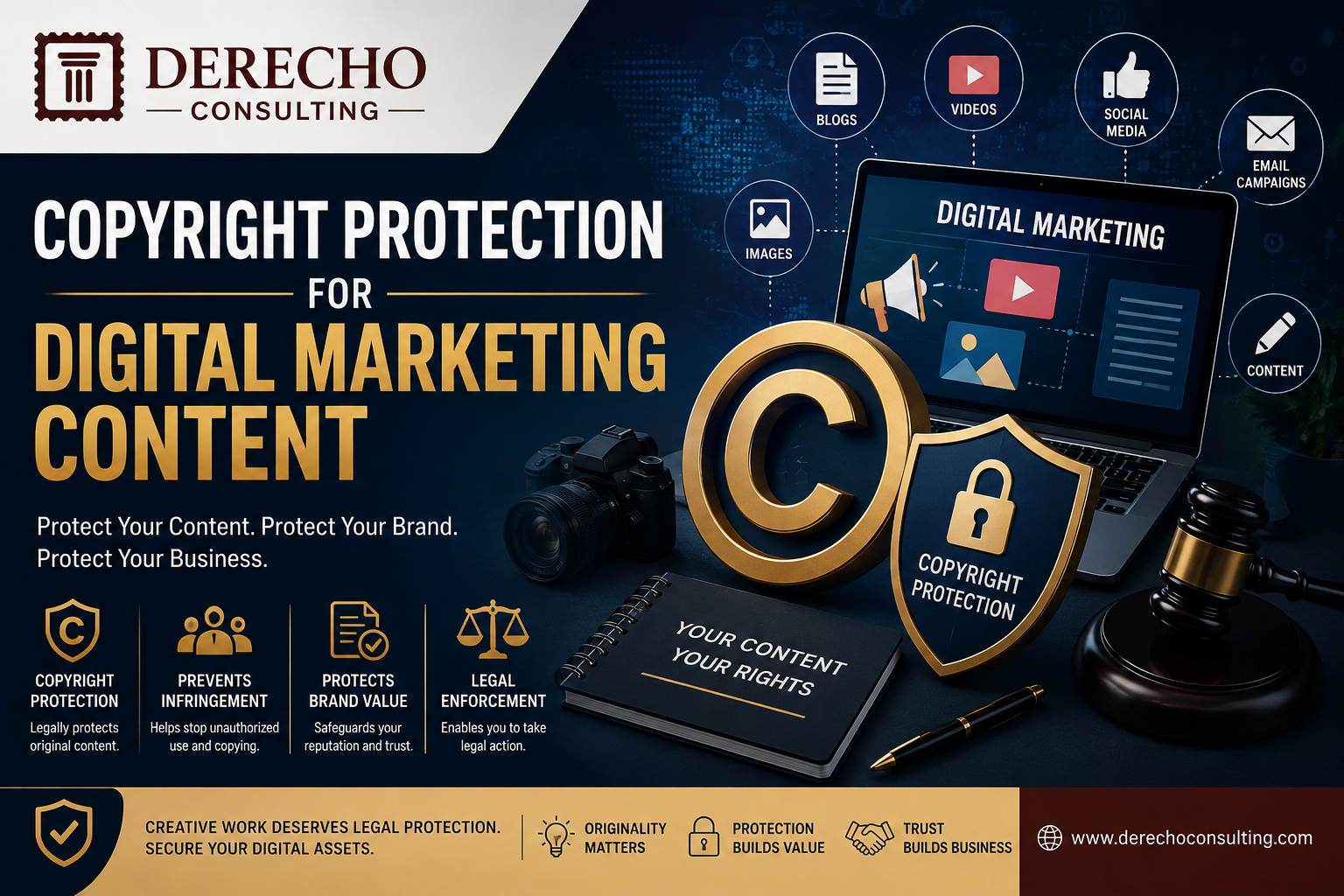
Copyright Protection for Digital Marketing Content is essential for businesses that create and publish original content across websites, blogs, social media platforms, advertisements, videos, and digital campaigns. High-quality marketing content is a valuable business asset, but without proper legal protection, it can be copied, reproduced, or misused without permission.
As digital marketing continues to evolve, organizations must understand how copyright laws protect creative works and what steps they should take to prevent infringement. Implementing effective copyright protection strategies helps businesses safeguard intellectual property, maintain brand integrity, and reduce legal risks.
This guide explains Copyright Protection for Digital Marketing Content, explores business responsibilities, outlines common copyright challenges, and highlights best practices for protecting digital assets in 2026.
Why Copyright Protection Matters
Original digital content represents significant time, creativity, and investment. Copyright protection gives creators and businesses exclusive rights over their original works while helping prevent unauthorized use.
Strong copyright protection helps organizations:
- Protect original creative content.
- Prevent unauthorized copying.
- Safeguard brand reputation.
- Reduce legal disputes.
- Support business growth.
- Protect valuable intellectual property.
Businesses that understand copyright laws can confidently publish and share digital content while protecting their legal rights.
What Digital Marketing Content Is Protected?
Copyright law protects original creative works fixed in a tangible form.
Common examples include:
- Website content.
- Blog articles.
- Social media posts.
- Marketing videos.
- Images and graphics.
- Infographics.
- Digital advertisements.
- E-books and guides.
- Email marketing campaigns.
- Creative presentations.
Organizations should ensure that all original content is properly managed and protected.
Business Responsibilities
Businesses should establish clear policies for creating, using, and protecting copyrighted material.
Organizations should:
- Create original content.
- Obtain licenses for third-party content.
- Credit creators where required.
- Maintain ownership records.
- Use copyright notices.
- Monitor unauthorized use.
These practices reduce infringement risks and strengthen intellectual property protection.
Common Copyright Risks
Businesses using digital marketing content may face several copyright challenges.
Common risks include:
- Unauthorized copying.
- Image misuse.
- Content plagiarism.
- Unlicensed music or videos.
- Trademark confusion.
- Copyright infringement claims.
Understanding these risks helps organizations avoid costly legal disputes.
Best Practices for Copyright Compliance
Businesses can strengthen copyright protection by following these best practices:
- Publish original content.
- Register copyrights where appropriate.
- Use licensed stock media.
- Monitor online content usage.
- Protect digital assets.
- Train marketing teams.
- Review content before publication.
A proactive compliance strategy helps protect valuable creative assets.
Copyright and Artificial Intelligence
AI tools are increasingly used to generate marketing content, creating new legal questions about ownership and originality.
Organizations should:
- Review AI-generated content.
- Verify ownership rights.
- Avoid unauthorized use of protected material.
- Maintain human oversight.
- Monitor evolving copyright regulations.
Responsible AI usage supports both innovation and legal compliance.
How to Respond to Copyright Infringement
When copyright infringement occurs, businesses should:
- Document the infringement.
- Contact the responsible party.
- Request removal of unauthorized content.
- Preserve evidence.
- Seek legal advice.
- Take appropriate enforcement action where necessary.
Early action can help minimize financial and reputational harm.
How Derecho Consulting Can Help
Derecho Consulting assists businesses in protecting their intellectual property through copyright advisory, intellectual property compliance, licensing guidance, contract review, risk assessments, and legal support for digital marketing content. Our experts help organizations protect creative assets while ensuring compliance with applicable intellectual property laws.
Conclusion
Copyright Protection for Digital Marketing Content plays a vital role in safeguarding original creative work in today’s digital economy. Businesses that understand copyright laws, implement strong protection strategies, and respect intellectual property rights can reduce legal risks while protecting their brand and competitive advantage.
By adopting responsible copyright practices, organizations can confidently create, publish, and distribute digital content while maintaining legal compliance and supporting long-term business growth.