
Introduction
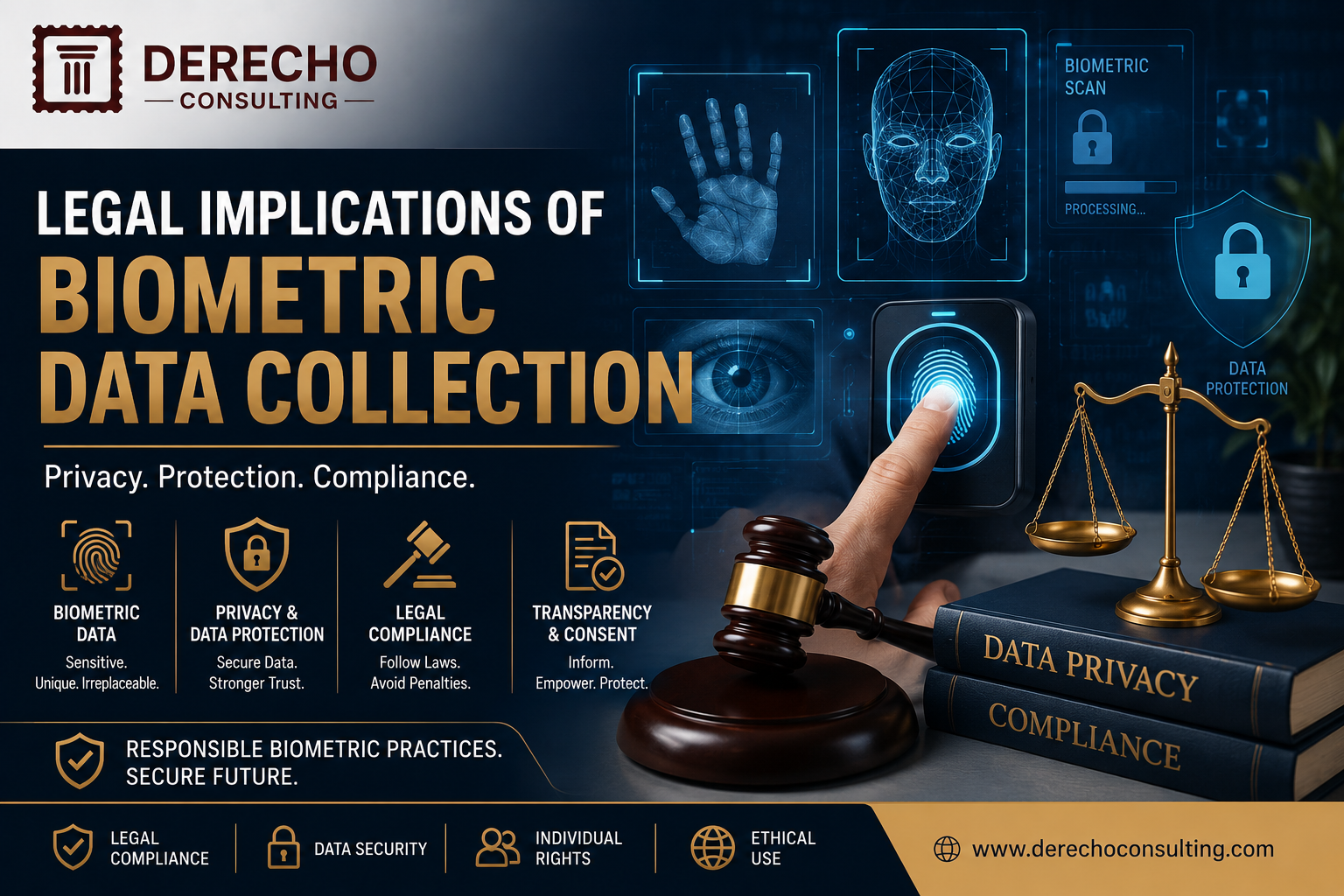
Legal Implications of Biometric Data Collection are becoming increasingly important as businesses adopt biometric technologies such as fingerprint scanning, facial recognition, iris scanning, and voice authentication for security, attendance tracking, and identity verification. While these technologies enhance convenience and strengthen security, they also raise significant legal, privacy, and data protection concerns.
Organizations collecting biometric data must comply with applicable privacy laws, implement robust security measures, and ensure transparency in how personal information is collected, stored, processed, and shared. Failure to comply with legal requirements can result in regulatory penalties, reputational damage, and loss of customer trust.
This guide explores the Legal Implications of Biometric Data Collection, explains business responsibilities, highlights privacy risks, and outlines best practices for ensuring legal compliance in 2026.
Why Biometric Data Collection Matters
Biometric information is unique to every individual, making it highly valuable for authentication and fraud prevention. However, because biometric identifiers cannot easily be changed if compromised, organizations must handle this data with greater care than traditional personal information.
Responsible biometric data practices help organizations:
- Strengthen security.
- Prevent identity fraud.
- Improve access control.
- Enhance customer trust.
- Protect personal information.
- Maintain legal compliance.
Businesses that use biometric technologies responsibly can reduce security risks while protecting individual privacy.
What Is Biometric Data?
Biometric data refers to unique physical or behavioral characteristics that can identify an individual.
Common examples include:
- Fingerprints.
- Facial recognition.
- Iris and retina scans.
- Voice recognition.
- Palm vein recognition.
- Hand geometry.
- Behavioral biometrics such as typing patterns.
Because biometric information is sensitive personal data, organizations must apply strict safeguards when processing it.
Legal Responsibilities for Businesses
Organizations collecting biometric information should establish clear policies that explain why data is collected, how it will be used, and how long it will be retained.
Businesses should:
- Obtain valid consent where required.
- Inform individuals about data collection.
- Limit data collection to legitimate purposes.
- Store biometric information securely.
- Restrict unauthorized access.
- Delete data when no longer required.
These practices help organizations meet legal and regulatory obligations.
Privacy and Data Protection
Protecting biometric information is essential because unauthorized access or misuse can have long-term consequences for individuals.
Organizations should:
- Encrypt biometric records.
- Apply strong access controls.
- Monitor data security continuously.
- Conduct regular security assessments.
- Maintain secure backup systems.
- Train employees on privacy responsibilities.
Strong data protection measures reduce the risk of breaches and unauthorized access.
Risks of Biometric Data Collection
Organizations should carefully evaluate the potential risks associated with biometric technologies.
Common risks include:
- Data breaches.
- Identity theft.
- Unauthorized surveillance.
- Privacy violations.
- Misuse of personal information.
- Regulatory non-compliance.
Implementing appropriate governance frameworks helps minimize these risks.
Best Practices for Compliance
Businesses can improve compliance by following these best practices:
- Develop a biometric privacy policy.
- Conduct privacy impact assessments.
- Obtain informed consent.
- Limit data retention periods.
- Perform regular compliance audits.
- Secure biometric databases.
- Review applicable legal requirements regularly.
A proactive compliance strategy strengthens both privacy protection and business accountability.
Emerging Trends in Biometric Regulation
As biometric technologies become more common, governments are introducing stricter regulations governing their use.
Key trends include:
- Stronger privacy protections.
- Greater transparency requirements.
- Enhanced consent obligations.
- Increased cybersecurity standards.
- AI-based biometric regulation.
- Higher regulatory enforcement.
Organizations should stay informed about evolving legal requirements to maintain compliance.
How Derecho Consulting Can Help
Derecho Consulting helps organizations navigate the legal and regulatory challenges associated with biometric data collection. Our experts provide guidance on privacy compliance, data protection frameworks, cybersecurity governance, risk assessments, and regulatory compliance to help businesses implement biometric technologies responsibly.
Conclusion
Legal Implications of Biometric Data Collection continue to evolve as organizations increasingly rely on biometric technologies for authentication, security, and operational efficiency. Businesses must balance innovation with privacy by implementing transparent policies, protecting sensitive biometric information, and complying with applicable legal requirements.
Organizations that prioritize responsible biometric data practices will be better positioned to strengthen trust, reduce legal risks, and build secure, privacy-focused digital environments.