
Introduction
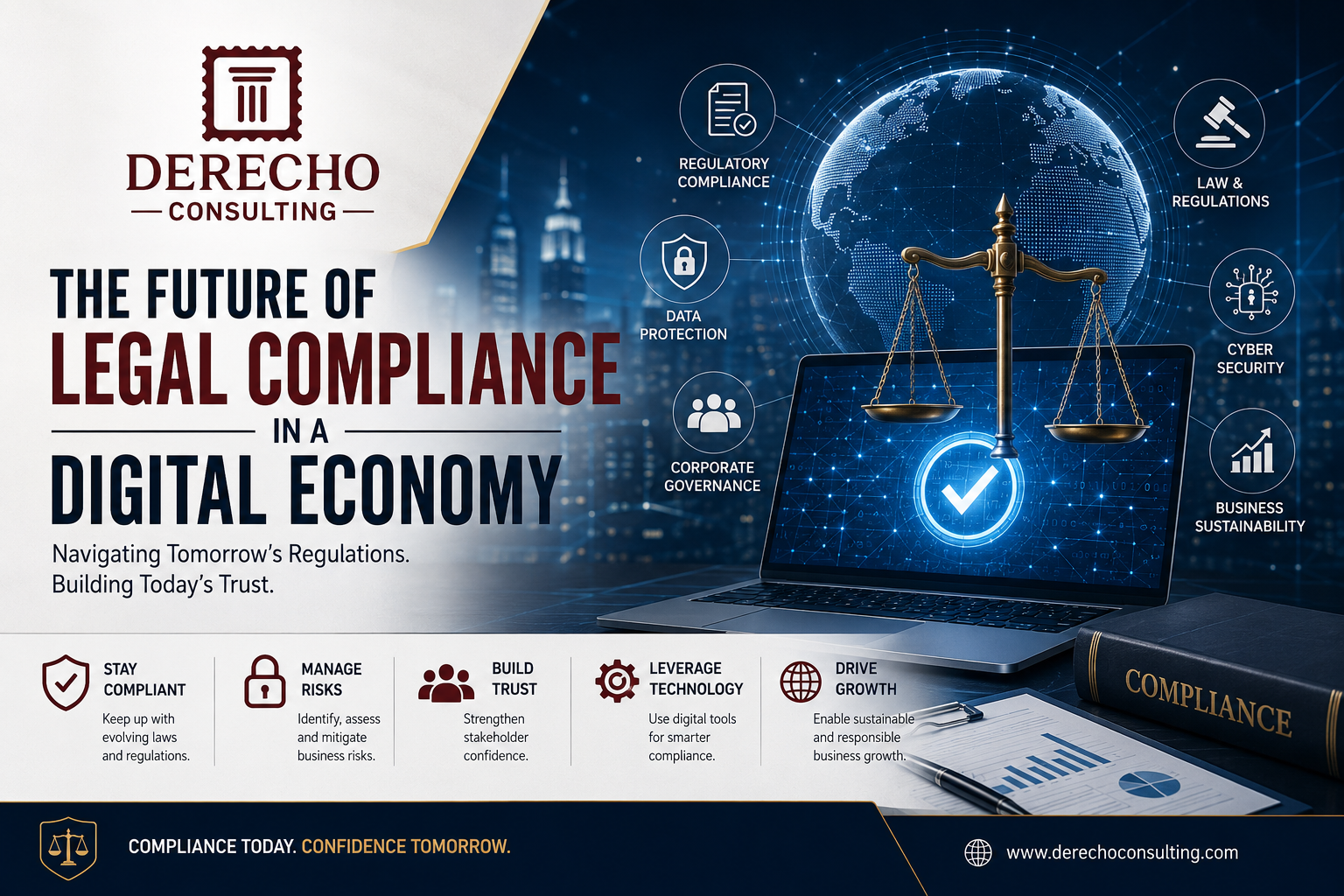
The Future of Legal Compliance in a Digital Economy is reshaping how businesses manage legal obligations, protect digital assets, and adapt to rapidly evolving regulations. As organizations embrace digital transformation, cloud technologies, artificial intelligence, and online business operations, compliance has become more complex and more important than ever.
Businesses must navigate changing legal frameworks while protecting customer data, maintaining cybersecurity, and ensuring regulatory compliance across digital platforms. Organizations that adopt proactive compliance strategies can reduce legal risks, strengthen stakeholder trust, and support sustainable business growth.
This guide explores The Future of Legal Compliance in a Digital Economy, highlights emerging compliance trends, and explains how businesses can prepare for the evolving regulatory landscape in 2026.
Why Legal Compliance Matters in a Digital Economy
Digital transformation has increased the need for businesses to comply with laws governing technology, privacy, cybersecurity, financial reporting, and corporate governance.
Strong legal compliance helps organizations:
- Reduce legal and financial risks.
- Protect sensitive business information.
- Build customer and investor trust.
- Meet regulatory requirements.
- Strengthen business resilience.
- Support sustainable growth.
Organizations that prioritize compliance are better equipped to succeed in today’s digital environment.
What Is Digital Compliance?
Digital compliance refers to following legal and regulatory requirements related to digital business operations, technology, and data management.
It commonly includes:
- Data privacy compliance.
- Cybersecurity regulations.
- Digital contract management.
- Electronic recordkeeping.
- Artificial intelligence governance.
- Regulatory reporting.
Effective digital compliance supports secure and responsible business operations.
Emerging Compliance Trends in 2026
Businesses should prepare for several important compliance developments.
Key trends include:
- Stronger data protection laws.
- AI governance regulations.
- Increased cybersecurity requirements.
- Digital identity verification.
- ESG reporting obligations.
- Cross-border compliance standards.
Keeping pace with these changes helps organizations remain competitive and compliant.
Common Compliance Challenges
Organizations operating in a digital economy often encounter several legal and regulatory challenges.
Common issues include:
- Rapidly changing regulations.
- Data security risks.
- Third-party compliance management.
- Cross-border legal requirements.
- AI-related legal risks.
- Digital fraud and cyber threats.
Addressing these challenges requires continuous monitoring and effective compliance programs.
Best Practices for Digital Compliance
Businesses can strengthen compliance by implementing practical governance strategies.
Organizations should:
- Develop compliance policies.
- Conduct regular legal audits.
- Protect sensitive data.
- Strengthen cybersecurity controls.
- Train employees regularly.
- Monitor regulatory updates.
- Document compliance activities.
- Perform ongoing risk assessments.
These best practices help organizations maintain legal compliance while supporting innovation.
The Role of Technology in Compliance
Modern compliance programs increasingly rely on technology to improve efficiency and accuracy.
Businesses can use technology to:
- Automate compliance monitoring.
- Track regulatory changes.
- Manage legal documentation.
- Improve cybersecurity.
- Support risk management.
- Enhance reporting processes.
Technology enables organizations to respond quickly to changing regulatory requirements.
Building a Compliance Culture
Legal compliance should become part of an organization’s daily operations rather than a one-time activity.
Businesses should encourage:
- Ethical leadership.
- Employee accountability.
- Transparent decision-making.
- Continuous learning.
- Responsible data management.
- Compliance awareness.
A strong compliance culture reduces business risk and improves long-term performance.
How Derecho Consulting Supports Digital Compliance
Derecho Consulting helps businesses navigate the evolving legal landscape through regulatory compliance advisory, corporate governance, data privacy guidance, cybersecurity compliance, legal risk assessments, and technology law services. Our experts assist organizations in building effective compliance frameworks that support innovation while meeting legal obligations.
Conclusion
The Future of Legal Compliance in a Digital Economy will continue to evolve as businesses adopt new technologies and governments introduce stronger regulatory requirements. Organizations that invest in compliance, cybersecurity, governance, and responsible digital practices will be better prepared to manage legal risks and maintain stakeholder confidence.
By embracing proactive compliance strategies, businesses can operate securely, remain competitive, and achieve sustainable growth in the digital economy.