
Introduction
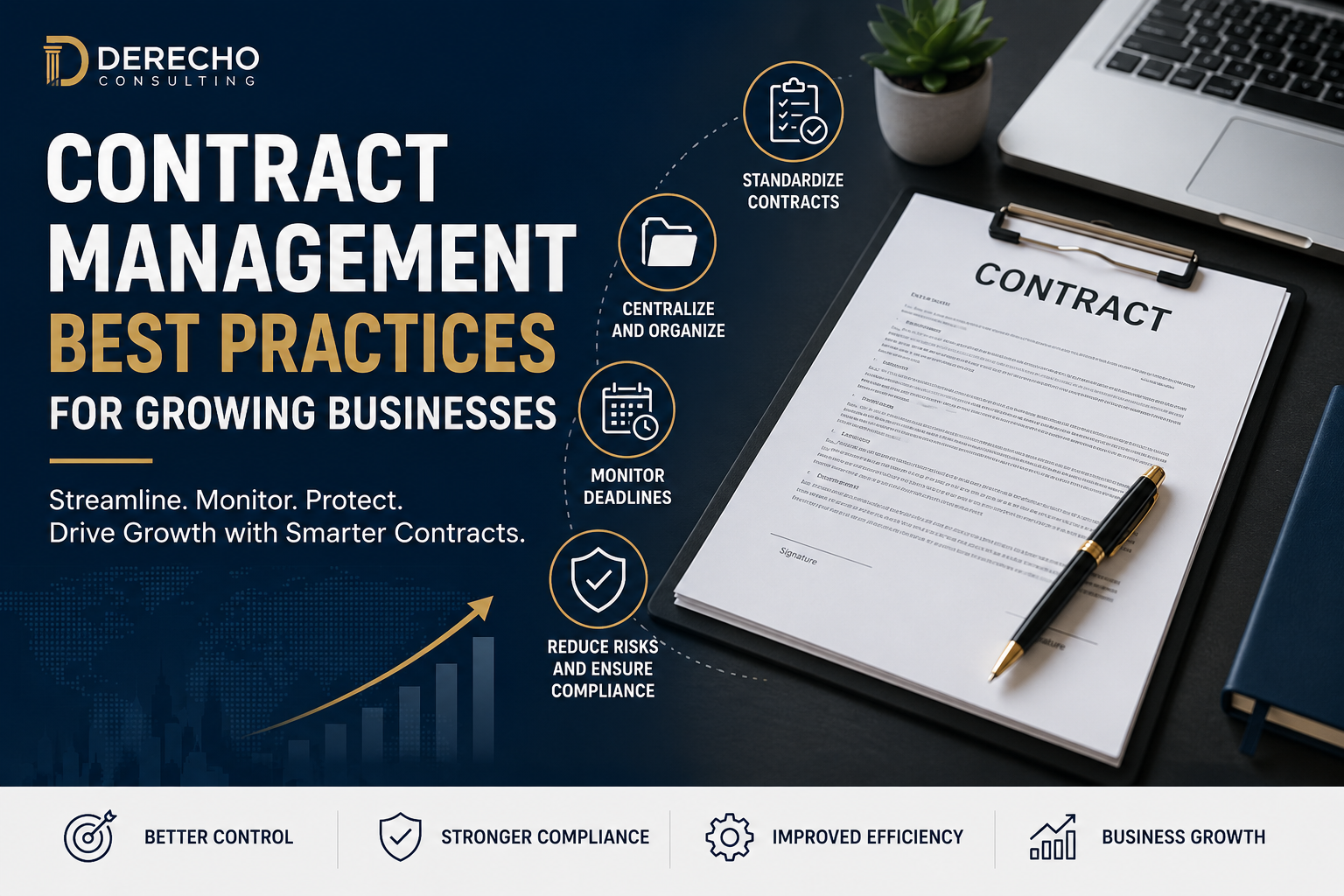
Contract Management Best Practices for Growing Businesses have become increasingly important as organizations expand their operations, build new partnerships, and manage complex business relationships in 2026. Contracts form the legal foundation of every business transaction, defining the rights, responsibilities, and obligations of all parties involved. Poor contract management can lead to missed deadlines, financial losses, compliance issues, disputes, and operational inefficiencies.
As businesses grow, the number of agreements with customers, suppliers, employees, vendors, and strategic partners also increases. Implementing effective contract management practices helps organizations reduce legal risks, improve operational efficiency, strengthen compliance, and build long-term business relationships.
This guide explains Contract Management Best Practices for Growing Businesses, highlights common contract management challenges, and outlines practical strategies organizations can implement to improve contract governance and support sustainable growth.
Why Contract Management Best Practices Matter
Effective contract management ensures that agreements are properly drafted, reviewed, approved, executed, monitored, and renewed throughout their lifecycle. Well-managed contracts reduce legal risks, improve business performance, strengthen compliance, and help organizations meet their contractual obligations.
A structured contract management process also supports better decision-making and stronger business relationships.
1. Standardize Contract Templates
Businesses should develop standardized contract templates for common agreements such as service contracts, vendor agreements, employment contracts, and confidentiality agreements.
Using approved templates improves consistency, reduces drafting errors, and accelerates contract preparation.
2. Clearly Define Roles and Responsibilities
Every contract should clearly specify the rights, obligations, deliverables, payment terms, timelines, and responsibilities of all parties involved.
Clearly written agreements reduce misunderstandings and minimize disputes.
3. Implement a Centralized Contract Repository
Businesses should store contracts in a secure, centralized digital repository where authorized personnel can easily access, review, and manage agreements.
Centralized storage improves document control and reduces the risk of lost contracts.
4. Monitor Contract Deadlines and Renewals
Organizations should actively track contract expiration dates, renewal periods, payment schedules, compliance obligations, and key milestones.
Timely monitoring helps prevent missed deadlines and unexpected contract lapses.
5. Conduct Regular Contract Reviews
Businesses should periodically review contracts to ensure they remain aligned with changing business goals, regulatory requirements, and operational needs.
Regular reviews help identify outdated clauses, compliance risks, and opportunities for improvement.
6. Strengthen Compliance and Risk Management
Organizations should ensure contracts comply with applicable laws, industry regulations, internal policies, and corporate governance standards.
A proactive compliance strategy reduces legal exposure and protects business interests.
7. Train Employees on Contract Management
Employees responsible for creating, negotiating, approving, or managing contracts should receive regular training on contract management procedures, legal requirements, and organizational policies.
Well-trained teams help improve contract accuracy and compliance.
Contract Management Best Practices for Long-Term Success
Businesses should establish clear approval workflows, use standardized templates, maintain centralized contract records, monitor renewal deadlines, review agreements regularly, strengthen compliance controls, and seek legal guidance for complex or high-value contracts.
A proactive contract management strategy supports operational efficiency, legal compliance, and long-term business success.
Conclusion
Understanding Contract Management Best Practices for Growing Businesses helps organizations reduce legal risks, improve operational efficiency, and strengthen business relationships. Businesses that implement structured contract management processes can better manage obligations, maintain regulatory compliance, and support sustainable growth.
By making contract management an integral part of business governance, organizations can improve decision-making, minimize disputes, and create a stronger foundation for long-term success.