
Introduction
Trademark Registration Mistakes Businesses Should Avoid is an essential topic for businesses seeking to protect their brand identity and intellectual property in 2026. A trademark is one of a company’s most valuable assets, helping customers recognize its products and services while distinguishing the business from competitors. However, many organizations make avoidable mistakes during the trademark registration process, resulting in application delays, legal disputes, financial losses, or even the loss of exclusive rights.
As businesses expand into digital markets and global commerce, protecting trademarks has become more important than ever. Selecting a strong trademark, conducting proper searches, filing accurate applications, and monitoring trademark usage are all critical steps in building a successful brand protection strategy.
This guide explains the Trademark Registration Mistakes Businesses Should Avoid, highlights common registration errors, and provides practical recommendations to help businesses secure and protect their trademarks effectively.
Why Trademark Registration Mistakes Matter for Businesses
A registered trademark gives businesses exclusive legal rights to use their brand name, logo, slogan, or other distinctive identifiers for specific goods or services. Trademark registration strengthens brand recognition, builds customer trust, prevents unauthorized use, and provides legal protection against infringement.
A well-managed trademark portfolio also supports business growth, licensing opportunities, and long-term brand value.
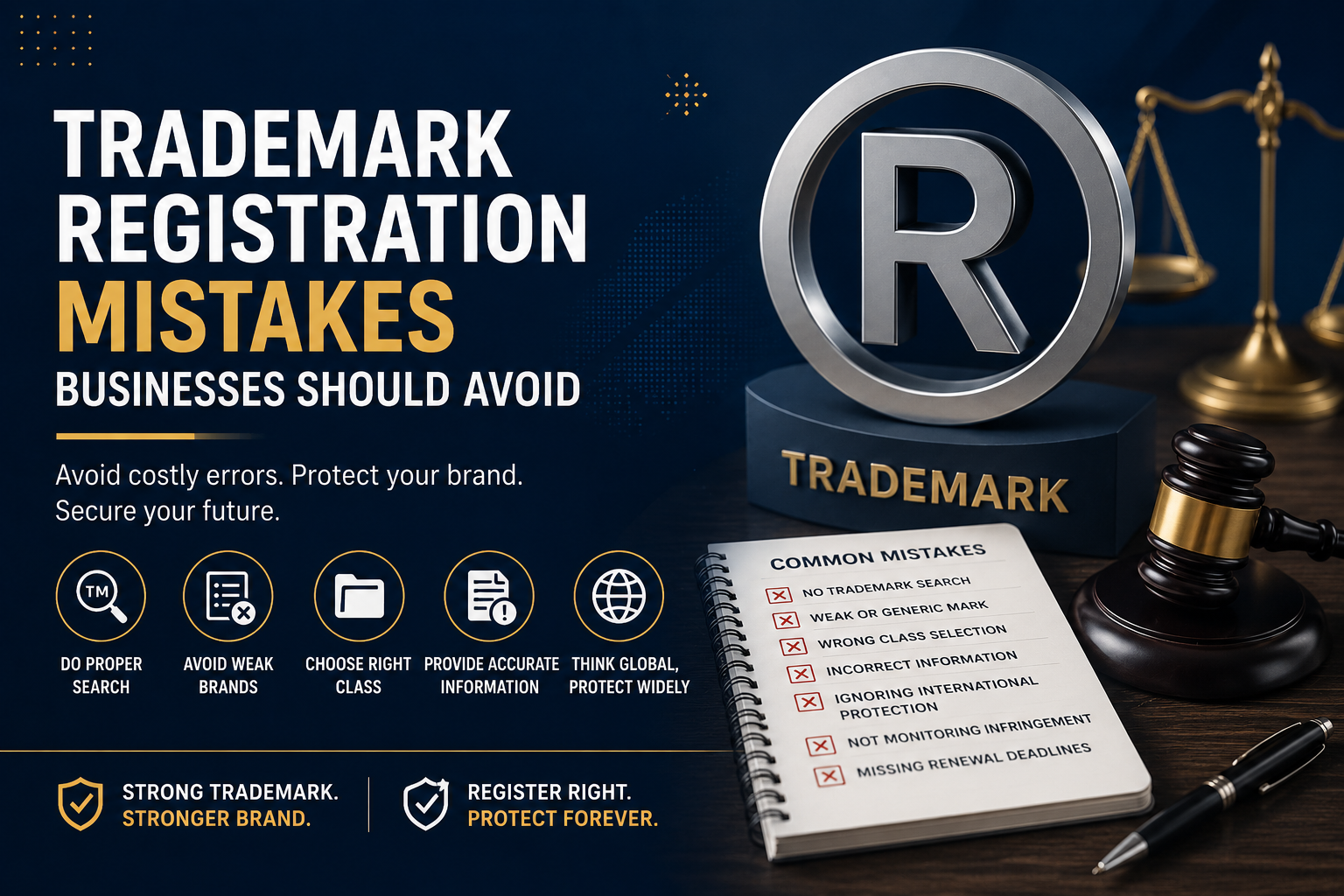
1. Failing to Conduct a Trademark Search
One of the most common mistakes is applying for a trademark without conducting a comprehensive trademark search. Businesses should verify whether similar trademarks already exist before submitting an application.
A thorough search reduces the likelihood of application rejection and future legal disputes.
2. Choosing a Weak or Generic Trademark
Generic or descriptive names are often difficult to register because they lack distinctiveness. Businesses should create unique, memorable, and distinctive trademarks that clearly identify their products or services.
Strong trademarks receive broader legal protection.
3. Selecting the Wrong Trademark Class
Trademark applications require businesses to choose the appropriate classes for their goods or services. Selecting incorrect classes may leave important business activities unprotected.
Organizations should carefully review trademark classification requirements before filing.
4. Submitting Incorrect Application Information
Incomplete or inaccurate application details can delay registration or result in rejection. Businesses should ensure that all ownership information, trademark descriptions, and supporting documents are accurate before submission.
Careful preparation helps streamline the registration process.
5. Ignoring International Trademark Protection
Businesses expanding into international markets often overlook trademark protection outside their home country. Since trademark rights are generally territorial, companies should evaluate whether international trademark registration is necessary.
Protecting trademarks globally reduces risks associated with international business expansion.
6. Failing to Monitor Trademark Infringement
Trademark registration is only the beginning. Businesses should actively monitor the marketplace for unauthorized use of similar names, logos, or branding.
Early detection allows organizations to take timely legal action and protect brand reputation.
7. Missing Trademark Renewal Deadlines
Registered trademarks require periodic renewal to maintain legal protection. Missing renewal deadlines may result in the loss of valuable trademark rights.
Businesses should maintain an organized intellectual property management system to track important renewal dates.
Best Practices to Avoid Trademark Registration Mistakes
Businesses should conduct trademark searches before branding decisions, choose distinctive trademarks, file accurate applications, monitor infringement, renew registrations on time, maintain consistent trademark usage, and seek professional legal advice when expanding into new markets.
A proactive trademark strategy helps businesses strengthen brand identity while reducing legal risks.
Conclusion
Understanding the Trademark Registration Mistakes Businesses Should Avoid helps organizations protect one of their most valuable business assets. Businesses that conduct proper trademark searches, file accurate applications, monitor infringement, and maintain registrations are better positioned to safeguard their brand identity and support long-term growth.
By making trademark protection an essential part of their intellectual property strategy, businesses can strengthen customer trust, reduce legal risks, and build a lasting competitive advantage.