
Introduction
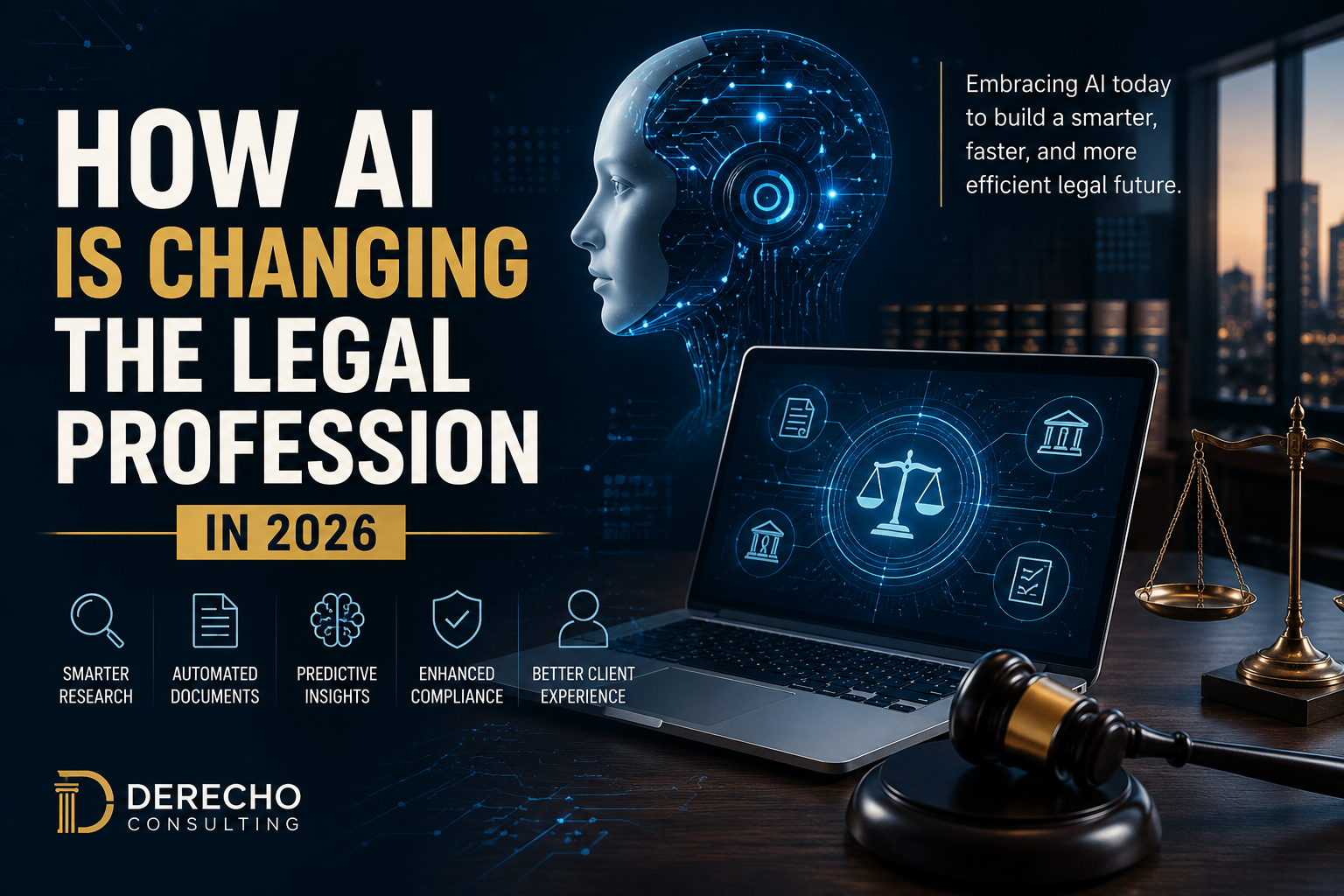
How AI Is Changing the Legal Profession in 2026 has become one of the most significant topics in the legal industry as artificial intelligence continues to transform how legal professionals deliver services, manage cases, conduct research, and support clients. Law firms, corporate legal departments, and legal consultants are increasingly adopting AI-powered technologies to improve efficiency, reduce operational costs, enhance accuracy, and streamline routine legal tasks.
From legal research and contract analysis to document automation and predictive analytics, AI is reshaping traditional legal workflows. However, while AI offers numerous benefits, it also introduces important legal, ethical, regulatory, and cybersecurity challenges that organizations must carefully address.
This guide explores How AI Is Changing the Legal Profession in 2026, examines the opportunities and challenges created by artificial intelligence, and outlines best practices for legal professionals seeking to adopt AI responsibly.
Why AI Legal Profession Trends Matter
Artificial intelligence enables legal professionals to automate repetitive work, analyze large volumes of legal data, improve decision-making, and deliver faster services to clients. Rather than replacing lawyers, AI is increasingly becoming a valuable tool that supports legal expertise and enhances productivity.
Organizations that integrate AI responsibly can improve client satisfaction, strengthen compliance, and remain competitive in an evolving legal landscape.
1. Faster Legal Research
AI-powered legal research platforms can quickly analyze legislation, case law, regulations, and legal precedents, allowing lawyers to identify relevant information in significantly less time.
Faster research improves productivity while supporting more informed legal advice.
2. Automated Contract Review
Artificial intelligence can review contracts, identify unusual clauses, highlight compliance risks, and suggest improvements based on predefined legal standards.
Automation reduces manual review time while improving contract consistency.
3. Document Automation
Law firms increasingly use AI to generate legal documents, agreements, compliance reports, and standardized forms using automated templates.
Document automation improves efficiency and minimizes drafting errors.
4. Predictive Legal Analytics
AI can analyze historical legal data to identify litigation trends, estimate case outcomes, and support strategic legal planning.
Predictive analytics helps organizations make better-informed legal decisions.
5. Enhanced Compliance Monitoring
AI systems continuously monitor regulatory changes, compliance obligations, and legal updates across multiple jurisdictions.
Real-time monitoring helps businesses reduce compliance risks.
6. Improved Client Service
AI-powered chatbots, virtual legal assistants, and intelligent client portals improve communication, provide faster responses, and simplify routine legal inquiries.
These technologies allow legal professionals to focus on more complex advisory work.
7. Ethical and Regulatory Challenges
The increasing use of AI also raises important concerns regarding data privacy, confidentiality, bias, transparency, accountability, and professional responsibility.
Legal professionals should establish governance frameworks that ensure AI systems are used responsibly and in accordance with applicable laws and ethical standards.
AI Legal Profession Best Practices
Organizations should implement AI governance policies, verify AI-generated legal outputs, protect confidential client information, conduct regular compliance reviews, provide employee training, monitor regulatory developments, and maintain human oversight over critical legal decisions.
A balanced approach allows organizations to benefit from AI while maintaining professional integrity and legal compliance.
Conclusion
Understanding How AI Is Changing the Legal Profession in 2026 helps legal professionals prepare for the future of legal services. AI is transforming legal research, contract management, compliance, and client service while creating new opportunities for innovation and operational efficiency.
By adopting AI responsibly and maintaining strong governance, legal professionals can improve productivity, strengthen compliance, reduce risks, and continue delivering high-quality legal services in an increasingly digital world.