
Introduction
Technology Risk Governance is becoming an important part of corporate governance in India. Businesses now depend on cloud services, software, artificial intelligence, digital platforms, data systems, payment technology, and external technology vendors.
When technology fails, the impact can go beyond the IT department. A cyberattack can stop business operations. A cloud outage can affect customers. A security weakness can expose confidential information. A failure at a major technology vendor can interrupt important services.
For this reason, Boards and senior management need a clear understanding of the company’s major technology risks. They should know which systems are critical, who is responsible for technology risk, how incidents are handled, and whether the company can continue operating during a major disruption.
For regulated sectors, technology governance can also form part of specific regulatory requirements. RBI’s operational-risk framework includes Board approval and periodic review of the operational-risk framework and risk appetite. It also addresses ICT risk management, business continuity, and incident response.
SEBI’s Cybersecurity and Cyber Resilience Framework also places emphasis on governance, accountability, risk management, critical IT assets, and cyber resilience for applicable regulated entities.
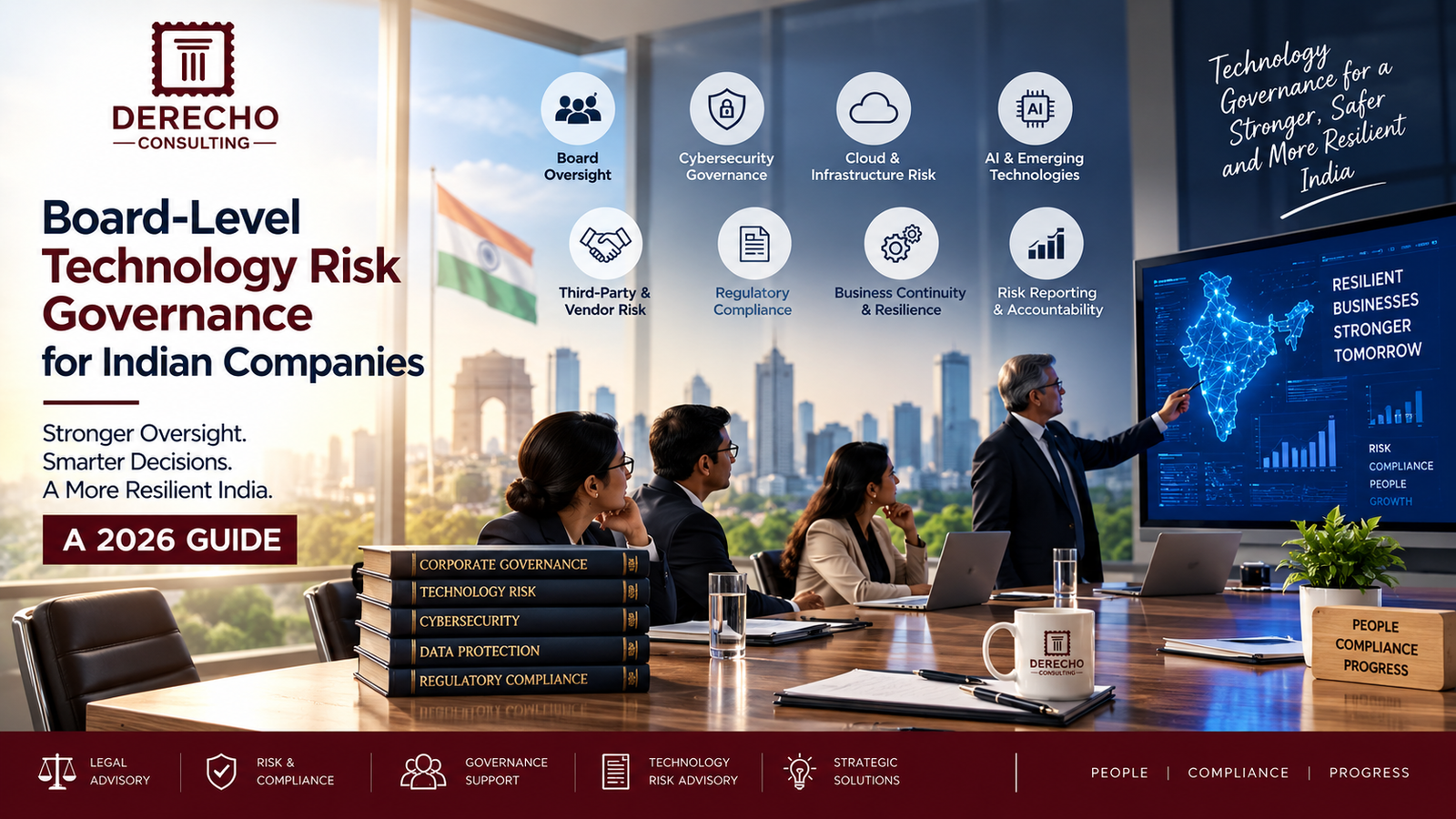
This guide explains Technology Risk Governance for Indian Companies, including Board oversight, cybersecurity, AI, cloud services, technology vendors, data protection, business continuity, incident response, and practical governance measures for 2026.
Why Technology Risk Governance Matters
Technology is now closely connected to business operations. A major technology problem can affect revenue, customers, employees, compliance, and reputation.
Good Technology Risk Governance can help companies:
- Understand major technology risks.
- Assign clear responsibility.
- Protect critical systems.
- Improve cybersecurity oversight.
- Manage technology vendors.
- Reduce cloud dependency risks.
- Prepare for technology failures.
- Improve incident response.
- Monitor AI and emerging technology.
- Give the Board better information for decision-making.
Technology governance also helps the Board ask important questions before a serious problem occurs.
Key Areas of Technology Risk Governance
1. Board Oversight of Technology Risk
The Board should have visibility into important technology risks.
Board reporting can cover:
- Cybersecurity risks.
- Critical technology systems.
- Major technology projects.
- AI adoption.
- Cloud dependency.
- Technology vendors.
- Data-security issues.
- Major incidents.
- Business continuity.
- Compliance gaps.
The Board does not need to manage technology operations itself. Its role is to make sure that suitable governance, resources, controls, and accountability are in place.
2. Technology Risk Appetite
Every company should understand how much technology risk it is prepared to accept.
A technology-risk framework can define:
- Acceptable risk levels.
- Risk tolerance.
- Critical systems.
- Maximum acceptable downtime.
- Incident thresholds.
- Recovery objectives.
- Vendor-risk limits.
RBI’s operational-risk framework specifically includes Board approval and periodic review of risk appetite and tolerance.
A clear risk appetite can help management make better decisions about technology investment, security, and resilience.
3. Critical Technology Systems
Companies should identify the systems that are essential to their business.
These may include:
- Customer applications.
- Payment systems.
- Databases.
- Cloud infrastructure.
- Internal business applications.
- APIs.
- AI systems.
- Communication platforms.
- Security systems.
Once critical systems are identified, companies can give them higher levels of protection and monitoring.
SEBI’s cyber-resilience framework also uses a structured approach to identifying and managing IT assets and associated cybersecurity risks for applicable regulated entities.
4. Cybersecurity Governance
Cybersecurity should be treated as a business risk.
The company should have clear processes for:
- Access control.
- Security monitoring.
- Vulnerability management.
- Employee awareness.
- Security testing.
- Incident response.
- Cyber audits.
- Data protection.
The Board should receive simple and useful information about major cyber risks. Reports should explain the business impact, not only technical details.
SEBI’s Cybersecurity and Cyber Resilience Framework requires applicable regulated entities to establish cybersecurity risk-management roles and responsibilities and to maintain Board-approved cybersecurity and cyber-resilience policies.
5. AI and Emerging Technology Risk
AI is becoming part of many business operations. Companies should therefore include AI risk in their wider Technology Risk Governance framework.
Potential risks include:
- Data privacy.
- AI security.
- Incorrect outputs.
- Bias.
- Lack of human oversight.
- Intellectual-property issues.
- Third-party AI risks.
- AI-assisted cyber threats.
Companies should identify where AI is used, who owns the system, what information it can access, and what controls are in place.
The Board should also receive updates when an AI system creates a material business, legal, or security risk.
6. Third-Party and Technology Vendor Risk
Many companies depend on external technology providers for important services.
These providers may support:
- Cloud infrastructure.
- SaaS platforms.
- Cybersecurity.
- AI services.
- Data processing.
- Payment technology.
- Software development.
- IT support.
Companies should review each important vendor carefully.
A vendor review should consider:
- Vendor importance.
- Security controls.
- Data access.
- Service availability.
- Business continuity.
- Subcontractors.
- Incident reporting.
- Audit rights.
- Exit arrangements.
- Data return and deletion.
A critical vendor can create major business risk when the company depends heavily on that provider.
SEBI’s framework states that applicable regulated entities remain accountable for third-party services, including matters such as confidentiality, integrity, availability, security of data and logs, and compliance with applicable requirements.
7. Cloud Technology Risk
Cloud services can make businesses more flexible and scalable. They can also create dependency and concentration risks.
Companies should review:
- Cloud-provider dependency.
- Data location.
- Availability.
- Backup systems.
- Disaster recovery.
- Access controls.
- Security responsibilities.
- Contract terms.
- Exit options.
The Board should know whether an important business service depends too heavily on one cloud provider.
A good governance framework should include a practical plan for dealing with major cloud disruption.
8. Data Protection and Information Governance
Technology risk and data risk are closely connected.
Companies should know:
- What data they hold.
- Where it is stored.
- Who can access it.
- Which vendors process it.
- How long it is retained.
- How it is protected.
Important data may include:
- Customer information.
- Employee records.
- Financial data.
- Confidential information.
- Business records.
- Intellectual property.
Clear data governance can reduce privacy, security, and operational risks.
9. Technology Contracts
Technology contracts can create long-term legal and operational obligations.
Important agreements may include:
- Cloud agreements.
- SaaS contracts.
- Software licences.
- AI vendor agreements.
- Cybersecurity contracts.
- Data-processing agreements.
- Service-level agreements.
Before signing important agreements, companies should review:
- Security obligations.
- Confidentiality.
- Data handling.
- Service levels.
- Liability.
- Indemnities.
- Audit rights.
- Incident notification.
- Termination rights.
- Data deletion.
Technology procurement should therefore involve the appropriate legal, technology, security, and business teams.
10. Business Continuity and Disaster Recovery
A technology failure can stop important business functions.
Companies should prepare for:
- System outages.
- Cyberattacks.
- Data loss.
- Cloud failures.
- Vendor failures.
- Infrastructure problems.
Business continuity plans should explain:
- Which systems are critical.
- How quickly they must be restored.
- Where backups are maintained.
- Who leads the response.
- How employees and customers are informed.
- How recovery will be tested.
RBI’s framework specifically includes business continuity plans, incident-response and recovery plans, and regularly tested ICT-risk programmes.
11. Technology Incident Reporting
Companies should have a clear process for reporting major technology incidents.
Examples include:
- Cyberattacks.
- Ransomware.
- Data breaches.
- Major outages.
- Critical vulnerabilities.
- Cloud failures.
- Unauthorised access.
- Vendor failures.
The process should explain:
- Who is notified.
- When escalation is required.
- Who manages the incident.
- How evidence is preserved.
- Whether regulatory reporting is required.
- How customers are informed.
- How corrective action is tracked.
A clear escalation process can help management respond quickly and keep the Board informed.
12. Technology Risk Reporting to the Board
Board reports should be simple and focused on business impact.
A technology-risk dashboard can show:
- Top technology risks.
- Risk trends.
- Critical vulnerabilities.
- Major cyber incidents.
- System availability.
- Key vendor risks.
- AI risks.
- Compliance gaps.
- Business-continuity status.
- Remediation progress.
The Board should be able to understand what could go wrong, how serious the risk is, and what management is doing about it.
13. Independent Technology Assurance
Companies should periodically check whether important technology controls are working.
Reviews may include:
- IT audits.
- Cybersecurity assessments.
- Vulnerability testing.
- Penetration testing.
- Vendor assessments.
- Business-continuity testing.
- Compliance reviews.
Independent assurance can identify weaknesses that routine management reporting may miss.
For applicable SEBI-regulated entities, the CSCRF includes formal cybersecurity and cyber-resilience requirements, including audit and assessment-related measures.
14. Board Technology Awareness
Directors do not need to become technology specialists. However, they should have enough knowledge to challenge management and understand important risks.
Companies can support this through:
- Cybersecurity briefings.
- AI governance sessions.
- Technology-risk workshops.
- Independent technology experts.
- Regular Board updates.
A technology-aware Board can make better decisions about investment, resilience, cybersecurity, and emerging risks.
Common Technology Risk Governance Risks
Companies may face Technology Risk Governance problems when:
- The Board has limited visibility into technology risks.
- No formal technology-risk framework exists.
- Responsibilities are unclear.
- Critical systems are not identified.
- Cybersecurity receives insufficient attention.
- The company depends too heavily on one vendor.
- Cloud dependencies are not assessed.
- Business-continuity plans are outdated.
- Major incidents are not escalated quickly.
- AI risks are not properly managed.
- Data governance is weak.
- Technology contracts do not provide adequate protection.
- Technology risks are not reported clearly.
- Independent reviews are not performed.
These weaknesses can increase legal, operational, financial, cybersecurity, and reputational risks.
Best Practices for Technology Risk Governance
Indian companies should consider the following practices:
- Establish clear Board oversight.
- Define technology-risk appetite.
- Identify critical systems.
- Assign clear risk ownership.
- Include cybersecurity in enterprise-risk management.
- Review AI and emerging technology risks.
- Assess important technology vendors.
- Monitor critical cloud dependencies.
- Review technology contracts.
- Test business-continuity plans.
- Establish clear incident-escalation procedures.
- Provide regular technology-risk reports to the Board.
- Conduct independent technology assessments.
- Train directors on major technology risks.
The goal should be simple: identify risks early, assign responsibility, monitor controls, and act before a technology issue becomes a major business problem.
2026 Technology Risk Governance Considerations
Technology Risk Governance is particularly important in 2026 as companies continue to increase their use of AI, cloud services, digital platforms, and external technology providers.
SEBI’s current 2026 regulatory activity includes a consultation paper published on 11 September 2026 concerning the application of its IT and cyber-security framework for Market Infrastructure Institutions to their subsidiaries. SEBI also published a consultation paper on strengthening MII governance on 9 September 2026.
SEBI has also stated that technology, risk management, and cyber resilience remain important areas for the securities-market ecosystem.
Companies should therefore focus on:
- Board-level cybersecurity oversight.
- AI-risk reporting.
- Cloud concentration risks.
- Critical technology vendors.
- Software supply-chain risks.
- Technology resilience.
- Business-continuity testing.
- Data governance.
- AI governance.
- Incident escalation.
- Technology audits.
- Regulatory reporting.
- Risk appetite and tolerance.
Companies should review their technology governance framework whenever there is a major change in technology, business operations, vendor dependency, or regulatory requirements.
How Derecho Consulting Can Help
Derecho Consulting can help Indian companies strengthen Technology Risk Governance through technology-risk assessments, Board governance reviews, cybersecurity advisory, AI governance assessments, technology-vendor due diligence, technology-contract reviews, data-governance assessments, business-continuity reviews, incident-response planning, and compliance documentation.
A proactive approach can help companies:
- Identify important technology risks.
- Define Board and management responsibilities.
- Build a clear technology-risk framework.
- Review cybersecurity governance.
- Assess critical technology vendors.
- Review cloud and AI risks.
- Strengthen technology contracts.
- Improve incident escalation.
- Develop Board-level risk reports.
- Prepare for internal and regulatory reviews.
Derecho Consulting can also support periodic reviews of technology governance as the company’s technology environment changes.
Conclusion
Board-Level Technology Risk Governance for Indian Companies is becoming an important part of modern corporate governance. Businesses depend on technology for operations, customer services, payments, data management, communications, and strategic growth.
A technology failure can therefore become a business failure. Cyberattacks, cloud outages, weak vendors, software vulnerabilities, and AI-related risks can affect customers, finances, compliance, and reputation.
A strong governance framework gives the Board clear visibility into major risks while keeping daily technology management with the responsible teams.
By identifying critical systems, setting a clear risk appetite, strengthening cybersecurity oversight, reviewing vendors, preparing for disruptions, improving Board reporting, and maintaining accountability, companies can build stronger technology resilience.
A proactive approach to Technology Risk Governance can help Indian companies make better technology decisions, reduce avoidable risks, protect business operations, and support sustainable digital growth in 2026 and beyond.