
Introduction
Insolvency Risk Management is an important part of corporate governance and financial risk management for Indian businesses facing financial stress, cash-flow challenges, creditor claims, or difficulties in meeting their obligations. Early identification of financial and legal risks can help companies take appropriate corrective measures before financial distress develops into formal insolvency proceedings.
For businesses operating in India, insolvency-related matters may involve creditors, lenders, employees, suppliers, shareholders, directors, and other stakeholders. A proactive approach to Insolvency Risk Management can help companies monitor financial warning signs, strengthen internal controls, understand their legal obligations, and evaluate appropriate restructuring or resolution options.
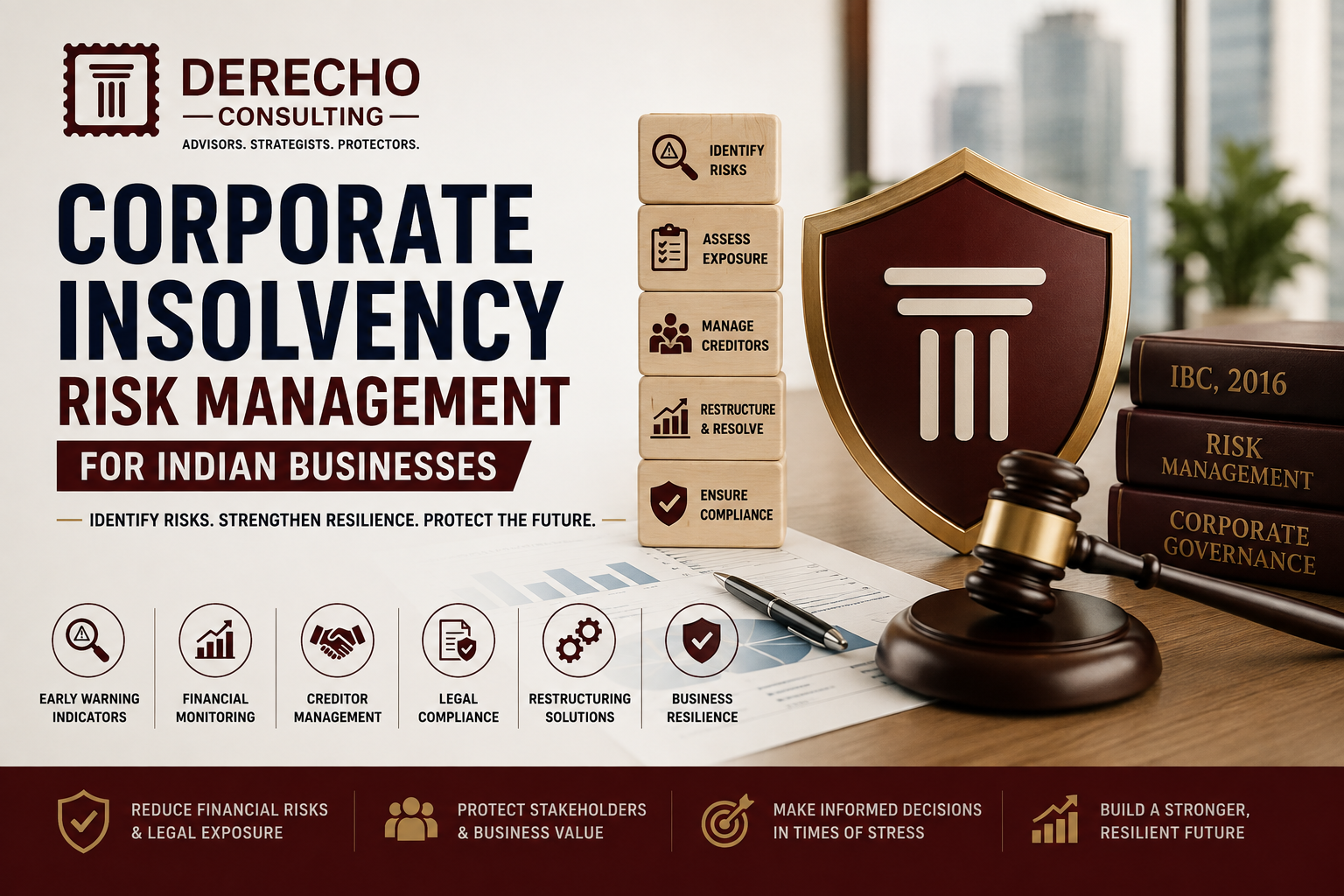
This guide explains Corporate Insolvency Risk Management for Indian Businesses, including early warning signs, creditor management, financial monitoring, legal compliance, documentation, restructuring considerations, insolvency proceedings, and practical strategies for reducing corporate insolvency risks.
Why Insolvency Risk Management Matters for Indian Businesses
Financial distress can affect a company’s ability to meet its operational, contractual, financial, and statutory obligations. If risks are not identified and addressed at an early stage, businesses may face increasing creditor pressure, legal proceedings, loss of stakeholder confidence, and potential insolvency-related consequences.
Effective Insolvency Risk Management can help businesses:
- Identify financial distress at an early stage.
- Monitor cash-flow and liquidity risks.
- Track outstanding creditor obligations.
- Strengthen financial and legal controls.
- Maintain accurate financial documentation.
- Manage creditor and stakeholder communications.
- Assess restructuring and resolution options.
- Reduce avoidable legal and financial exposure.
- Improve coordination between finance, legal, and management teams.
- Support informed corporate decision-making.
Key Areas of Insolvency Risk Management
1. Early Identification of Financial Distress
Businesses should establish processes for identifying early indicators of financial stress.
Companies should regularly monitor:
- Declining cash flows.
- Increasing debt obligations.
- Delayed payments to creditors.
- Persistent operating losses.
- Increasing borrowing costs.
- Difficulty meeting financial commitments.
- Growing creditor disputes.
- Significant reduction in working capital.
- Delays in statutory payments.
Early identification can give management more time to evaluate corrective measures.
2. Cash Flow and Liquidity Management
Cash-flow management is an important component of Insolvency Risk Management.
Businesses should regularly review:
- Cash inflows and outflows.
- Accounts receivable.
- Accounts payable.
- Working-capital requirements.
- Loan and interest obligations.
- Short-term liabilities.
- Upcoming payment commitments.
- Available funding sources.
Maintaining adequate liquidity can help companies manage operational obligations and reduce the risk of sudden financial distress.
3. Creditor and Lender Management
Effective communication with creditors and lenders can become particularly important when a company experiences financial difficulties.
Businesses should maintain proper records of:
- Outstanding creditor balances.
- Loan agreements.
- Repayment schedules.
- Security arrangements.
- Payment commitments.
- Disputed claims.
- Creditor correspondence.
- Settlement or restructuring discussions.
A structured approach can help management understand its obligations and evaluate available options.
4. Financial and Legal Due Diligence
Companies experiencing financial stress should conduct appropriate financial and legal reviews.
These reviews may cover:
- Financial statements.
- Debt obligations.
- Material contracts.
- Security interests.
- Litigation.
- Guarantees.
- Related-party arrangements.
- Statutory liabilities.
- Employee obligations.
- Significant contingent liabilities.
Identifying these obligations can help management understand the company’s overall financial and legal exposure.
5. Internal Controls and Corporate Governance
Strong internal controls can help businesses identify and manage insolvency-related risks more effectively.
Companies should review:
- Financial approval procedures.
- Cash management controls.
- Debt monitoring systems.
- Contract-management processes.
- Payment authorisation.
- Financial reporting.
- Board oversight.
- Risk escalation procedures.
Effective governance can support timely decision-making when financial difficulties arise.
6. Restructuring and Resolution Options
When a company experiences financial distress, management may evaluate whether restructuring or other resolution options are appropriate.
Depending on the circumstances, businesses may consider:
- Debt restructuring.
- Creditor negotiations.
- Refinancing.
- Business restructuring.
- Asset monetisation.
- Operational cost reduction.
- Formal resolution mechanisms.
The appropriate strategy should be evaluated based on the company’s financial position, creditor interests, contractual obligations, and applicable law.
7. Insolvency Proceedings and Legal Compliance
Where financial distress progresses to formal insolvency proceedings, companies and their stakeholders may have significant legal and procedural obligations.
Businesses should ensure that they:
- Maintain accurate corporate records.
- Preserve relevant financial documents.
- Respond appropriately to legal notices.
- Track important procedural deadlines.
- Cooperate with authorised professionals and authorities.
- Maintain transparent financial information.
- Obtain appropriate legal and financial advice.
The Insolvency and Bankruptcy Code, 2016 (IBC) provides India’s principal framework for time-bound insolvency resolution of corporate persons and other specified categories of debtors.
8. Documentation and Evidence Management
Proper documentation is essential when managing financial distress or potential insolvency proceedings.
Businesses should maintain organised records relating to:
- Financial statements.
- Bank records.
- Loan agreements.
- Invoices.
- Purchase and sales records.
- Tax records.
- Employee liabilities.
- Creditor claims.
- Board resolutions.
- Material contracts.
- Legal correspondence.
- Restructuring discussions.
Well-maintained records can help businesses substantiate their financial position and respond more effectively to legal and regulatory requirements.
Common Insolvency Risks for Indian Businesses
Indian businesses may face insolvency risks due to:
- Poor cash-flow management.
- Excessive debt.
- Declining revenues.
- Persistent operating losses.
- Delayed creditor payments.
- Inadequate financial controls.
- Unmanaged contractual liabilities.
- Increasing litigation exposure.
- Poor working-capital management.
- Inadequate monitoring of financial obligations.
- Lack of early-warning systems.
- Delayed response to financial distress.
- Incomplete financial documentation.
Best Practices for Insolvency Risk Management
Businesses should consider the following practices:
- Maintain regular cash-flow forecasts.
- Monitor liquidity and working capital.
- Track debt and repayment obligations.
- Maintain a centralised creditor register.
- Review significant financial commitments.
- Conduct periodic legal and financial risk assessments.
- Strengthen internal financial controls.
- Maintain accurate corporate and financial records.
- Establish early-warning indicators for financial distress.
- Monitor significant litigation and contingent liabilities.
- Maintain appropriate communication with lenders and creditors.
- Evaluate restructuring options at an early stage.
- Ensure timely escalation of material financial risks.
- Coordinate finance, legal, compliance, and management teams.
2026 Insolvency Risk Considerations
The Indian insolvency framework continues to evolve, making regular monitoring important for businesses in 2026.
Companies should keep track of applicable developments relating to insolvency resolution, creditor rights, restructuring processes, regulatory requirements, and judicial decisions that may affect their obligations and risk-management strategies.
Businesses experiencing financial stress should also distinguish between ordinary commercial difficulties and circumstances that may require more immediate legal or financial intervention.
How Derecho Consulting Can Help
Derecho Consulting can help Indian businesses manage insolvency-related legal and compliance risks through corporate risk assessment, legal due diligence, regulatory analysis, contract reviews, documentation reviews, restructuring support, dispute-management assistance, corporate governance advisory, and compliance support.
A proactive approach to Insolvency Risk Management can help businesses identify financial and legal warning signs, understand their obligations, strengthen internal controls, and make informed decisions when dealing with creditors and other stakeholders.
Conclusion
Corporate Insolvency Risk Management for Indian Businesses is an important component of responsible corporate governance and financial risk management. Businesses should not wait until severe financial distress or formal insolvency proceedings arise before assessing their financial and legal exposure.
By monitoring cash flow, managing creditor obligations, maintaining accurate documentation, strengthening internal controls, identifying early warning signs, and evaluating restructuring or resolution options at the appropriate stage, businesses can better manage insolvency-related risks.
A proactive and well-documented approach to Insolvency Risk Management can help Indian businesses improve financial resilience, reduce avoidable legal exposure, strengthen corporate governance, and make more informed decisions during periods of financial stress.