
Introduction
TDS Compliance Risks are an important part of tax compliance for Indian businesses. Companies making payments such as salaries, professional fees, commissions, interest, rent, and contractor payments need to correctly identify applicable TDS obligations, deduct tax at the appropriate rate, deposit it within the prescribed timelines, and maintain proper documentation.
Effective TDS compliance requires businesses to maintain accurate records, monitor applicable tax provisions, complete statutory filings on time, and establish appropriate internal controls. A proactive approach can help businesses identify potential issues early and reduce unnecessary financial and regulatory exposure.
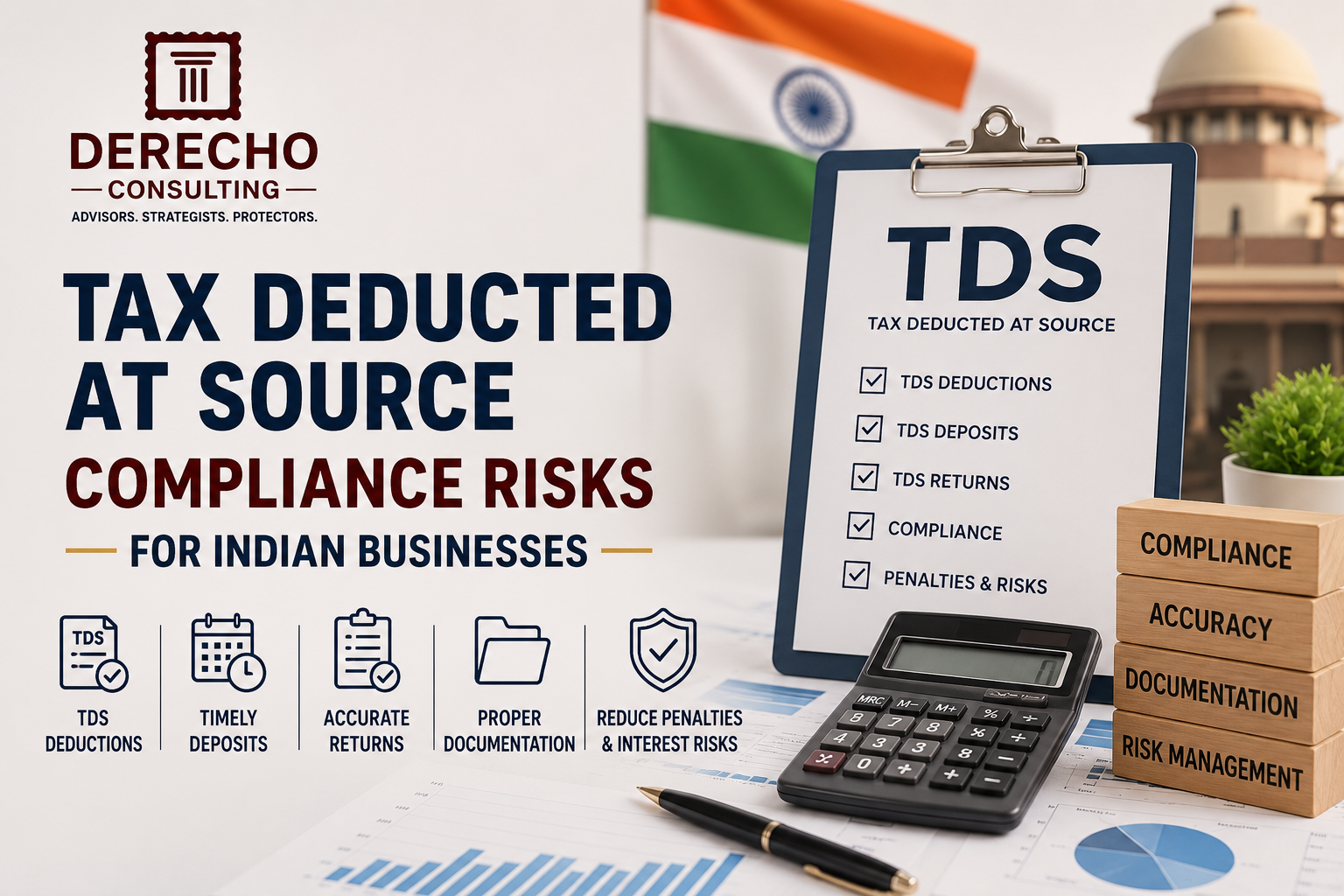
This guide explains TDS Compliance Risks for Indian Businesses, including TDS deductions, deposits, returns, documentation, reconciliation, notices, interest, penalties, and practical strategies for strengthening TDS compliance.
Why TDS Compliance Risk Management Matters
Effective TDS compliance helps businesses identify applicable deduction obligations, deduct tax correctly, deposit it within prescribed timelines, file accurate statements, and maintain proper documentation.
TDS-related errors can create financial, administrative, and regulatory challenges for businesses. Incorrect deductions, delayed deposits, inaccurate returns, or inadequate documentation may result in interest, penalties, tax demands, notices, and additional compliance requirements.
Effective TDS Compliance Risk Management can help businesses:
- Identify potential TDS issues at an early stage.
- Apply the appropriate TDS provisions to business payments.
- Maintain proper TDS and financial documentation.
- Deposit deducted tax within applicable timelines.
- File accurate TDS statements and returns.
- Reduce avoidable interest and penalty exposure.
- Improve reconciliation between accounting and TDS records.
- Strengthen internal tax compliance controls.
- Improve coordination between tax, finance, payroll, and legal teams.
Key Areas of TDS Compliance Risk Management
1. Identifying Applicable TDS Requirements
Businesses should establish a proper process for reviewing payments and determining whether TDS requirements apply.
Each payment should be carefully assessed to identify:
- The nature of the payment.
- The applicable TDS provision.
- The applicable deduction rate.
- The timing of deduction.
- The recipient’s tax status and information.
- Applicable thresholds and conditions.
- Documentation required for the transaction.
Proper classification of payments can help businesses reduce the risk of incorrect or missed TDS deductions.
2. TDS Deduction and Deposit
Businesses should ensure that TDS is deducted correctly and deposited within the applicable statutory timelines.
Companies should regularly monitor:
- TDS deductions.
- Applicable deduction rates.
- Deduction dates.
- TDS payment deadlines.
- Challan details.
- Accounting entries.
- Reconciliation of deductions and deposits.
Timely monitoring can help prevent avoidable interest and compliance issues.
3. TDS Returns and Reporting
Accurate TDS reporting is an important part of TDS compliance.
Businesses should review their TDS statements for:
- Correct PAN details.
- Correct taxpayer information.
- Accurate transaction details.
- Correct TDS amounts.
- Correct challan information.
- Proper reporting of deductions.
- Timely filing of applicable statements.
Errors in TDS reporting can create mismatches and may require subsequent correction and reconciliation.
4. TDS Certificates and Documentation
Proper documentation provides important support for demonstrating compliance.
Businesses should maintain appropriate records relating to:
- TDS deductions.
- TDS deposits.
- TDS returns.
- TDS certificates.
- Payment records.
- Invoices.
- Agreements and contracts.
- PAN and taxpayer information.
- Accounting records.
- Supporting correspondence.
Organised documentation can help businesses respond more effectively to tax queries, notices, and compliance reviews.
5. TDS Reconciliation and Internal Controls
Regular reconciliation can help businesses identify discrepancies before they develop into larger compliance issues.
Companies should periodically compare:
- Accounting records.
- TDS ledgers.
- Tax deducted amounts.
- Tax deposited amounts.
- TDS returns.
- Challan records.
- Vendor and employee information.
Strong internal controls can help identify errors, missing deductions, incorrect reporting, and reconciliation differences at an early stage.
6. Managing TDS Notices and Defaults
Businesses may receive communications or notices relating to TDS deductions, deposits, reporting, or mismatches.
Companies should establish a process for:
- Monitoring tax communications.
- Reviewing notices promptly.
- Identifying the relevant transaction or period.
- Collecting supporting documents.
- Preparing appropriate responses.
- Tracking response deadlines.
- Maintaining records of submissions.
Timely and well-supported responses can help businesses manage TDS-related compliance proceedings more effectively.
7. TDS Interest and Penalty Risks
TDS non-compliance may create additional financial exposure depending on the nature and circumstances of the default.
Businesses should assess:
- Potential tax liability.
- Interest exposure.
- Applicable penalty provisions.
- Financial impact.
- Compliance correction requirements.
- Possible dispute or resolution options.
Early identification of potential exposure can help management take appropriate corrective action.
Common TDS Compliance Risks for Indian Businesses
Indian businesses may face TDS Compliance Risks due to:
- Incorrect classification of payments.
- Failure to deduct TDS.
- Deduction at an incorrect rate.
- Incorrect PAN or taxpayer information.
- Delayed TDS deposits.
- Inaccurate TDS statements.
- TDS return filing errors.
- Mismatch between accounting and TDS records.
- Failure to issue applicable TDS certificates.
- Incomplete documentation.
- Incorrect reconciliation.
- Failure to monitor changes in tax provisions.
- Inadequate internal TDS controls.
Best Practices for TDS Compliance Risk Management
Businesses should consider the following practices:
- Maintain a centralised TDS compliance calendar.
- Track deduction and deposit deadlines.
- Review payment categories regularly.
- Verify applicable TDS provisions before making payments.
- Maintain accurate PAN and taxpayer information.
- Reconcile TDS records with accounting records.
- Review TDS statements before filing.
- Maintain complete supporting documentation.
- Track TDS notices and compliance communications.
- Conduct periodic internal TDS reviews.
- Document important tax-compliance decisions.
- Monitor changes in tax laws and regulations.
- Coordinate finance, payroll, tax, and legal teams.
2026 TDS Compliance Considerations
The tax environment in India continues to evolve, making regular monitoring particularly important for businesses in 2026.
Companies should review how applicable changes in tax legislation, TDS provisions, reporting procedures, digital tax administration, and compliance requirements affect their existing TDS processes.
Businesses should also review their payment classifications, deduction procedures, reporting systems, documentation, and internal controls to ensure that their TDS compliance framework remains aligned with the applicable legal requirements.
How Derecho Consulting Can Help
Derecho Consulting can help Indian businesses manage TDS-related legal and compliance risks through tax compliance advisory, TDS risk assessment, documentation reviews, regulatory analysis, compliance-process reviews, dispute-management support, tax governance, and corporate legal advisory.
A proactive approach to TDS Compliance Risk Management can help businesses identify potential deduction and reporting issues, strengthen internal controls, maintain proper documentation, and make informed decisions when dealing with tax authorities and compliance proceedings.
Conclusion
TDS Compliance Risks for Indian Businesses are an important component of effective corporate tax governance. Businesses should not wait until a TDS error results in a notice, demand, interest, or penalty before reviewing their compliance processes.
By correctly identifying TDS obligations, maintaining accurate records, making timely deductions and deposits, filing accurate statements, reconciling tax records, tracking deadlines, and strengthening internal controls, businesses can better manage TDS-related legal and financial risks.
A proactive and well-documented approach to TDS Compliance can help Indian businesses reduce avoidable tax exposure, improve regulatory compliance, strengthen financial processes, and maintain greater confidence in their overall tax governance framework.