
Introduction
Related Party Transaction Compliance is an important part of corporate governance for Indian companies that enter into transactions with directors, key managerial personnel, promoters, group entities, subsidiaries, associates, or other related parties. Proper compliance helps companies ensure that such transactions are conducted transparently, on appropriate terms, and in accordance with applicable legal and regulatory requirements.
Under the Companies Act, 2013, Section 188 covers specified contracts and arrangements with related parties, including transactions involving goods, property, leasing, services, appointments, and certain securities-related arrangements. Applicable approval and disclosure requirements depend on the nature and circumstances of the transaction.
For listed entities, additional requirements under the SEBI Listing Obligations and Disclosure Requirements framework apply to related party transactions, including requirements relating to Audit Committee and shareholder approvals and disclosures. SEBI has also issued updated standards and guidance concerning information required for approval of related party transactions.
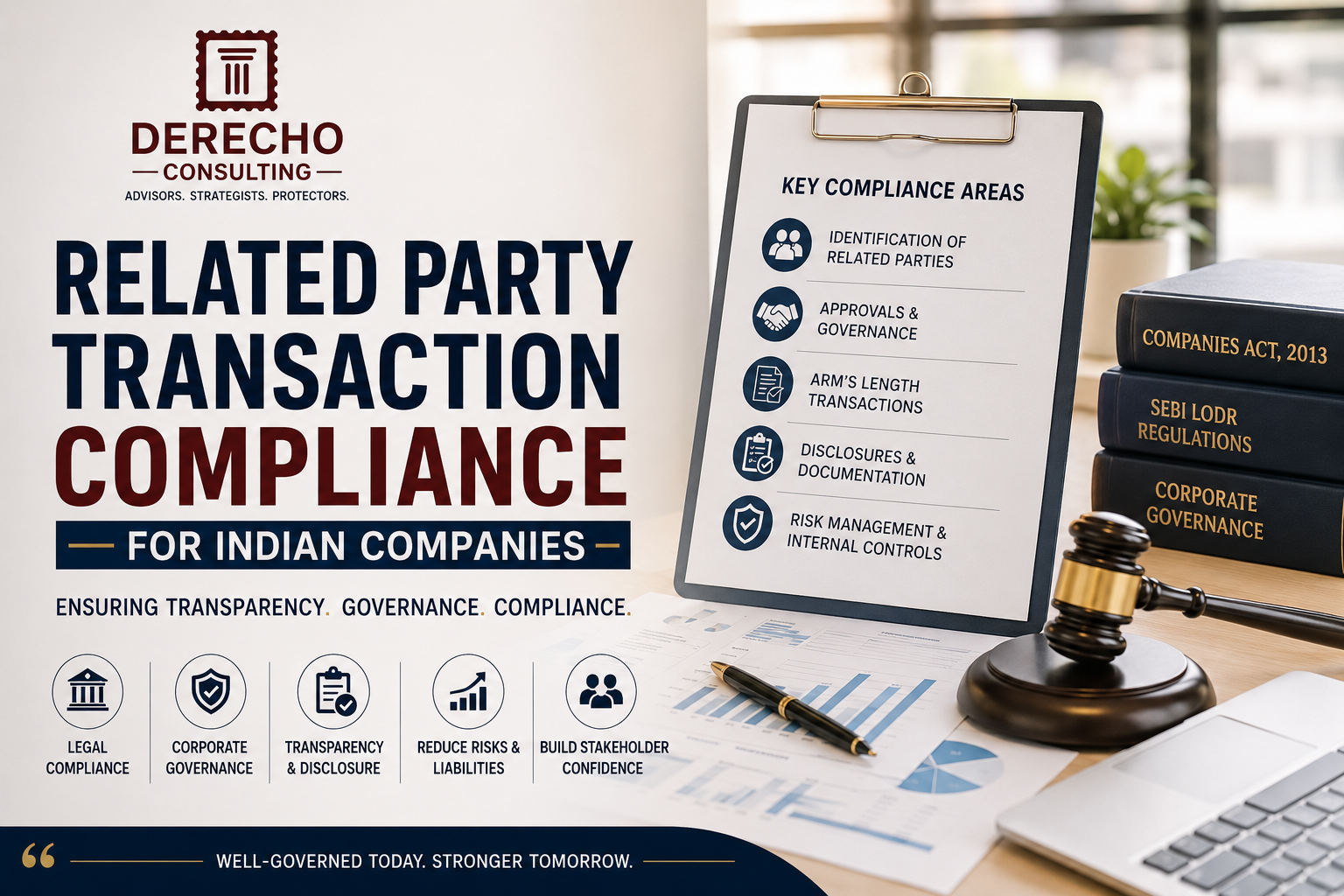
This guide explains Related Party Transaction Compliance for Indian Companies, including identification of related parties, approval requirements, arm’s-length transactions, ordinary-course transactions, disclosures, documentation, governance controls, compliance risks, and practical strategies for managing related party transactions.
Why Related Party Transaction Compliance Matters
Related party transactions can create potential conflicts of interest and governance concerns if they are not properly identified, reviewed, approved, documented, and disclosed.
Effective Related Party Transaction Compliance can help companies:
- Identify related parties and covered transactions at an early stage.
- Ensure appropriate Board, Audit Committee, and shareholder approvals where applicable.
- Maintain proper transaction documentation.
- Assess whether transactions satisfy applicable arm’s-length and ordinary-course requirements.
- Strengthen corporate governance and transparency.
- Reduce conflicts of interest.
- Maintain accurate statutory and regulatory disclosures.
- Improve coordination between finance, legal, compliance, and secretarial teams.
- Reduce regulatory and reputational risks.
Key Areas of Related Party Transaction Compliance
1. Identification of Related Parties
Companies should maintain an accurate and regularly updated record of related parties.
The review may include:
- Directors and their relatives.
- Key managerial personnel.
- Promoters and promoter groups.
- Holding companies.
- Subsidiary companies.
- Associate companies.
- Entities connected through management or control.
- Other persons or entities covered by applicable law.
Proper identification is important because transactions may require additional review or approval when they fall within the applicable related party framework.
2. Identifying Related Party Transactions
Companies should establish processes for identifying transactions that may fall within the applicable related party transaction requirements.
These may include:
- Sale or purchase of goods or materials.
- Sale, purchase, or transfer of property.
- Leasing of property.
- Availing or rendering of services.
- Appointment of agents.
- Certain appointments or arrangements involving directors or their relatives.
- Other transactions covered by applicable corporate and securities regulations.
Section 188 specifically addresses several categories of contracts and arrangements involving related parties.
3. Board and Shareholder Approvals
Companies should determine whether a proposed related party transaction requires approval from the Board, shareholders, Audit Committee, or other applicable authority.
The approval process should consider:
- Nature of the transaction.
- Value of the transaction.
- Applicable statutory thresholds.
- Whether the transaction is in the ordinary course of business.
- Whether it is conducted on an arm’s-length basis.
- Whether the company is listed.
- Applicable SEBI requirements.
- Applicable exemptions.
For listed entities, Regulation 23 of the SEBI LODR framework contains additional requirements relating to related party transactions, including shareholder approval requirements in specified circumstances.
4. Arm’s-Length and Ordinary-Course Transactions
Companies should carefully evaluate whether related party transactions satisfy applicable arm’s-length and ordinary-course-of-business requirements.
Businesses should maintain appropriate evidence supporting:
- Pricing decisions.
- Commercial terms.
- Market comparisons.
- Business justification.
- Comparable transactions.
- Valuation reports where applicable.
- Approval and review procedures.
Proper documentation can help demonstrate that transactions were entered into on appropriate commercial terms.
5. Disclosure and Record Keeping
Accurate documentation and disclosure are important components of related party transaction compliance.
Companies should maintain records relating to:
- Details of related parties.
- Nature of relationships.
- Transaction details.
- Transaction value.
- Approval records.
- Board minutes.
- Audit Committee records where applicable.
- Shareholder resolutions where applicable.
- Agreements and invoices.
- Valuation or pricing documentation.
- Statutory disclosures.
Proper records can help companies demonstrate compliance during audits, regulatory reviews, and corporate governance assessments.
6. Audit Committee Oversight
For companies to which applicable requirements apply, the Audit Committee plays an important role in reviewing related party transactions.
The review process may involve assessing:
- Commercial rationale.
- Financial terms.
- Related party relationship.
- Pricing and valuation.
- Potential conflicts of interest.
- Applicable approvals.
- Disclosure requirements.
- Overall fairness of the transaction.
SEBI has issued standards specifying information to be provided for review and approval of related party transactions by Audit Committees and shareholders of listed entities.
7. Related Party Transaction Monitoring
Companies should establish continuous monitoring mechanisms rather than reviewing transactions only at the time of annual reporting.
Businesses should regularly monitor:
- New related parties.
- Changes in ownership or control.
- New contracts.
- Transaction values.
- Approval status.
- Applicable thresholds.
- Disclosure requirements.
- Changes in regulatory requirements.
Regular monitoring can help prevent transactions from being entered into without the required approvals or documentation.
Common Related Party Transaction Compliance Risks
Indian companies may face compliance risks due to:
- Failure to identify a related party.
- Incorrect classification of a transaction.
- Failure to obtain required approvals.
- Inadequate Audit Committee review.
- Failure to obtain shareholder approval where required.
- Transactions not adequately supported as arm’s length.
- Incomplete documentation.
- Incorrect statutory disclosures.
- Inadequate monitoring of transaction thresholds.
- Conflicts of interest.
- Failure to update related party records.
- Non-compliance with applicable SEBI requirements for listed entities.
SEBI has continued to update and review the regulatory framework surrounding related party transactions, including additional standards for information required for approvals and proposals concerning the SEBI LODR framework.
Best Practices for Related Party Transaction Compliance
Companies should consider the following practices:
- Maintain an updated related party register.
- Establish a centralised related party transaction register.
- Identify potential related party transactions before execution.
- Review applicable approval requirements.
- Maintain proper Board and committee documentation.
- Obtain shareholder approval where applicable.
- Maintain evidence supporting arm’s-length pricing.
- Document the commercial rationale for significant transactions.
- Reconcile related party transactions with accounting records.
- Review statutory and regulatory disclosures.
- Conduct periodic internal compliance reviews.
- Train relevant finance, legal, secretarial, and management teams.
- Monitor changes in Companies Act and SEBI requirements.
How Derecho Consulting Can Help
Derecho Consulting can help Indian companies manage related party transaction compliance through corporate governance advisory, transaction reviews, regulatory analysis, documentation reviews, compliance assessments, approval-process support, disclosure reviews, and corporate legal advisory.
A proactive approach to Related Party Transaction Compliance can help businesses identify potential compliance issues, strengthen governance controls, maintain appropriate documentation, and make informed decisions when entering into transactions with related parties.
Conclusion
Related Party Transaction Compliance for Indian Companies is an important component of effective corporate governance and regulatory risk management. Companies should not treat related party transactions as routine commercial arrangements without first assessing the applicable legal, approval, documentation, and disclosure requirements.
By maintaining accurate related party records, identifying covered transactions, obtaining appropriate approvals, evaluating arm’s-length and ordinary-course requirements, maintaining supporting documentation, and completing applicable disclosures, companies can better manage related party transaction risks.
A proactive and well-documented approach to Related Party Transaction Compliance can help Indian companies strengthen transparency, reduce conflicts of interest, improve corporate governance, and maintain greater confidence in their overall legal and regulatory compliance framework.