
Introduction
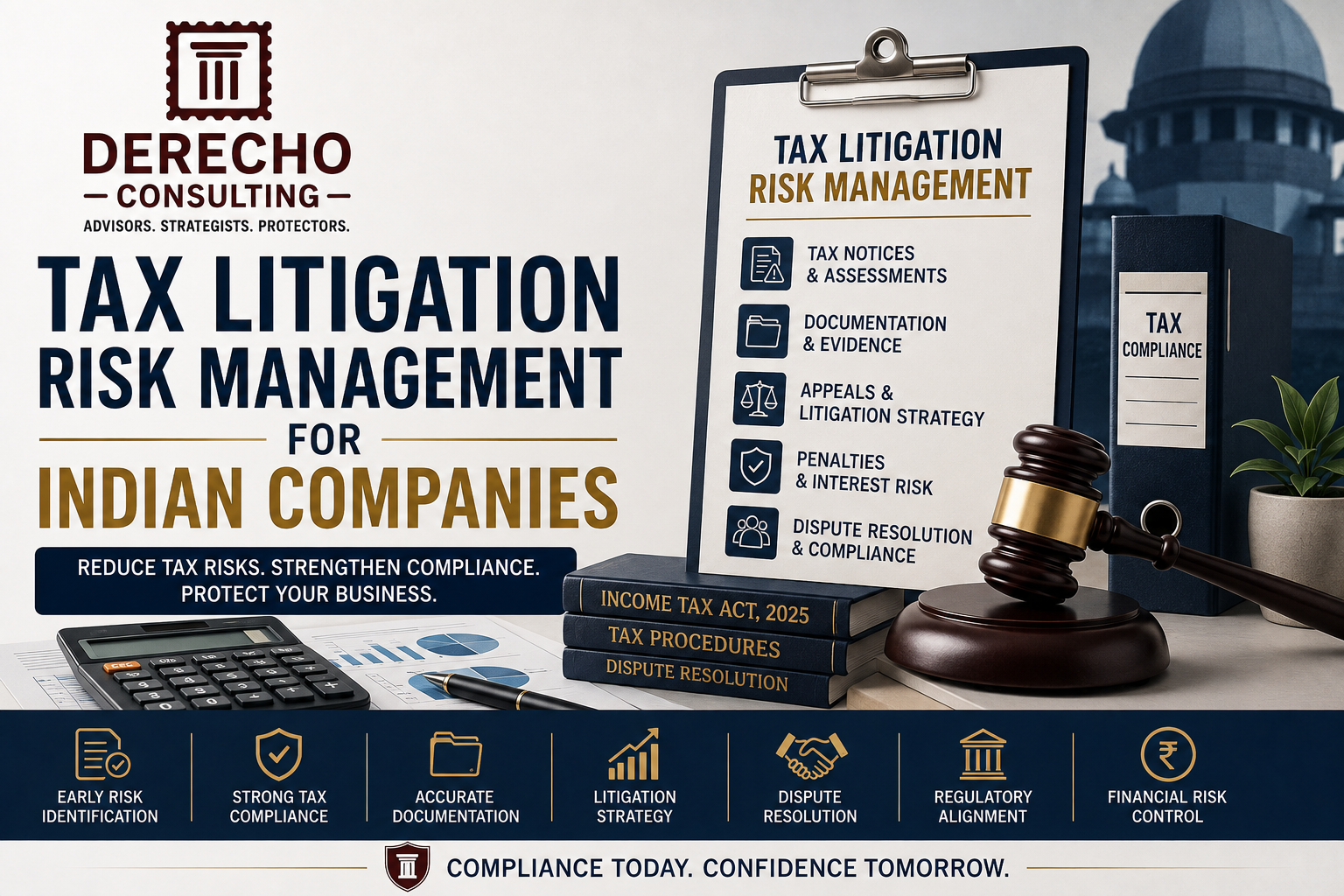
Tax Litigation Risk Management is an important part of corporate compliance for Indian companies dealing with tax assessments, notices, disputes, penalties, appeals, and regulatory proceedings. Effective tax litigation management helps businesses identify potential disputes early, maintain proper documentation, respond to tax authorities within prescribed timelines, and protect their financial and legal interests.
With India’s evolving tax framework, companies need to adopt a proactive approach to managing tax-related risks. Proper planning, accurate records, timely responses, and informed litigation strategies can help businesses reduce unnecessary exposure and handle tax disputes more effectively.
This guide explains Tax Litigation Risk Management for Indian Companies, including tax notices, assessments, documentation, penalties, appeals, dispute resolution, compliance controls, and practical strategies for reducing tax litigation risks.
Why Tax Litigation Risk Management Matters
Tax disputes can create financial, operational, and reputational challenges for businesses. Unresolved tax issues may result in additional tax demands, interest, penalties, litigation costs, and prolonged regulatory proceedings.
Effective Tax Litigation Risk Management can help companies:
- Identify potential tax disputes at an early stage.
- Maintain proper tax and financial documentation.
- Respond to tax notices within applicable timelines.
- Reduce avoidable penalties and interest exposure.
- Evaluate litigation and dispute-resolution options.
- Manage financial and operational risks.
- Strengthen internal tax compliance.
- Improve coordination between tax, finance, and legal teams.
Key Areas of Tax Litigation Risk Management
1. Tax Notices and Assessments
Companies should establish a proper process for receiving, reviewing, and responding to tax notices.
Each notice should be carefully reviewed to identify:
- The relevant assessment year or tax period.
- The applicable legal provision.
- The response deadline.
- Information or documents requested.
- Potential tax exposure.
- Supporting evidence required.
Timely and well-supported responses can help businesses present their position clearly before the tax authorities.
2. Tax Documentation and Record Keeping
Strong documentation is an important foundation of Tax Litigation Risk Management.
Companies should maintain appropriate records relating to:
- Revenue and business transactions.
- Expenses and deductions.
- Tax payments.
- TDS and withholding taxes.
- GST transactions.
- Related-party transactions.
- Transfer pricing.
- Tax exemptions and incentives.
- Financial statements.
- Supporting agreements and invoices.
Proper documentation can help businesses substantiate their tax positions when disputes arise.
3. Tax Compliance and Internal Controls
Tax litigation risks can often be reduced through strong internal compliance systems.
Companies should regularly review their:
- Tax filing processes.
- TDS compliance.
- GST compliance.
- Tax calculations.
- Documentation procedures.
- Approval processes.
- Reconciliation procedures.
- Regulatory reporting.
Periodic internal reviews can help identify potential issues before they develop into major disputes.
4. Managing Tax Penalties and Interest
Tax disputes may involve more than the underlying tax demand. Depending on the circumstances, companies may also face interest and penalty exposure.
Businesses should therefore assess:
- Potential tax liability.
- Interest exposure.
- Penalty provisions.
- Financial impact.
- Litigation costs.
- Possible dispute-resolution options.
Early assessment of the overall financial exposure can help management make informed decisions.
5. Tax Appeals and Litigation Strategy
When a company disagrees with a tax order, it should evaluate the available appellate remedies and applicable timelines.
Before proceeding with an appeal, businesses should consider:
- Strength of the legal position.
- Supporting evidence.
- Financial exposure.
- Applicable precedents.
- Probability of success.
- Cost and duration of litigation.
- Alternative dispute-resolution mechanisms.
A structured litigation strategy can help companies manage tax disputes more efficiently.
6. Faceless Tax Proceedings
Digital and faceless tax proceedings have changed the way businesses interact with tax authorities.
Companies should maintain effective systems for monitoring electronic communications, tracking notices, uploading documents, preparing responses, and maintaining records of submissions.
Proper digital compliance can help prevent missed deadlines and procedural difficulties.
7. Dispute Resolution
Companies should consider whether available dispute-resolution mechanisms may provide a more suitable alternative to prolonged litigation.
Depending on the nature of the dispute and applicable law, businesses may evaluate available settlement, resolution, revision, or appellate mechanisms.
The appropriate approach should be determined after considering the facts, legal position, financial exposure, and applicable eligibility requirements.
Common Tax Litigation Risks for Indian Companies
Indian companies may face tax litigation risks due to:
- Incorrect interpretation of tax provisions.
- Incomplete documentation.
- Incorrect tax calculations.
- Missed notice deadlines.
- Inadequate responses to tax authorities.
- TDS disputes.
- GST disputes.
- Transfer-pricing disputes.
- Disallowance of expenses.
- Penalty proceedings.
- Inadequate internal tax controls.
- Failure to monitor regulatory changes.
Best Practices for Tax Litigation Risk Management
Companies should consider the following practices:
- Maintain a centralised tax-dispute register.
- Track all tax notices and deadlines.
- Maintain complete supporting documentation.
- Conduct periodic tax-risk assessments.
- Review significant tax positions.
- Coordinate tax, finance, and legal teams.
- Maintain an organised appeal calendar.
- Assess potential financial exposure.
- Document important litigation decisions.
- Monitor changes in tax laws and regulations.
- Conduct periodic internal compliance reviews.
2026 Tax Compliance Considerations
The tax environment in India continues to evolve, making regular monitoring particularly important for businesses in 2026.
Companies should review how changes in applicable tax legislation, assessment procedures, digital tax administration, and dispute-resolution mechanisms affect their existing tax positions and ongoing proceedings.
Businesses should also distinguish between proceedings governed by earlier legislation and matters governed by the applicable current framework.
How Derecho Consulting Can Help
Derecho Consulting can help Indian companies manage tax-related legal and compliance risks through tax compliance advisory, litigation-risk assessment, documentation reviews, regulatory analysis, dispute-management support, tax governance, and corporate legal advisory.
A proactive approach to Tax Litigation Risk Management can help businesses identify potential disputes, strengthen their documentation, understand their legal position, and make informed decisions when dealing with tax authorities and proceedings.
Conclusion
Tax Litigation Risk Management for Indian Companies is an important component of effective corporate tax governance. Businesses should not wait until a tax dispute becomes a major litigation issue before taking action.
By maintaining accurate documentation, monitoring tax notices, strengthening internal controls, tracking deadlines, assessing litigation exposure, and developing a structured dispute strategy, companies can better manage tax-related legal risks.
A proactive and well-documented approach can help Indian businesses reduce avoidable tax exposure, improve compliance, and respond more effectively to tax disputes.