
Introduction
Creating a safe, respectful, and inclusive workplace is no longer just a matter of good business practice—it is a legal obligation. As workplace dynamics continue to evolve in 2026, employers must stay informed about workplace harassment laws, strengthen compliance programs, and foster environments where employees feel protected and valued.
Workplace harassment can take many forms, including sexual harassment, discrimination, bullying, verbal abuse, and retaliation. Failure to prevent or address such conduct can expose organizations to legal claims, financial penalties, reputational damage, and reduced employee morale. Employers have a responsibility to implement effective policies, investigate complaints promptly, and ensure compliance with applicable employment laws.
This guide explores workplace harassment laws, employer responsibilities, best practices for prevention, and how businesses can build a legally compliant and respectful workplace.
Understanding Workplace Harassment
Workplace harassment refers to unwelcome conduct based on characteristics such as race, gender, religion, age, disability, nationality, sexual orientation, or other protected characteristics that creates a hostile, intimidating, or offensive work environment.
Common types of workplace harassment include:
- Sexual harassment
- Verbal harassment
- Physical harassment
- Psychological harassment
- Workplace bullying
- Cyber harassment
- Discriminatory harassment
- Retaliation against employees who report misconduct
Organizations must recognize these behaviors and take immediate action to prevent and address them.
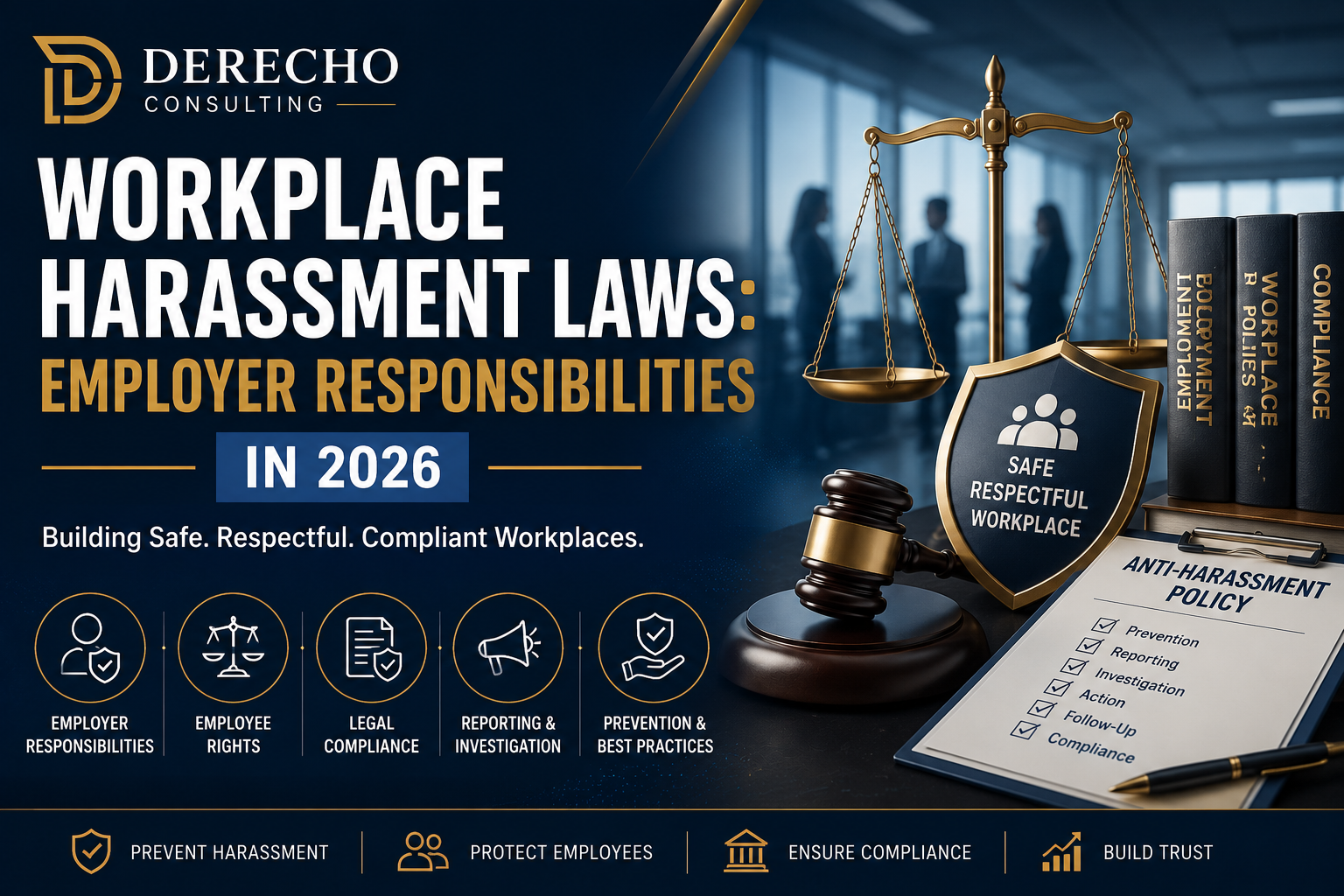
Employer Responsibilities Under Workplace Harassment Laws
Employers play a critical role in maintaining a harassment-free workplace. Their responsibilities generally include:
Develop Comprehensive Anti-Harassment Policies
Organizations should establish clear workplace harassment policies that define prohibited conduct, reporting procedures, and disciplinary actions.
Provide Regular Employee Training
Training helps employees and managers understand acceptable workplace behavior, reporting mechanisms, and legal obligations.
Encourage Safe Reporting
Employees should have access to confidential and accessible channels for reporting workplace harassment without fear of retaliation.
Conduct Prompt Investigations
Every complaint should be investigated fairly, confidentially, and without unnecessary delay.
Take Appropriate Corrective Action
Employers must respond appropriately when harassment is confirmed, including disciplinary measures and preventive actions.
Why Workplace Harassment Compliance Matters
Maintaining compliance with workplace harassment laws helps organizations:
- Protect employee well-being.
- Reduce legal risks.
- Improve workplace culture.
- Increase employee trust and retention.
- Strengthen organizational reputation.
- Minimize financial liability.
- Promote diversity, equity, and inclusion.
A proactive approach benefits both employees and employers.
Best Practices for Preventing Workplace Harassment
Businesses can reduce workplace harassment risks by implementing the following practices:
- Establish a zero-tolerance policy.
- Conduct annual compliance training.
- Encourage respectful workplace communication.
- Maintain confidential reporting systems.
- Document complaints and investigations.
- Review workplace policies regularly.
- Monitor workplace culture through employee feedback.
- Provide leadership accountability.
These preventive measures contribute to a safer and more productive work environment.
Legal Consequences of Non-Compliance
Failure to comply with workplace harassment laws may result in:
- Employee lawsuits
- Regulatory investigations
- Financial penalties
- Compensation claims
- Loss of business reputation
- Increased employee turnover
- Reduced workplace productivity
Employers should treat harassment prevention as an ongoing compliance priority.
How Technology Supports Compliance
Many organizations now use technology to improve workplace compliance by:
- Offering online reporting portals
- Providing digital compliance training
- Tracking investigations
- Monitoring policy acknowledgments
- Maintaining secure compliance records
- Generating audit reports
Technology helps organizations respond more efficiently while maintaining documentation.
How Derecho Consulting Can Help
Derecho Consulting helps businesses strengthen workplace compliance through legal guidance, policy development, compliance assessments, risk management strategies, and employee awareness programs. Our experts assist organizations in building effective workplace harassment prevention frameworks that align with evolving employment laws and regulatory requirements.
Conclusion
Workplace harassment laws continue to evolve, making employer responsibility more important than ever in 2026. Organizations that implement clear policies, provide employee training, encourage reporting, and respond promptly to complaints create safer workplaces while reducing legal and reputational risks.
By prioritizing compliance and fostering a culture of respect, employers not only meet their legal obligations but also build stronger, more inclusive organizations prepared for long-term success.