
Introduction
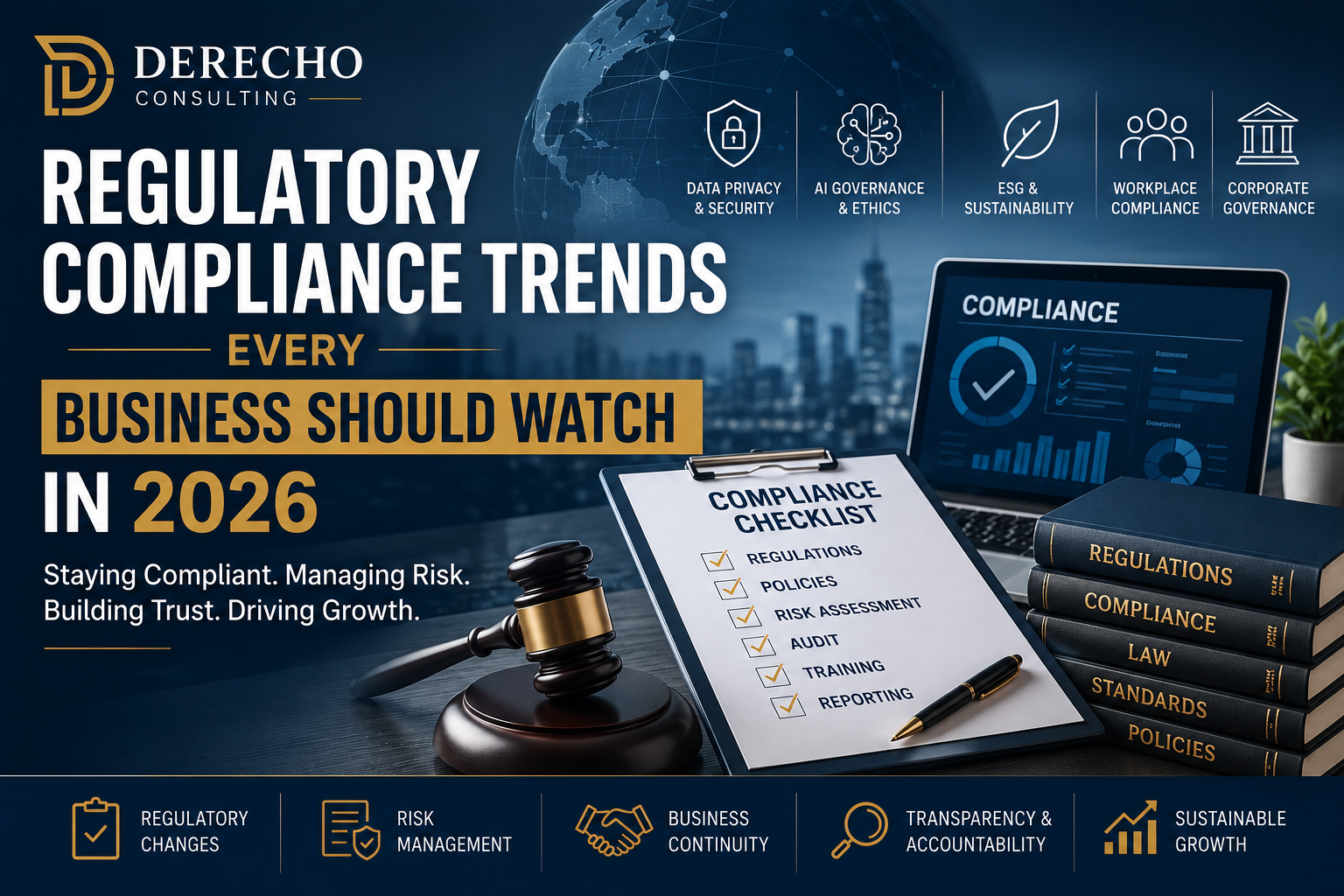
Regulatory Compliance Trends are evolving rapidly as governments introduce new laws and stricter enforcement measures to address emerging business risks. In 2026, businesses must stay updated on regulations related to data privacy, artificial intelligence, cybersecurity, ESG reporting, employment law, and corporate governance. Understanding these regulatory compliance trends helps organizations reduce legal risks, maintain compliance, and support sustainable business growth.
Understanding the latest regulatory compliance trends enables businesses to strengthen their compliance programs, reduce operational risks, and maintain stakeholder trust. By proactively monitoring regulatory developments and implementing effective compliance strategies, organizations can navigate an increasingly complex legal landscape while supporting sustainable growth.
This guide explores the most important regulatory compliance trends every business should watch in 2026 and how organizations can prepare for the future.
Why Regulatory Compliance Matters
Regulatory compliance ensures that businesses operate according to applicable laws, industry standards, and government regulations. A strong compliance framework helps organizations minimize legal risks while improving transparency, accountability, and operational efficiency.
Key benefits include:
- Reducing legal and financial risks
- Protecting business reputation
- Strengthening customer trust
- Improving corporate governance
- Enhancing operational efficiency
- Supporting long-term business growth
Top Regulatory Compliance Trends in 2026
AI Governance and Responsible AI
As artificial intelligence becomes more widely adopted, governments are introducing regulations that promote transparency, accountability, fairness, and ethical AI practices. Businesses using AI should establish governance policies, monitor automated decision-making systems, and ensure compliance with applicable regulations.
Stronger Data Privacy Requirements
Data privacy remains a major compliance priority. Organizations must strengthen data protection practices, secure customer information, manage consent effectively, and prepare for evolving privacy regulations.
Cybersecurity Compliance
Cyber threats continue to increase across industries. Businesses should invest in cybersecurity programs, conduct regular risk assessments, develop incident response plans, and comply with cybersecurity standards to protect sensitive information.
ESG and Sustainability Reporting
Environmental, Social, and Governance (ESG) reporting requirements are becoming more important worldwide. Companies are expected to improve sustainability practices, disclose environmental impacts, and demonstrate responsible corporate governance.
Workplace Compliance
Employers should continue strengthening workplace compliance through anti-harassment policies, employee safety programs, diversity initiatives, and updated employment practices that align with evolving legal requirements.
Third-Party Risk Management
Organizations increasingly rely on vendors and service providers. Businesses should assess third-party compliance risks, conduct due diligence, and continuously monitor supplier compliance.
Best Practices for Maintaining Compliance
Businesses can improve compliance by:
- Monitoring regulatory updates regularly
- Conducting compliance audits
- Training employees on compliance requirements
- Maintaining accurate documentation
- Using compliance management technology
- Reviewing internal policies annually
- Performing risk assessments
- Consulting legal professionals when needed
Common Compliance Challenges
Organizations may face:
- Frequently changing regulations
- Complex international compliance requirements
- Cybersecurity threats
- Limited compliance resources
- Vendor compliance risks
- Data privacy obligations
A proactive compliance strategy helps businesses overcome these challenges effectively.
How Technology Supports Compliance
Modern compliance programs benefit from:
- Compliance management software
- AI-powered risk monitoring
- Automated reporting
- Document management systems
- Cybersecurity monitoring tools
- Compliance dashboards
Technology enables organizations to improve efficiency while reducing compliance risks.
How Derecho Consulting Can Help
Derecho Consulting helps businesses navigate evolving regulatory requirements through compliance assessments, legal advisory services, policy development, risk management strategies, corporate governance support, and regulatory compliance programs. Our experts help organizations remain compliant while adapting to changing legal and regulatory environments.
Conclusion
Regulatory compliance trends continue to shape the future of business in 2026. Organizations that proactively monitor regulatory developments, strengthen governance, improve cybersecurity, and invest in effective compliance programs are better positioned to manage risks and achieve sustainable growth.
By staying informed and implementing best practices, businesses can maintain legal compliance, build stakeholder confidence, and remain competitive in an increasingly regulated environment.