
Introduction
Corporate Governance Priorities are becoming increasingly important as businesses enter the second half of 2026. Organizations must strengthen governance frameworks, improve compliance, manage emerging risks, and enhance board oversight to remain competitive and compliant.
Businesses today face increasing pressure to improve transparency, enhance accountability, protect sensitive information, and maintain strong internal controls. Regulatory changes, cybersecurity risks, artificial intelligence, data privacy requirements, and corporate ethics are reshaping how organizations manage governance across every level of the business. Companies that regularly review their governance frameworks are better prepared to reduce legal risks, improve decision-making, and build long-term business resilience.
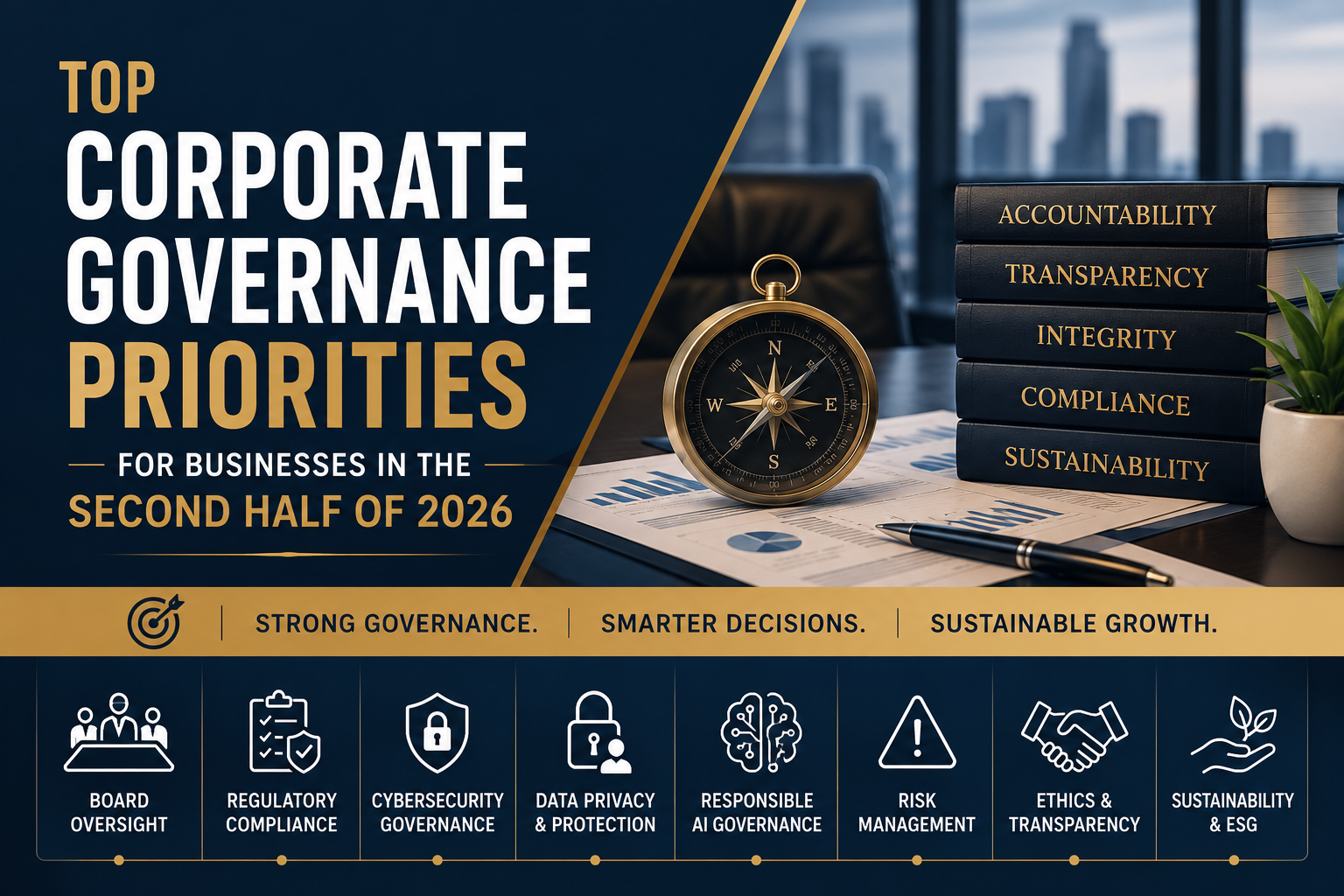
This guide explores the Top Corporate Governance Priorities for Businesses in the Second Half of 2026, highlighting the key governance areas organizations should review to strengthen compliance, improve corporate oversight, and support sustainable business growth.
Why Corporate Governance Matters in 2026
Corporate governance is more than a legal obligation. It provides the framework that helps businesses operate ethically, manage risks, protect stakeholder interests, and maintain regulatory compliance. Strong governance practices improve accountability, support strategic decision-making, and build confidence among investors, employees, customers, and regulators.
As legal and regulatory requirements continue to evolve, businesses should regularly review their governance policies to ensure they remain aligned with current compliance expectations.
1. Strengthen Board Oversight and Accountability
Boards of directors should actively oversee business operations, monitor strategic decisions, and evaluate organizational risks. Regular board meetings, clear governance policies, and documented decision-making processes help strengthen accountability and improve corporate governance.
2. Enhance Regulatory Compliance
Businesses should review applicable federal, state, and industry-specific regulations to ensure ongoing compliance. Updating internal policies and conducting periodic compliance reviews helps organizations respond effectively to changing legal requirements.
3. Improve Cybersecurity Governance
Cybersecurity remains one of the most important governance priorities in 2026. Businesses should establish clear oversight for cybersecurity risks, strengthen security controls, and develop incident response plans to protect sensitive business and customer information. Businesses should regularly review their Corporate Governance Priorities to improve compliance and governance.
4. Strengthen Data Privacy Governance
As privacy regulations continue to expand, organizations should review data protection policies, privacy notices, vendor agreements, and internal procedures. Effective data governance supports legal compliance while improving customer trust.
5. Establish Responsible AI Governance
Artificial intelligence is becoming part of everyday business operations. Organizations should develop governance frameworks that promote responsible AI use, manage potential risks, ensure transparency, and support compliance with emerging AI regulations.
6. Improve Enterprise Risk Management
Businesses should regularly assess operational, financial, legal, and strategic risks. A structured risk management program enables organizations to identify potential issues early and respond effectively before they affect business performance.
7. Promote Corporate Ethics and Transparency
Strong ethical standards support better governance. Businesses should maintain clear codes of conduct, encourage ethical decision-making, provide employee training, and establish reporting procedures that promote transparency throughout the organization.
Best Practices for Corporate Governance
Corporate governance should be reviewed throughout the year rather than treated as an annual compliance exercise. Regular governance assessments, internal audits, policy updates, board training, and compliance monitoring help organizations remain prepared for evolving legal and regulatory requirements.
Building a strong governance culture supports long-term business success while reducing legal, operational, and reputational risks.
Conclusion
The Top Corporate Governance Priorities for Businesses in the Second Half of 2026 highlight the growing importance of accountability, compliance, cybersecurity, data privacy, responsible AI, and enterprise risk management. Businesses that proactively strengthen their governance frameworks will be better positioned to adapt to regulatory changes, improve operational resilience, and build lasting stakeholder confidence. Following these Corporate Governance Priorities helps organizations strengthen governance and reduce legal risks.
By making corporate governance an ongoing priority, organizations can reduce compliance risks, support sustainable growth, and create a stronger foundation for long-term business success.