
Introduction
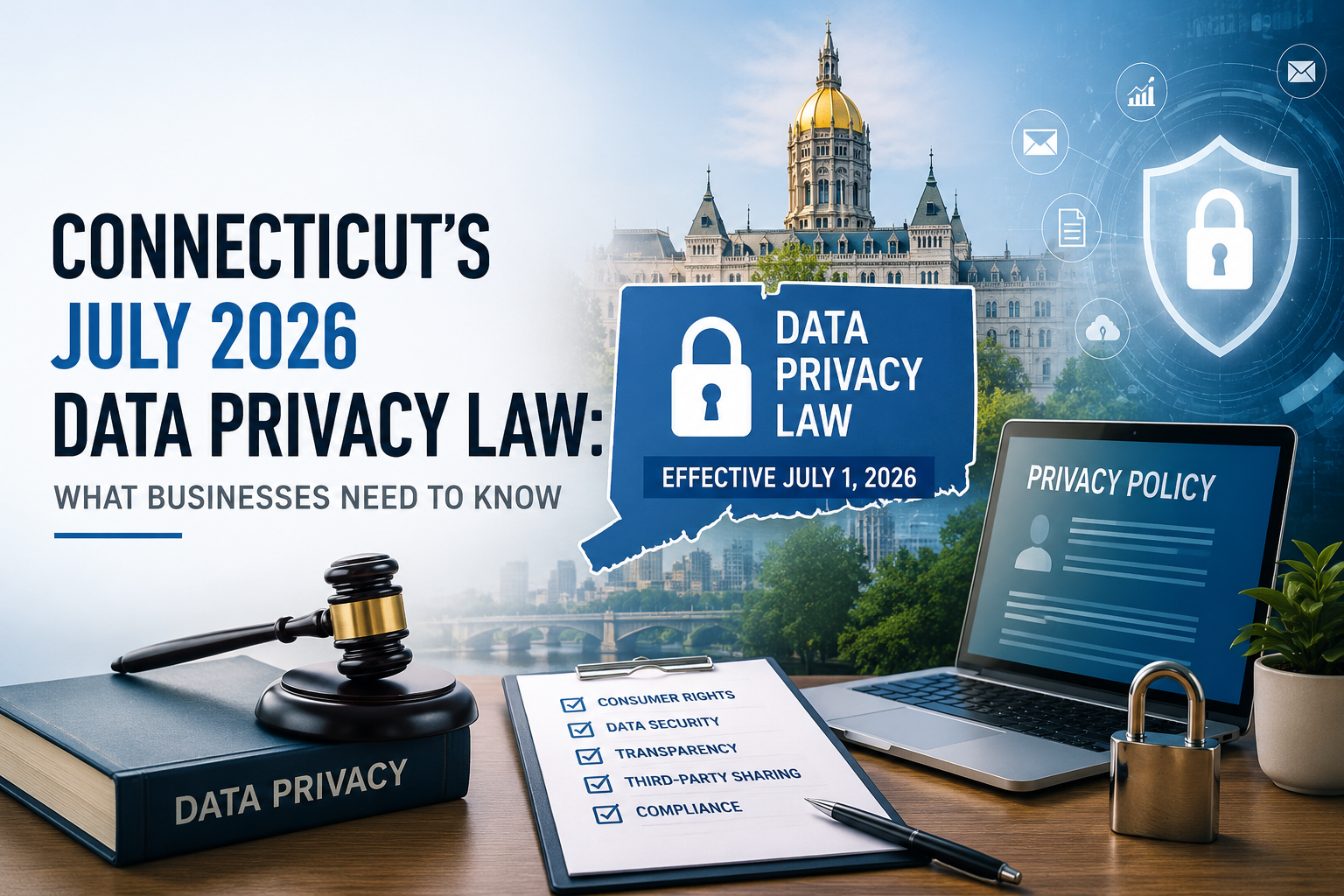
Connecticut Data Privacy Law introduces important compliance requirements for businesses handling consumer data in 2026. The July 2026 updates strengthen privacy protections and require organizations to review how they collect, process, store, and share personal information while maintaining compliance with evolving privacy regulations.
Whether your business operates within Connecticut or serves Connecticut residents through websites, digital platforms, or online services, understanding these legal changes is essential. Failure to comply with evolving privacy regulations can lead to regulatory investigations, financial penalties, reputational damage, and loss of customer trust. Organizations should review their privacy policies, internal procedures, and data governance frameworks to ensure they remain compliant with the latest legal requirements.
This guide explains Connecticut’s July 2026 Data Privacy Law, highlights the key compliance changes businesses should understand, and outlines practical steps organizations can take to strengthen their privacy programs while reducing legal and regulatory risks.
Why Connecticut’s Privacy Law Matters
Data privacy laws continue to expand across the United States, with individual states introducing their own consumer privacy requirements. Connecticut’s July 2026 updates reflect the growing emphasis on consumer rights, transparency, and responsible data handling.
Businesses that collect personal information should understand how these changes affect their legal obligations and why proactive compliance is becoming increasingly important.
1. Understand the New Privacy Requirements
Businesses should review the updated legal requirements introduced under Connecticut’s July 2026 privacy law. Organizations may need to evaluate how they collect, process, store, and share consumer information while ensuring their privacy practices align with the latest regulatory standards.
Understanding these requirements is the first step toward maintaining compliance.
2. Review Your Privacy Policy
An accurate and transparent privacy policy is essential for compliance. Businesses should clearly explain what personal information is collected, why it is collected, how it is used, and whether it is shared with third parties.
Regular updates help ensure privacy disclosures remain consistent with current business practices and legal obligations.
3. Strengthen Consumer Privacy Rights
Modern privacy laws provide consumers with greater control over their personal information. Businesses should establish procedures for responding to requests involving access, correction, deletion, and other applicable consumer privacy rights within required timeframes.
Businesses should review their policies to comply with the Connecticut Data Privacy Law.
Providing efficient request management demonstrates accountability and supports regulatory compliance.
4. Evaluate Data Security Practices
Protecting personal information remains a critical part of privacy compliance. Businesses should regularly review administrative, technical, and organizational safeguards designed to prevent unauthorized access, misuse, or disclosure of sensitive information.
Strong security practices help reduce legal risks while strengthening customer confidence.
5. Review Third-Party Data Sharing
Organizations should carefully evaluate how personal information is shared with vendors, service providers, marketing partners, and technology platforms. Contracts and data processing agreements should reflect current privacy obligations and clearly define each party’s responsibilities.
Transparent third-party data management supports stronger compliance programs.
6. Train Employees on Privacy Compliance
Privacy compliance depends on more than written policies. Employees who handle personal information should receive regular training on data protection responsibilities, internal privacy procedures, and evolving legal requirements.
Ongoing education helps reduce compliance risks caused by human error.
7. Establish an Ongoing Privacy Compliance Program
Privacy laws continue to evolve, making continuous compliance essential. Businesses should regularly monitor regulatory developments, conduct privacy audits, review internal policies, and update compliance programs whenever legal requirements change.
A proactive approach helps organizations remain prepared for future regulatory developments.
Best Practices for Connecticut Privacy Compliance
Businesses should treat privacy compliance as an ongoing business function rather than a one-time legal requirement. Regular policy reviews, accurate documentation, employee training, data security assessments, and periodic compliance audits help organizations maintain strong privacy governance while reducing operational and legal risks
Conclusion
Connecticut’s July 2026 Data Privacy Law highlights the growing importance of responsible data governance and consumer privacy protection. Businesses that review their privacy policies, strengthen internal controls, improve data security, and stay informed about changing legal requirements will be better positioned to maintain compliance and build lasting customer trust.
By taking a proactive approach to privacy compliance today, organizations can reduce regulatory risk, improve operational resilience, and confidently adapt to the evolving data privacy landscape in 2026 and beyond.