
Introduction
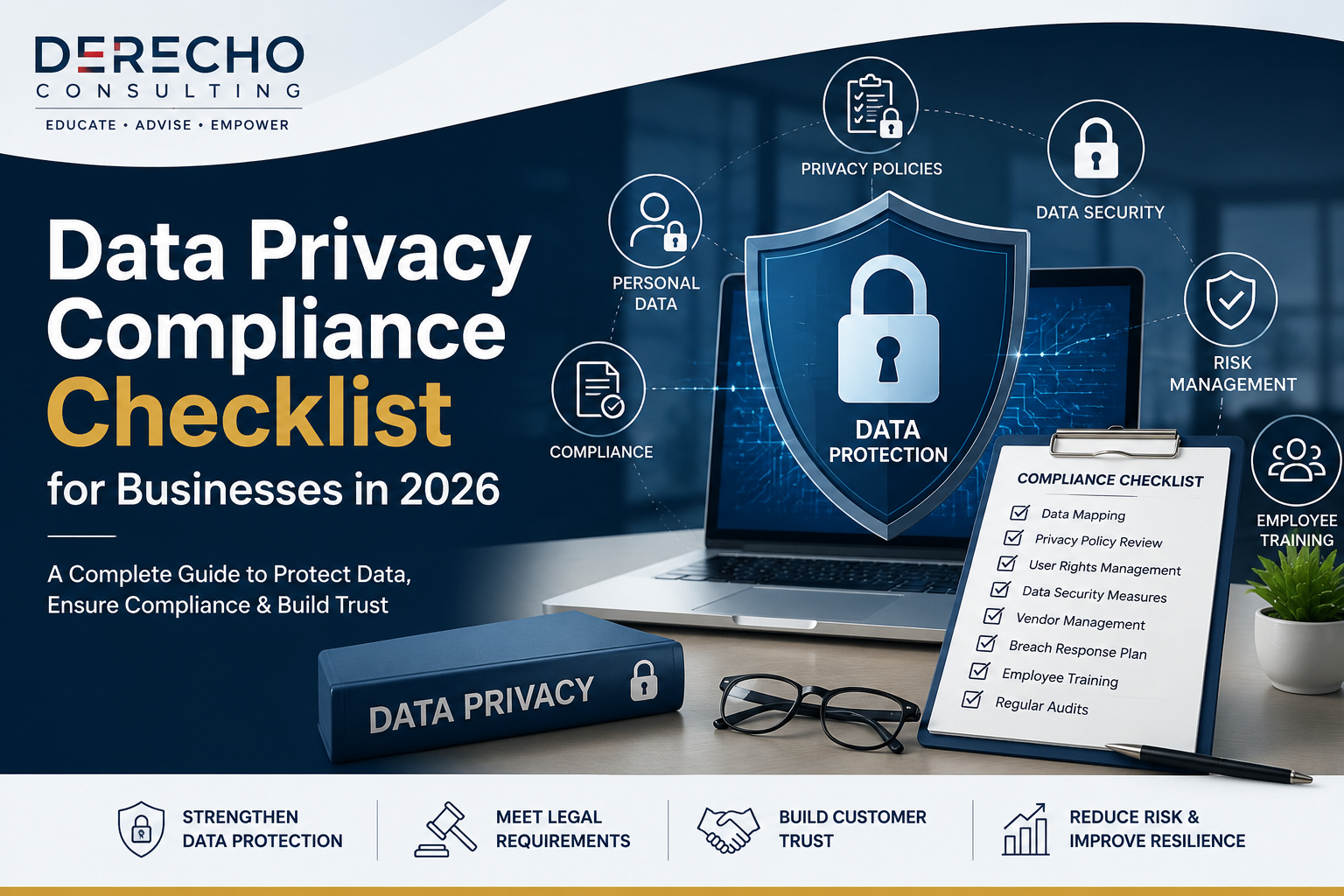
Data Privacy Compliance Checklist is essential for businesses in 2026 as privacy laws continue to evolve across the United States and globally. Organizations that collect, process, or store personal information should strengthen their privacy programs, improve data protection practices, and maintain compliance with changing legal requirements.
Failure to comply with data privacy regulations can result in regulatory investigations, financial penalties, operational disruptions, and reputational damage. Whether you operate a startup, a growing business, or a large enterprise, maintaining a strong privacy compliance program is essential for meeting legal obligations and protecting sensitive information.
This Data Privacy Compliance Checklist for Businesses in 2026 provides a practical guide to the key compliance areas organizations should review. It highlights the essential steps businesses can take to strengthen privacy governance, improve data protection, and remain compliant with evolving privacy regulations.
Why Data Privacy Compliance Matters in 2026
Data privacy is no longer just an IT responsibility. It has become a core business and compliance priority. Customers expect businesses to handle personal information responsibly, while regulators continue introducing stricter privacy requirements across multiple jurisdictions.
A well-structured privacy compliance program helps businesses reduce legal risks, improve transparency, strengthen cybersecurity, and build long-term customer confidence.
1. Identify the Personal Data You Collect
Businesses should understand what personal information they collect, where it is stored, how it is processed, and who has access to it. This includes customer information, employee records, website data, payment details, and marketing information.
Maintaining a complete data inventory helps organizations manage privacy obligations more effectively.
2. Review Your Privacy Policy
Privacy policies should clearly explain how personal information is collected, used, stored, shared, and protected. Businesses should review their privacy notices regularly to ensure they accurately reflect current business practices and comply with applicable privacy laws.
Clear privacy disclosures improve transparency and customer trust.
3. Strengthen Data Security Measures
Protecting personal information requires strong administrative, technical, and organizational safeguards. Businesses should regularly evaluate cybersecurity controls, encryption practices, access management, and incident response procedures to reduce security risks.
Effective security measures support both compliance and business continuity.
4. Manage Consumer Privacy Rights
Many privacy laws provide consumers with rights to access, correct, delete, or obtain copies of their personal information. Businesses should establish procedures for receiving, verifying, and responding to privacy requests within the required legal timeframes.
Efficient request handling demonstrates accountability and regulatory compliance.
5. Review Third-Party Data Sharing
Organizations should evaluate how personal information is shared with vendors, service providers, payment processors, cloud providers, and marketing platforms. Contracts should clearly define data protection responsibilities and compliance obligations for all third parties.
Responsible vendor management strengthens overall privacy governance.
6. Train Employees on Data Privacy
Employees play an important role in protecting personal information. Regular privacy awareness training helps staff understand company policies, recognize potential risks, and follow secure data handling procedures.
Well-informed employees help reduce compliance risks caused by human error.
7. Conduct Regular Privacy Audits
Privacy compliance should be monitored continuously rather than treated as a one-time project. Businesses should conduct periodic privacy audits, review internal policies, assess regulatory changes, and update compliance programs whenever necessary.
Regular assessments help organizations remain prepared for evolving privacy requirements.
Best Practices for Data Privacy Compliance
Businesses should integrate privacy into everyday operations by maintaining accurate documentation, reviewing policies regularly, strengthening cybersecurity, monitoring legal developments, and establishing a culture of compliance throughout the organization.
A proactive approach reduces regulatory risks while improving customer confidence and operational resilience.
Conclusion
Maintaining strong Data Privacy Compliance is essential for businesses operating in today’s digital environment. Organizations that understand their data practices, strengthen security measures, update privacy policies, and monitor regulatory changes are better positioned to protect personal information while meeting evolving legal requirements.
By following this Data Privacy Compliance Checklist for Businesses in 2026, organizations can improve privacy governance, reduce compliance risks, build customer trust, and create a stronger foundation for sustainable business growth.