
Introduction
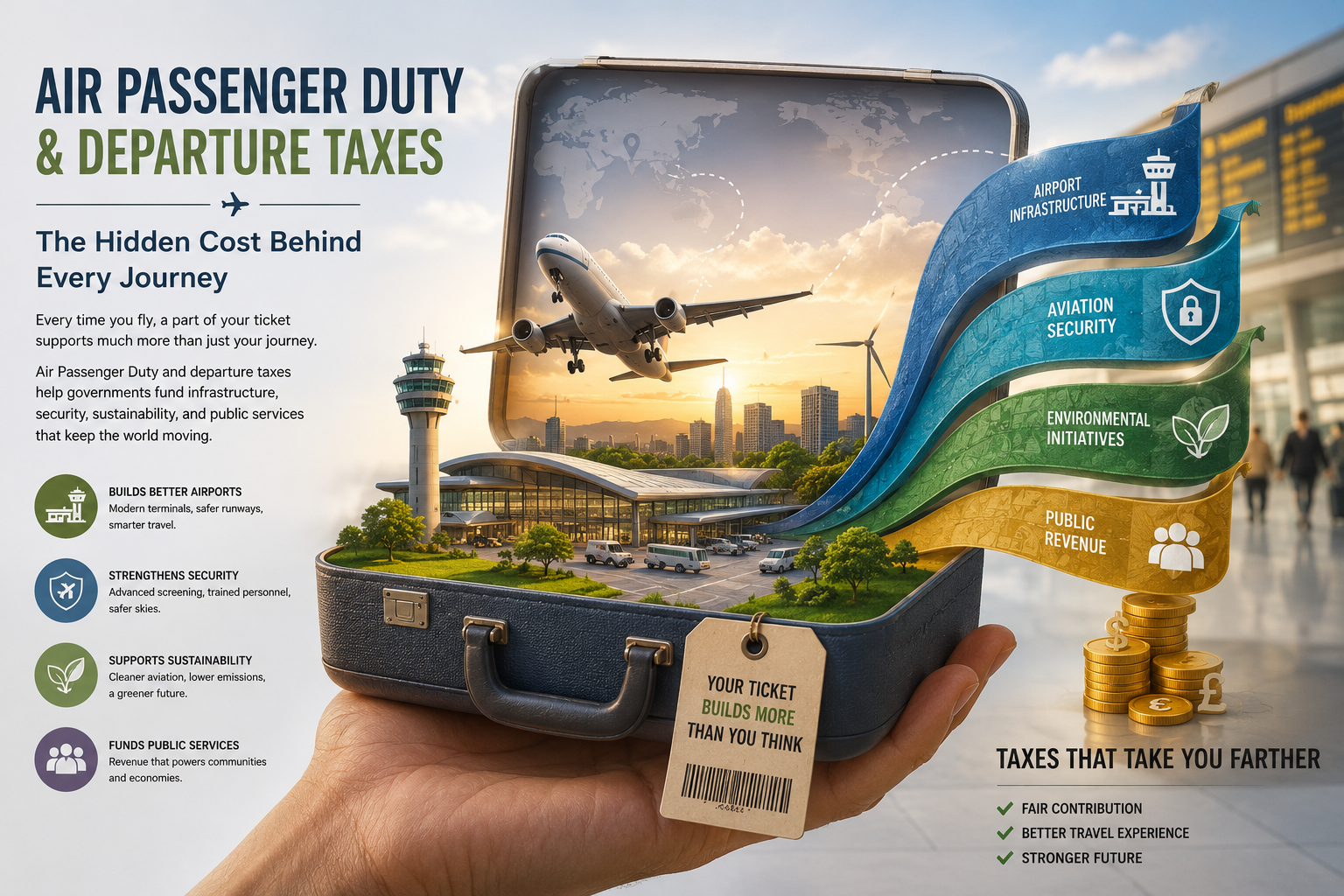
When booking flights, travelers often compare prices, schedules, baggage policies, and airline services. However, many don’t realize that a large part of the ticket price doesn’t actually go to the airline itself.
Within the fare are government-imposed charges, with Air Passenger Duty (APD) and departure taxes among the most significant. These fees can considerably increase travel costs, affect airline profits, influence tourism trends, and even shape environmental policies.
As global air travel expands, governments increasingly use aviation taxes strategically—not only to generate income but also to fund infrastructure, enhance airport services, and promote sustainability efforts.
A clear understanding of APD and departure taxes is important for aviation professionals, business travelers, policymakers, and anyone curious about the true economics behind air travel.
What Is Air Passenger Duty (APD)?
Air Passenger Duty, or APD, is a tax levied on passengers departing from airports in certain countries. Airlines collect this tax as part of the ticket price and then pay it to the government.
The UK’s APD system is the most well-known example, where the tax varies based on:
- Distance traveled
- Destination region
- Cabin class
- Flight type
Unlike airport fees, APD is purely a government tax, not kept by airlines or airports, but contributing directly to public revenue.
Passengers often don’t notice APD since it’s included in the ticket price, yet it remains a significant and steady income source for governments from the aviation sector.
Understanding Departure Taxes
Departure taxes refer to various charges applied to travelers leaving a country. While APD is one specific type, many countries impose additional fees under different names.
These may include:
- Passenger service fees
- Airport development charges
- Security fees
- Tourism taxes
- Environmental levies
- Border control and immigration fees
Though the specific purposes differ by country, the common goal is ensuring travelers contribute to costs related to aviation infrastructure and government services.
Often, passengers are unaware that multiple taxes and fees are combined into one ticket price.
Why Governments Tax Air Travel
At first glance, taxing airline passengers seems a straightforward revenue source. However, modern aviation taxes serve several strategic purposes.
Supporting Public Revenue
Air travel is a massive global industry, carrying billions annually. Governments view it as a reliable tax income stream.
Funds from APD and departure taxes help support:
- Public infrastructure projects
- Transportation networks
- Healthcare systems
- Education programs
- General government services
In some countries, aviation taxes provide hundreds of millions of dollars annually to national budgets.
Funding Airport Infrastructure
Airports require ongoing investment.
Expanding terminals, runways, security systems, baggage technology, and passenger amenities all demand substantial funds.
Departure taxes often assist governments and airport authorities in financing these projects without relying solely on taxpayers.
As passenger expectations rise, investments in infrastructure are crucial for maintaining efficient, competitive airports.
Enhancing Aviation Security
The aviation sector operates under stringent security standards.
Governments invest heavily in:
- Passenger screening systems
- Border control technologies
- Customs operations
- Security personnel
- Cybersecurity measures
Part of departure tax revenue frequently supports these essential services, ensuring safe travel for millions.
Encouraging Sustainable Travel
Environmental concerns now heavily influence aviation tax policies.
Air travel contributes significantly to global carbon emissions, putting pressure on governments to meet climate goals.
Hence, many policymakers see aviation taxes as tools to:
- Promote responsible travel choices
- Support sustainable aviation practices
- Fund environmental programs
- Encourage investments in cleaner technology
This evolution has transformed APD into a key element in environmental policy, beyond just a revenue source.
The Impact on Airline Ticket Prices
To grasp the effect of APD and departure taxes, consider a typical international flight.
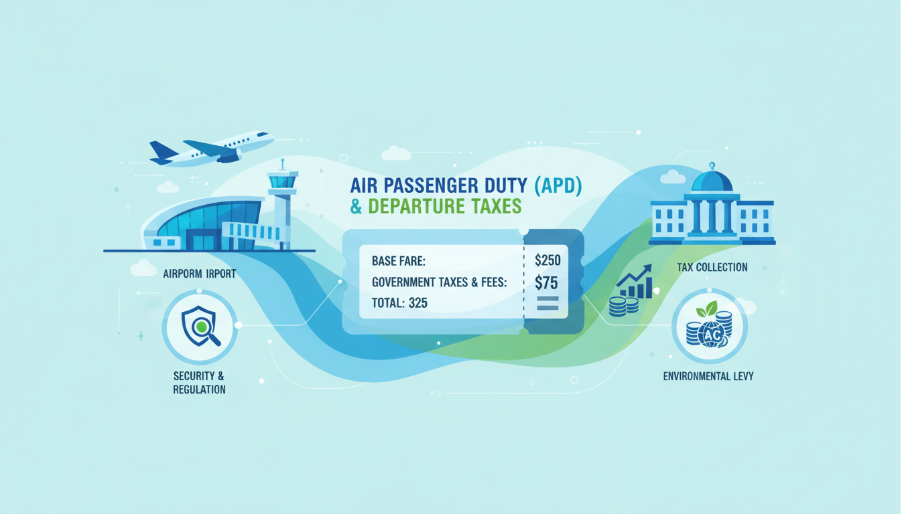
Passengers may assume the entire fare goes to the airline, but ticket prices usually include:
- Base airfare
- Airport charges
- Security fees
- Government taxes
- Fuel surcharges
- Passenger duties
In many markets, taxes and fees can make up a surprisingly large portion of the total ticket cost.
Long-haul, premium-class travelers often face much higher taxes than economy passengers, raising overall travel expenses.
This directly affects passenger choices and travel demand.
How Airlines Are Affected
Airlines compete in a highly competitive market.
Even small ticket price increases can change customer behavior.
When APD or departure taxes rise:
- Passenger demand may decline
- Route profitability can become challenging
- Competition from nearby airports may intensify
- Tourism may shift toward lower-tax destinations
Airlines closely monitor such tax policies and engage with governments on proposed changes.
Many argue that excessive aviation taxes hinder growth and reduce international competitiveness.
Real-World Scenario
Imagine two neighboring countries with flights to the same destination.
Country A imposes a high departure tax, while Country B has a lower tax.
A family planning a vacation may save hundreds by flying out of Country B.
Consequently:
- Travelers might choose alternative airports
- Airlines may shift capacity to lower-tax markets
- Tourism spending could cross borders
This shows how aviation taxes influence economic activity beyond just airlines.
The Debate: Revenue vs. Growth
The core debate around APD and departure taxes asks:
Should governments prioritize tax income or aviation industry growth?
Proponents say aviation should fairly pay for infrastructure, security, and environmental costs.
Opponents believe excessive taxes discourage travel, reduce tourism, and harm competitiveness.
Policymakers face the challenge of balancing necessary revenue without overburdening airlines and passengers.
As travel grows, this debate remains central to aviation policy discussions worldwide.
The Future of Aviation Taxes
Sustainability will likely shape the future of APD and departure taxes.
Governments are exploring taxes linked to:
- Aircraft fuel efficiency
- Carbon emissions
- Adoption of sustainable aviation fuels
- Environmental performance metrics
Technology is also changing tax management via automated reporting and digital compliance.
In coming years, aviation taxes may evolve from simple fees to sophisticated tools supporting both economic growth and environmental goals.
Conclusion
Air Passenger Duty and departure taxes are more than hidden fees on airline tickets. They represent a complex intersection of taxation, transport policy, environmental responsibility, and economic development.
They provide governments with vital revenue and funding. For airlines, they influence pricing and route economics. For travelers, they impact affordability.
As the aviation industry advances sustainability and innovation, these taxes will continue evolving. Understanding them reveals the broader economic forces shaping every flight.
Next time you book a ticket, remember part of the fare supports the infrastructure, security, and policies enabling global air travel.