
Introduction
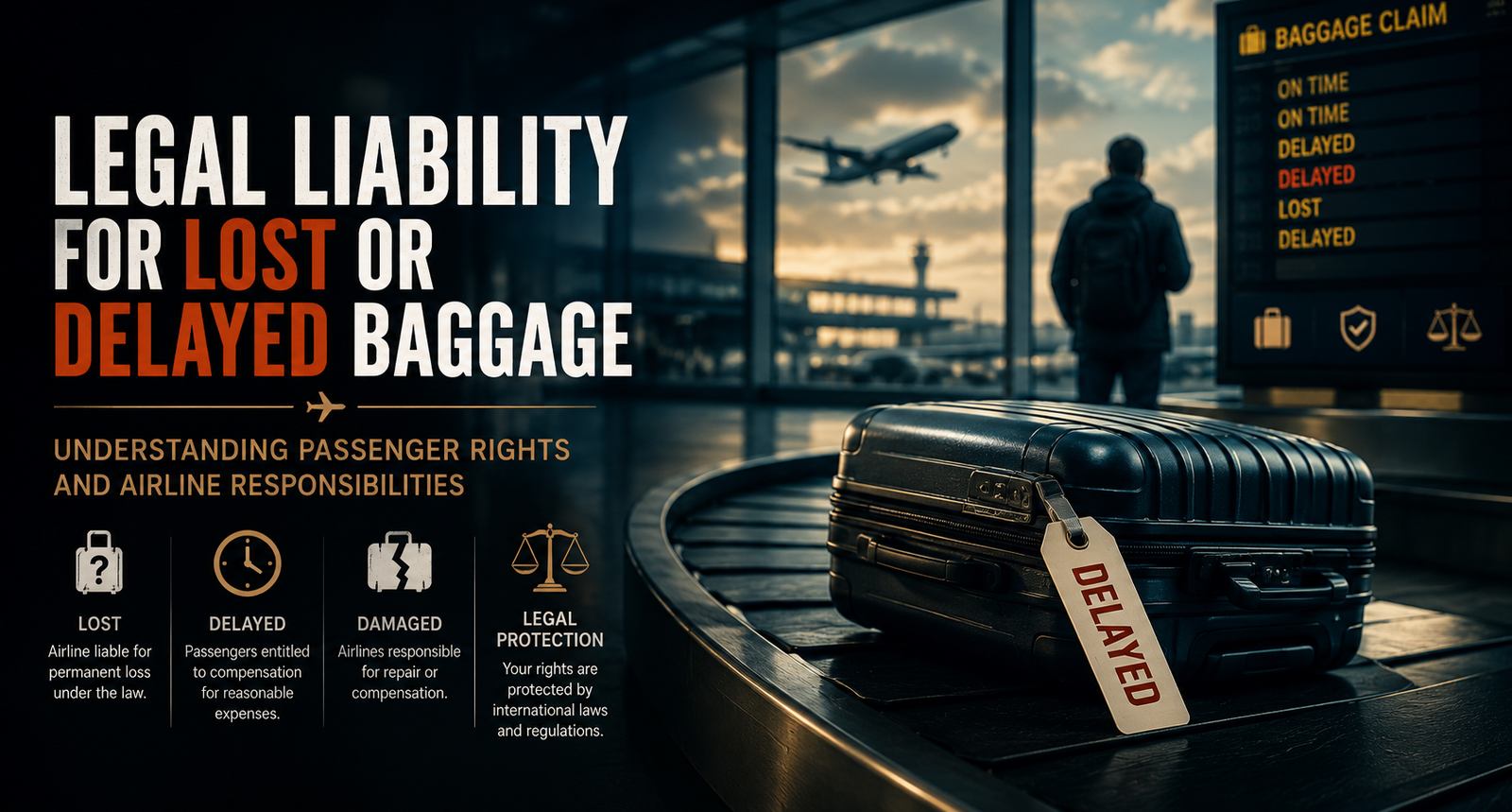
Air travel connects people across the globe, making journeys faster and more convenient than ever before. Each day, millions of passengers entrust airlines with their travel and personal belongings. Despite advances in baggage handling technology, lost, delayed, or damaged baggage remains a frequent source of frustration for travelers worldwide.
For many, baggage contains essential items — from clothing and electronics to medications and important documents. When baggage doesn’t arrive on time or goes missing, it can cause financial loss, disrupt travel plans, and create significant inconvenience and stress.
To protect passengers, international treaties, national laws, and airline policies clearly define airline responsibilities and passenger rights regarding baggage. Understanding the legal liability surrounding lost or delayed baggage empowers travelers to act confidently and ensures airlines uphold their obligations.
This article explores the legal principles, regulations, compensation processes, challenges, and future trends related to baggage liability in air travel.
What Is Baggage Liability?
Baggage liability refers to an airline’s legal responsibility when passengers’ checked luggage is:
Lost permanently
Delayed in delivery
Damaged during transport
Misdirected to another destination
Stolen while under airline custody
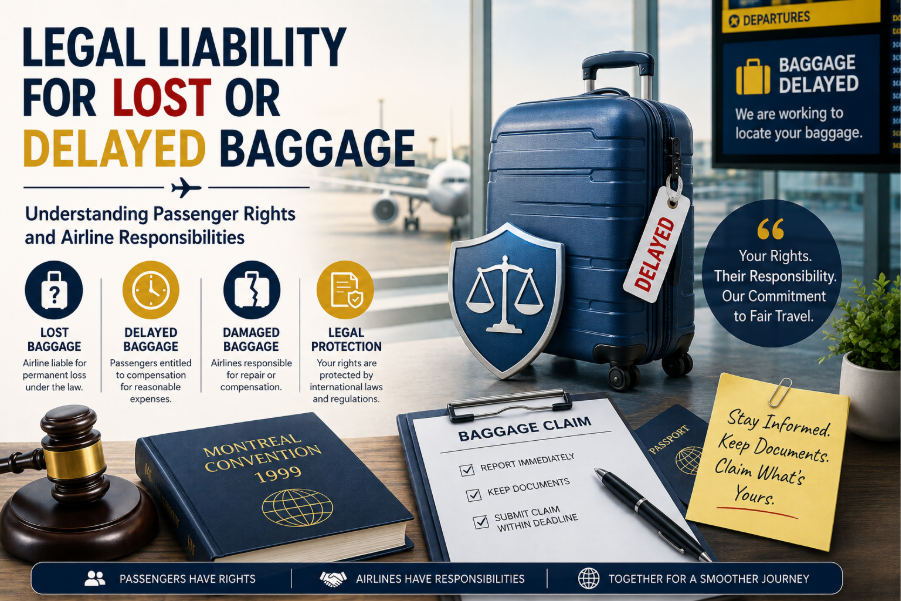
When you check your baggage, a contract forms between you and the airline, obligating the airline to transport your luggage safely to your destination. However, this liability is subject to defined limits and conditions under international and national laws.
Common Types of Baggage Issues
Delayed Baggage
Delayed baggage means your luggage arrives later than you do. Causes include connection mishaps, loading errors, security inspections, weather, and airport handling mistakes. While the luggage usually arrives eventually, delays can cause inconvenience and extra expenses.
Lost Baggage
Baggage is considered lost if it cannot be located within a certain period (often 21 days). Lost luggage often results from misrouting, labeling errors, theft, or system failures.
Damaged Baggage
Damage may include broken wheels, torn fabric, cracked cases, or missing contents. Airlines may compensate passengers depending on the damage’s extent and airline policies.
The International Legal Framework
The Montreal Convention (1999)
The Montreal Convention is the primary international treaty governing airline liability for baggage issues. Adopted by over 130 countries, it standardizes the rules airlines must follow worldwide.
Key aims of the Convention include:
Protecting passengers
Establishing clear compensation limits
Reducing legal conflicts
Ensuring fairness in international air travel
Liability Under the Montreal Convention
Under this treaty, airlines are liable for lost, delayed, or damaged baggage while under their custody. Compensation is capped at approximately 1,288 Special Drawing Rights (SDRs)—a monetary unit defined by the International Monetary Fund—unless higher declarations or additional fees apply.
Airline Liability in Practice
Delayed Baggage
If your baggage is delayed, airlines typically reimburse reasonable expenses for essentials like clothing, toiletries, and medication. Passengers must keep receipts and avoid unnecessary luxury purchases.
Lost Baggage
When baggage is permanently lost, airlines compensate for the actual or depreciated value of belongings. Documentation such as purchase receipts, photos, or inventories strengthens claims.
Liability Limits: What Airlines Typically Exclude
Airlines often exclude or limit liability for high-value or fragile items such as:
Cash, jewelry, and precious metals
Electronics like laptops and cameras
Business documents and securities
Fragile or perishable goods
Passengers are advised to carry valuables and fragile items in carry-on luggage.
National Laws and Consumer Protections
Alongside international treaties, many countries enforce their own regulations to protect air travelers. For example:
The United States mandates compensation rules through the Department of Transportation.
The European Union enforces strong passenger rights under EU consumer protection laws.
India’s Directorate General of Civil Aviation oversees airline compliance on baggage matters.
These laws often provide additional safeguards beyond international standards.
Navigating the Claims Process
Step 1: Report Immediately
Always file a Property Irregularity Report (PIR) at the airport before leaving, as this official document is key evidence.
Step 2: Keep Documentation
Save boarding passes, baggage tags, receipts, and any evidence of expenses incurred.
Step 3: Submit Claims Promptly
Most airlines require written claims within strict deadlines—usually 7 days for damage and 21 days for delayed baggage.
Real-Life Example: Business Traveler’s Lost Luggage
Imagine a consultant traveling for a crucial presentation. Their checked baggage, containing suits and documents, is lost due to transfer error. The airline compensates up to the Montreal Convention limit, but the traveler faces costly last-minute purchases and disrupted plans. This underscores the importance of carrying critical items onboard when possible.
Airline Defenses Against Liability
Airlines may reduce or deny claims if:
Passengers neglect labeling or packing rules
Damage arises from inherent defects in the baggage
Extraordinary events like natural disasters or security emergencies occur
The Role of Travel Insurance
Travel insurance often covers baggage loss or delay beyond airline limits, reimbursing theft, emergency purchases, and valuables. For frequent travelers, insurance provides valuable peace of mind.
Technology Improving Baggage Handling
Advances reducing lost baggage include:
RFID tracking for real-time luggage monitoring
Mobile apps for passenger updates
AI-driven systems optimizing routing and loading
Smart baggage tags minimizing labeling errors
These innovations are gradually reducing mishandling rates.
Emerging Legal Challenges
New issues arise with technology use:
Passenger privacy concerns with tracking data
Accountability in AI-driven decisions
Cross-border enforcement complexities in international claims
Regulators are adapting frameworks to keep pace.
Tips for Passengers
To protect yourself:
Label baggage clearly and photograph contents
Retain receipts and purchase travel insurance
Carry valuables and essential items in cabin baggage
Report issues promptly and document everything
Looking Ahead
Future baggage liability will be shaped by:
Digital claims processing
Enhanced customer transparency
Stronger international cooperation
Integration of emerging technologies
Passengers can expect improved experiences and protections moving forward.
Conclusion
While lost and delayed baggage remains a common challenge, understanding your legal rights and airline responsibilities equips you to manage baggage issues effectively. The Montreal Convention and national laws provide clear frameworks for compensation, but timely action and proper documentation are essential.
As technology advances and regulations evolve, the industry aims to minimize baggage mishandling and protect passengers worldwide. Until then, being informed and prepared remains your best defense on every journey.