
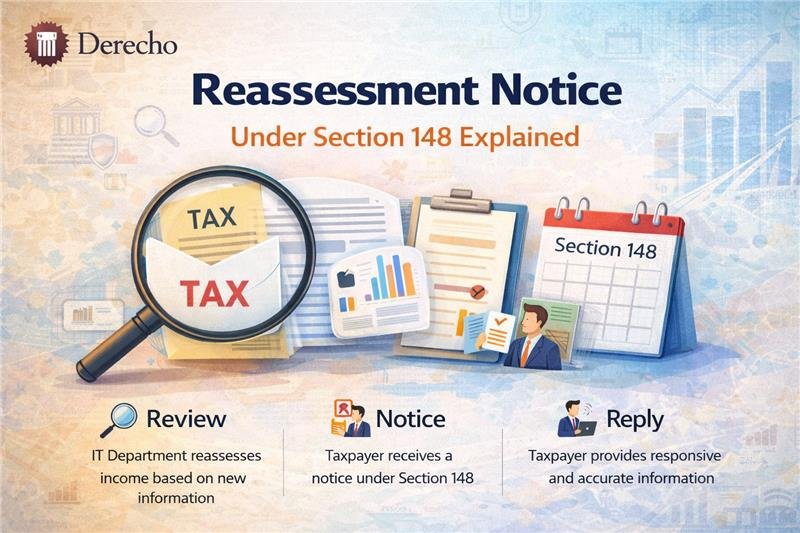
A Reassessment Notice under Section 148 is issued by the Income Tax Department when it believes that a taxpayer’s income has escaped assessment (i.e., not reported or underreported in earlier returns).
This process is governed under the Income Tax Act, 1961, specifically Sections 147 to 151.
What is Section 148 Notice?
A notice under Section 148 is:
- Issued to reopen previously filed income tax returns
- Used when the Assessing Officer suspects undisclosed income
- A legal opportunity given to the taxpayer to explain
Why is a Reassessment Notice Issued?
Common reasons include:
- Unreported income
- Mismatch in financial transactions
- High-value transactions not disclosed
- Information received from third parties
- Incorrect claims or deductions
Time Limits for Issuing Notice
- Up to 3 years → General cases
- Up to 10 years → If escaped income exceeds ₹50 lakhs and meets conditions
Procedure Before Issuing Notice
Before issuing Section 148 notice:
- Officer conducts preliminary inquiry
- Issues Section 148A notice (show cause)
- Provides opportunity to respond
- Passes order before issuing final notice
Step-by-Step Process After Receiving Notice
Step 1: Review the Notice
Carefully check details such as assessment year and reason.
Step 2: File Return in Response
Submit income tax return as per notice requirements.
Step 3: Analyze Reasons Provided
Understand why the reassessment is initiated.
Step 4: Submit Explanation
Provide proper documents and justification.
Step 5: Attend Proceedings
Respond to queries from the Assessing Officer.
Step 6: Assessment Order Passed
Officer passes reassessment order after review.
Step 7: Appeal (If Required)
Taxpayer can file appeal if dissatisfied with order.
Rights of Taxpayer
- Right to know reasons for notice
- Right to respond and provide evidence
- Right to be heard
- Right to appeal
Consequences of Ignoring Notice
- Penalties
- Additional tax liability
- Legal action
- Prosecution in serious cases
Benefits of Proper Response
- Avoid penalties
- Correct tax position
- Resolve disputes quickly
- Maintain compliance
Conclusion
A Section 148 reassessment notice is a serious legal communication but also an opportunity to clarify discrepancies. Timely response, proper documentation, and professional guidance can help resolve the matter efficiently.
Taxpayers should handle such notices carefully to avoid penalties and legal complications.