
IP Due Diligence refers to the process of identifying, verifying, and evaluating a startup’s Intellectual Property (IP) assets to ensure legal ownership, protection, and compliance. It is especially important during funding, mergers, acquisitions, or partnerships.
In India, IP rights are governed under laws such as the Patents Act, 1970, Trade Marks Act, 1999, and Copyright Act, 1957.

What is IP Due Diligence?
It is a legal review process to:
- Verify ownership of IP assets
- Identify risks or infringements
- Ensure proper registration and protection
Types of IP Covered
- Trademarks (brand names, logos)
- Patents (inventions)
- Copyrights (content, software)
- Trade Secrets (confidential business info)
Why is IP Due Diligence Important?
It helps startups:
- Attract investors
- Avoid legal disputes
- Protect innovation
- Increase business valuation
When is IP Due Diligence Required?
- Fundraising rounds
- Mergers & acquisitions
- Strategic partnerships
- Licensing agreements
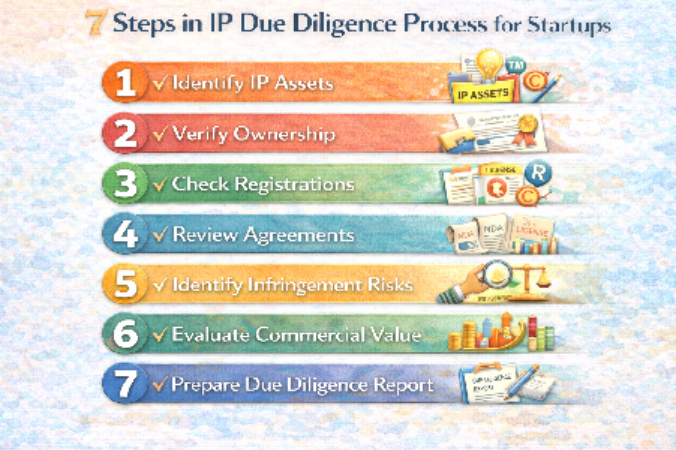
Step-by-Step IP Due Diligence Process
Step 1: Identify IP Assets
List all IP owned or used by the startup.
Step 2: Verify Ownership
Check whether IP is legally owned by the company (not founders/employees).
Step 3: Check Registrations
Ensure trademarks, patents, and copyrights are properly registered.
Step 4: Review Agreements
Examine:
- Employment agreements
- NDAs
- Licensing contracts
Step 5: Identify Infringement Risks
Check for any third-party IP violations or disputes.
Step 6: Evaluate Commercial Value
Assess the business value and monetization potential of IP assets.
Step 7: Prepare Due Diligence Report
Create a detailed report highlighting risks, ownership status, and recommendations.
Benefits of IP Due Diligence
- Legal clarity
- Stronger investor confidence
- Risk mitigation
- Higher valuation
Advantages
- Protects innovation
- Ensures compliance
- Prevents disputes
- Strengthens business strategy
Risks of Ignoring IP Due Diligence
- Ownership disputes
- Loss of IP rights
- Legal penalties
- Investment rejection
Conclusion
IP due diligence is a critical step for startups to safeguard their intellectual assets and ensure long-term growth. It not only protects innovation but also enhances credibility during investment and expansion.
Startups should proactively conduct IP due diligence to avoid legal risks and maximize the value of their intellectual property.