
1. Introduction
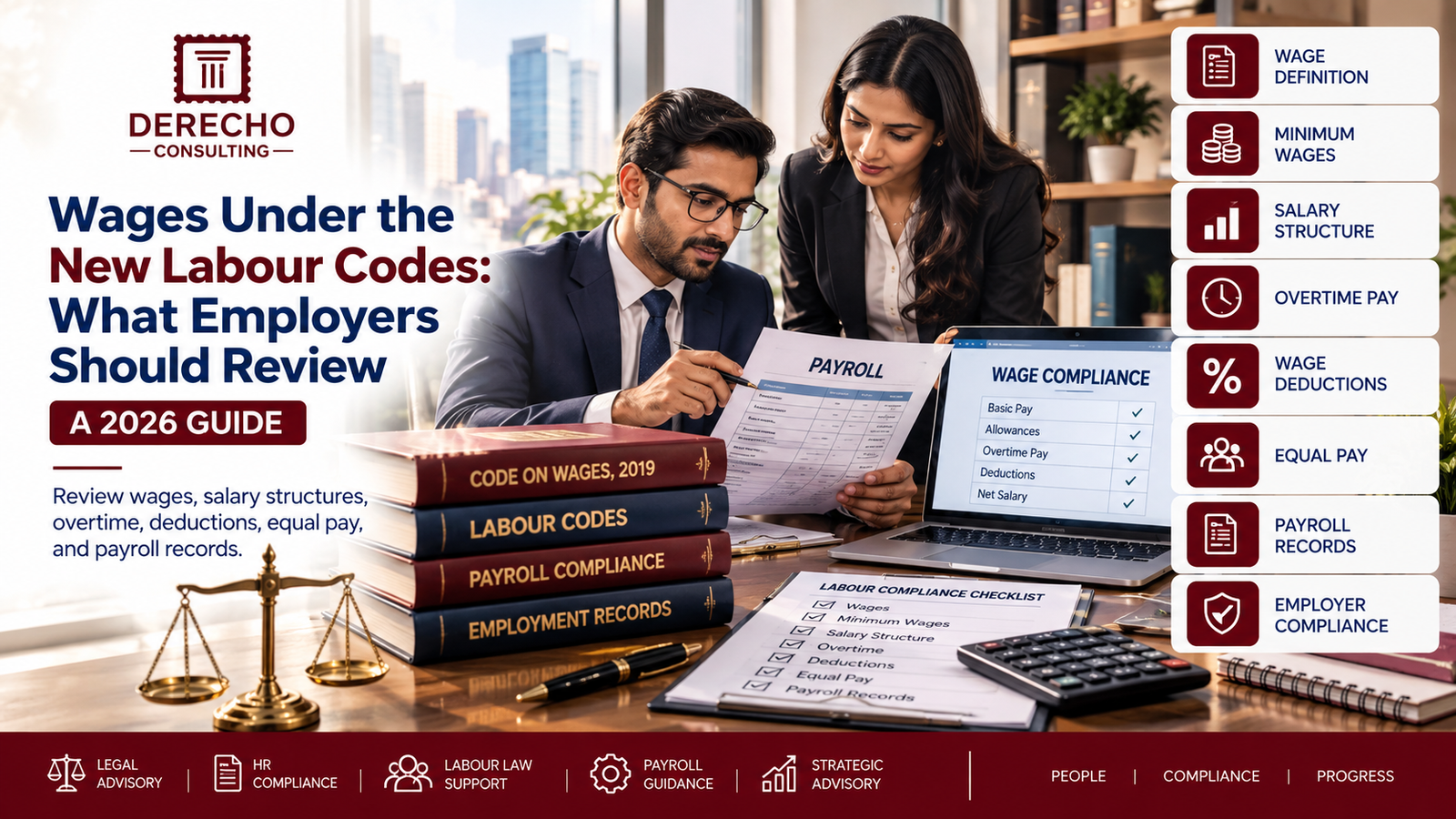
Wage Compliance is an important area for employers in 2026. India’s four Labour Codes came into effect on 21 November 2025. The Code on Wages, 2019 covers minimum wages, payment of wages, bonus, and related matters. Employers should now review their salary structures and payroll processes.
2. Understand the Definition of Wages
The Code on Wages defines wages mainly through basic pay, dearness allowance, and retaining allowance. Certain payments are excluded. However, excluded allowances above the prescribed percentage can be added back to wages. The Ministry has clarified that the revised definition applies from 21 November 2025.
3. Review Minimum Wage Requirements
Employers must pay at least the applicable minimum wage. Minimum wages are fixed by the appropriate government. They are different from the general definition of wages. Employers should therefore check the rate that applies to their employees, location, and employment category.
4. Check Salary Structures
Salary structures should be reviewed carefully. A large allowance component can affect the wage calculation. This may also affect certain statutory benefits. Employers should compare current salary structures with the new wage definition. They should update payroll calculations where required.
5. Review Wage Payment Dates
Employers should follow the prescribed timelines for wage payments. Monthly wages must be paid within the applicable time limit. Employers should also check final wage payments when an employee leaves. Clear payroll procedures can help prevent delays and disputes.
6. Check Overtime Payments
Overtime is another important area of Wage Compliance. Employees covered by the minimum-wage provisions can be entitled to overtime wages. The Ministry states that overtime should be paid at least at twice the normal rate of wages. Employers should review attendance records and overtime calculations.
7. Review Wage Deductions
Employers should also review deductions from wages. The Code places a limit on total deductions. The Ministry states that deductions are generally capped at 50% of wages. Payroll systems should therefore be checked for deductions relating to advances, loans, fines, absence, and other permitted items.
8. Check Equal Pay Requirements
Employers should review their pay practices for discrimination. The Code provides for non-discrimination in wages for the same or similar work. Recruitment practices should also follow the applicable gender equality requirements. Clear salary policies can support consistent payroll practices.
9. Update Payroll Records
Good Wage Compliance also depends on accurate records. Employers should maintain salary records, attendance records, overtime details, payslips, and deduction records. They should also review employment contracts and payroll systems. During the transition period, existing rules continue where they are consistent with the Labour Codes and until the applicable new rules are finally notified.
10. How Derecho Consulting Can Help
Wage Compliance involves more than changing a salary sheet. Employers may need to review contracts, payroll systems, wage calculations, and internal policies. Derecho Consulting can assist with Labour Code reviews, salary-structure checks, payroll compliance, wage documentation, and implementation support.
Conclusion
The new Labour Codes have changed the framework for Wage Compliance in India. Employers should review wages, minimum-wage requirements, salary structures, overtime, deductions, equal-pay practices, and payroll records. Regular compliance reviews can help businesses identify gaps and maintain accurate wage processes.