
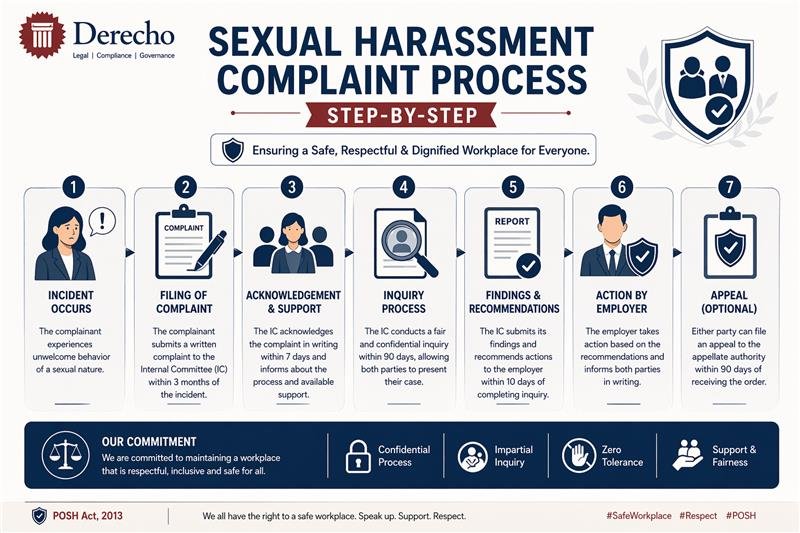
The Sexual Harassment Complaint Process ensures a safe and respectful workplace by providing a structured mechanism to address complaints of harassment. In India, this is governed by the Sexual Harassment of Women at Workplace (Prevention, Prohibition and Redressal) Act, 2013 (POSH Act).
What is Sexual Harassment?
Sexual harassment includes:
- Unwelcome physical contact
- Requests for sexual favors
- Sexually colored remarks
- Showing pornography
- Any unwelcome verbal or non-verbal conduct
Applicability of POSH Act
- Applicable to all workplaces (private & public)
- Covers employees, interns, consultants, and visitors
- Mandatory for organizations with 10+ employees
Internal Complaints Committee (ICC)
Every eligible organization must:
- Constitute an Internal Complaints Committee (ICC)
- Include a Presiding Officer (senior woman employee)
- Include an external member
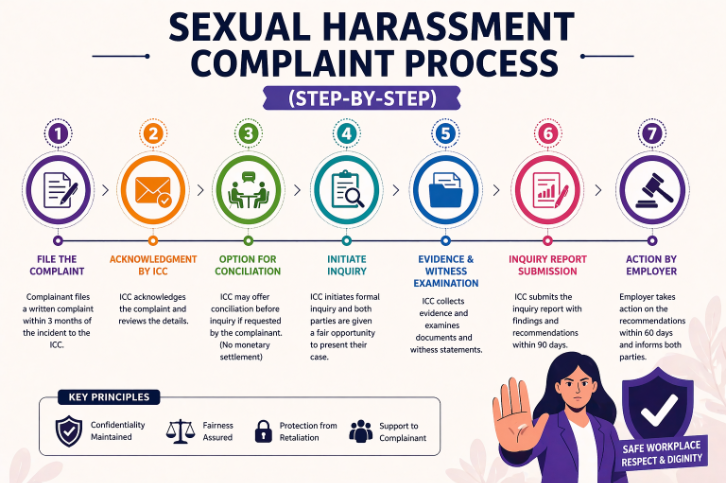
Step-by-Step Complaint Process
Step 1: Filing the Complaint
- Complaint must be filed within 3 months of the incident
- Can be written or assisted by ICC
Step 2: Acknowledgment by ICC
- ICC acknowledges receipt of complaint
- Reviews initial details
Step 3: Option for Conciliation
- Before inquiry, complainant may request settlement
- No monetary settlement allowed
Step 4: Initiate Inquiry
- ICC conducts a formal inquiry
- Both parties are given a fair hearing
Step 5: Evidence & Witness Examination
- Collect documents, messages, and witness statements
Step 6: Inquiry Report Submission
- ICC submits report within 90 days
- Findings and recommendations included
Step 7: Action by Employer
- Employer acts within 60 days based on ICC report
- Actions may include disciplinary measures
Rights of the Complainant
- Right to a safe workplace
- Confidentiality
- Fair inquiry
- Protection against retaliation
Employer Responsibilities
- Create POSH policy
- Conduct awareness programs
- Ensure ICC functioning
- Maintain confidentiality
Consequences of Non-Compliance
- Penalties up to ₹50,000
- License cancellation (repeat offense)
- Legal action
- Reputational damage
Benefits of Proper Compliance
- Safe work environment
- Employee trust
- Legal protection
- Better workplace culture
Conclusion
The POSH complaint process is essential for maintaining workplace dignity and safety. Organizations must implement proper systems, and employees should be aware of their rights and procedures.
A strong complaint mechanism ensures fairness, accountability, and a respectful workplace for all.