
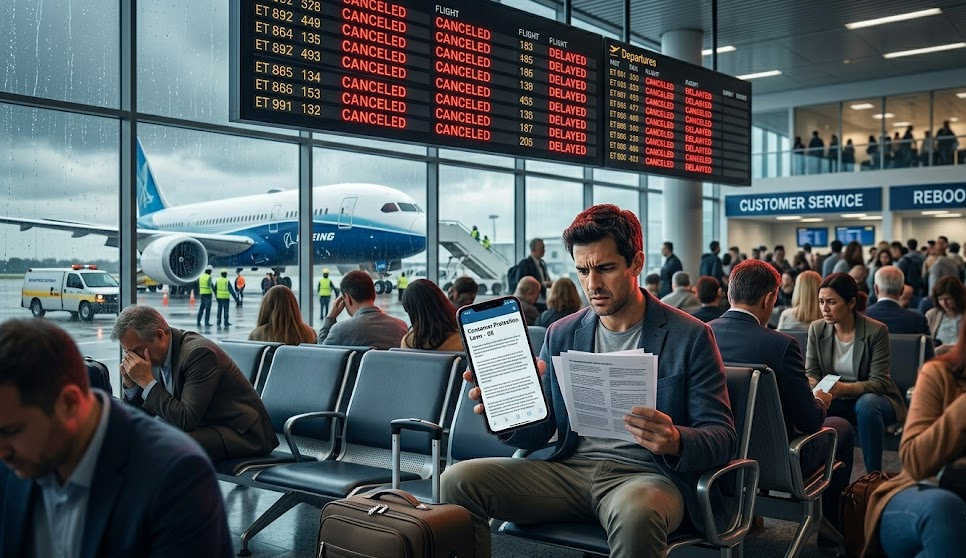
The Hidden Cost of a Flight Cancellation
A canceled flight is more than an inconvenience.
For passengers, it can mean missed business meetings, lost hotel bookings, disrupted family events, additional expenses, and emotional stress.
For airlines, cancellations trigger operational costs, reputational damage, regulatory scrutiny, compensation obligations, and potential litigation.
As air travel continues to recover and expand globally, governments and regulators have strengthened consumer protection frameworks to ensure passengers are treated fairly when disruptions occur.
However, despite these regulations, many travelers remain unaware of their rights.
Understanding the legal framework governing flight cancellations is essential not only for passengers but also for airlines, travel agencies, insurance providers, and policymakers.
This article explores the key consumer protection laws across major jurisdictions, compares compensation regimes, examines emerging challenges, and highlights best practices for both travelers and aviation businesses.
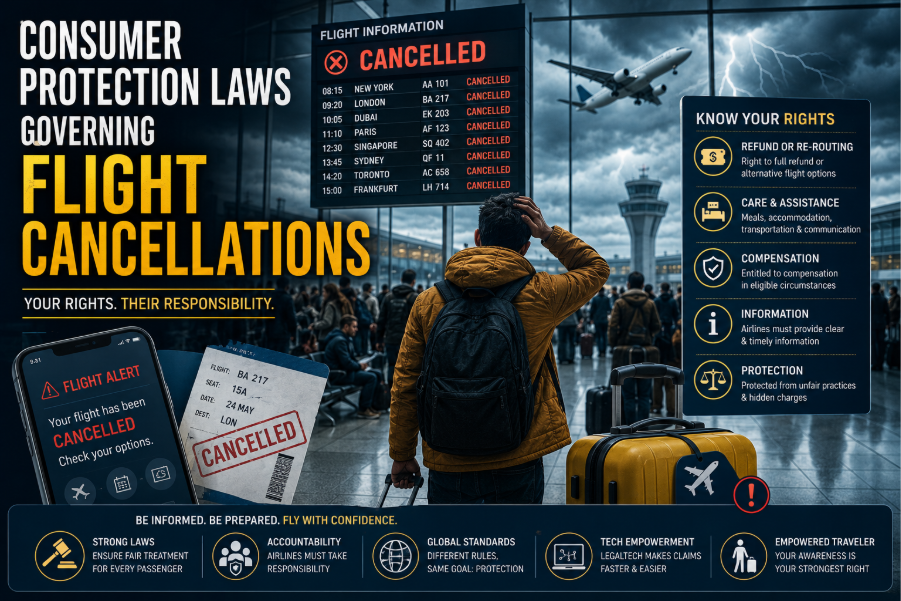
Why Flight Cancellation Regulations Matter
Air travel operates within a complex ecosystem involving airlines, airports, air traffic control authorities, weather systems, ground handling providers, and international regulators.
When disruptions occur, determining responsibility becomes difficult.
Historically, passengers had limited recourse when flights were canceled.
Airlines often relied on lengthy terms and conditions that heavily favored carriers.
Over time, increasing consumer complaints led governments to introduce regulations designed to balance commercial realities with passenger rights.
Modern consumer protection laws seek to achieve four primary objectives:
- Ensure transparency regarding cancellations
- Standardize compensation obligations
- Protect passengers from unfair contract terms
- Improve accountability across the aviation industry
These regulations encourage airlines to invest in operational resilience while empowering consumers with enforceable rights.
Understanding Flight Cancellation: The Legal Definition
A flight cancellation occurs when an airline decides not to operate a scheduled flight for which at least one passenger has made a reservation.
This differs from:
- Flight delays
- Schedule changes
- Missed connections
- Denied boarding due to overbooking
The distinction matters because passenger rights often vary depending on the nature of the disruption.
For example, a six-hour delay may entitle passengers to assistance but not compensation in certain jurisdictions.
Conversely, a complete cancellation can trigger reimbursement rights, alternative transportation obligations, and statutory compensation.
The Global Patchwork of Passenger Rights
Unlike many industries, aviation operates across multiple legal jurisdictions.
There is no single global framework governing flight cancellations.
Instead, airlines must comply with a complex network of national and regional regulations.
Key regulatory frameworks include:
- European Union Regulation EC 261/2004
- United Kingdom Air Passenger Rights Regulations
- United States Department of Transportation rules
- Canada’s Air Passenger Protection Regulations
- India’s Civil Aviation Requirements
- Australia’s consumer protection framework
- International conventions such as the Montreal Convention
The rights available to passengers often depend on:
- Departure location
- Airline nationality
- Destination country
- Cause of cancellation
- Timing of notification
As a result, passengers on similar routes may receive significantly different protections.
European Union: The Gold Standard for Passenger Protection
The European Union’s Regulation EC 261/2004 is widely considered the most comprehensive passenger rights framework in the world.
The regulation applies to:
- Flights departing from EU airports
- Flights arriving in the EU operated by EU-based carriers
Under EC 261, passengers affected by cancellations are entitled to:
Right to Information
Airlines must clearly communicate passenger rights during disruptions.
Right to Care
Passengers must receive:
- Meals and refreshments
- Hotel accommodation when necessary
- Transportation between the airport and hotel
- Communication assistance
Right to Reimbursement or Re-routing
Passengers can choose between:
- Full ticket refund
- Alternative flight arrangements at the earliest opportunity
- Rebooking for a later date
Right to Compensation
Passengers may receive compensation ranging from:
- €250 for short-haul flights
- €400 for medium-haul flights
- €600 for long-haul flights
Compensation depends on:
- Flight distance
- Length of delay caused by rerouting
- Timing of cancellation notice
However, airlines are exempt when cancellations result from extraordinary circumstances, including:
- Severe weather
- Political instability
- Security risks
- Air traffic control restrictions
Routine technical problems generally do not qualify as extraordinary circumstances.
This distinction has been clarified through extensive court rulings.
United Kingdom: Post-Brexit Continuity
Following Brexit, the United Kingdom retained much of the EU framework through UK261 regulations.
Passenger rights remain broadly similar to EC 261.
Travelers departing from UK airports or arriving on UK carriers continue to receive:
- Reimbursement rights
- Alternative transportation
- Duty of care
- Compensation for eligible cancellations
Although current protections mirror EU standards, future regulatory divergence remains possible.
Airlines operating across both jurisdictions must monitor evolving compliance requirements.
United States: A Different Regulatory Philosophy
Unlike Europe, the United States does not mandate fixed compensation for most flight cancellations.
The regulatory approach focuses primarily on refunds and transparency.
Under rules enforced by the U.S. Department of Transportation:
Passengers Are Entitled to Refunds When:
- The airline cancels a flight
- Significant schedule changes occur
- Passengers decline alternative arrangements
Refunds must include:
- Ticket price
- Baggage fees
- Seat selection charges
- Other ancillary services not provided
Unlike the EU system, airlines are generally not required to compensate passengers for inconvenience.
However, carriers may voluntarily provide:
- Travel vouchers
- Hotel accommodations
- Meal allowances
These policies vary significantly among airlines.
Consumer advocates continue to push for stronger protections similar to the European model.
Canada: Balancing Consumer and Airline Interests
Canada’s Air Passenger Protection Regulations establish compensation rules based on airline size and the reason for disruption.
Passenger rights include:
- Clear communication
- Rebooking obligations
- Refund entitlements
- Standards of treatment
Compensation may range from CAD 125 to CAD 1,000 depending on:
- Delay duration
- Airline classification
- Cause of disruption
Canadian law distinguishes between cancellations caused by:
- Situations within airline control
- Situations required for safety
- Situations outside airline control
This tiered approach seeks to balance operational realities with consumer protection.
India: Strengthening Passenger Rights
India’s aviation market has experienced rapid growth, leading regulators to strengthen passenger protection measures.
The Directorate General of Civil Aviation (DGCA) governs flight cancellation rights through Civil Aviation Requirements.
Passengers are generally entitled to:
- Full refunds
- Alternate flights
- Compensation under specified conditions
Compensation depends on factors such as:
- Notice period provided by the airline
- Availability of alternative transportation
- Delay duration
Airlines must proactively inform passengers about cancellations through:
- SMS notifications
- Email communication
- Other digital channels
Indian regulations also require airlines to provide assistance when disruptions occur.
However, compensation obligations may not apply when cancellations result from extraordinary circumstances beyond the airline’s control.
As competition intensifies in India’s aviation sector, enforcement of passenger rights is expected to become increasingly important.
The Montreal Convention: International Liability Framework
The Montreal Convention of 1999 establishes a global framework for airline liability in international travel.
More than 135 countries have adopted the convention.
Unlike regional regulations, the convention focuses primarily on damages rather than fixed compensation.
Passengers may claim reimbursement for losses resulting from delays and cancellations, including:
- Accommodation expenses
- Alternative transportation costs
- Lost business opportunities
However, passengers must demonstrate actual damages.
Airlines can avoid liability by proving they took all reasonable measures to prevent the disruption.
The convention supplements, rather than replaces, domestic consumer protection laws.
Extraordinary Circumstances: The Most Contested Issue
One of the most significant legal disputes in flight cancellation cases concerns the definition of extraordinary circumstances.
Common examples include:
- Severe weather events
- Natural disasters
- Political unrest
- Terrorism threats
- Airspace closures
- Air traffic control strikes
Issues generally considered within airline control include:
- Crew shortages
- Maintenance failures
- Scheduling errors
- Operational inefficiencies
The classification determines whether compensation is payable.
Because definitions vary across jurisdictions, disputes frequently reach regulatory agencies and courts.
Clearer guidance remains a priority for policymakers worldwide.
The Rise of Digital Claims and Consumer Technology
Technology is transforming how passengers enforce their rights.
Today, travelers can access:
- Automated compensation platforms
- Mobile disruption alerts
- Digital claim management tools
- Real-time flight status tracking
Legal technology firms increasingly help passengers navigate complex regulations.
While these services improve access to justice, they also create new compliance challenges for airlines.
Companies must invest in:
- Transparent communication systems
- Automated refund processing
- Customer service modernization
- Predictive disruption management
The future of passenger rights will depend as much on technology as on legislation.
The Impact of the COVID-19 Pandemic
The pandemic exposed significant weaknesses in consumer protection frameworks.
Millions of passengers experienced:
- Flight cancellations
- Delayed refunds
- Voucher disputes
- Cross-border legal confusion
Regulators worldwide faced pressure to balance airline solvency with consumer rights.
Key lessons emerged:
- Refund obligations must remain clear during crises.
- Emergency rules should be transparent and consistent.
- Digital communication systems require modernization.
- International coordination must improve.
The pandemic accelerated discussions about creating more resilient passenger protection systems.
Best Practices for Travelers
Passengers can protect themselves by taking proactive steps.
Before Booking
- Review airline cancellation policies.
- Understand applicable regulations.
- Purchase comprehensive travel insurance.
- Use credit cards with travel protection benefits.
During Disruptions
- Retain boarding passes and receipts.
- Request written confirmation of cancellation.
- Document communication with the airline.
- Monitor regulatory compensation deadlines.
After the Journey
- Submit claims promptly.
- Escalate unresolved disputes to regulators.
- Maintain records of all expenses.
Awareness remains the most effective consumer protection tool.
What Airlines Should Do
Forward-looking airlines recognize that consumer protection is not merely a compliance issue.
It is a strategic business imperative.
Organizations should focus on:
- Transparent communication
- Faster refund processes
- Automated compensation systems
- Staff training programs
- Clear disruption policies
- Data-driven operational planning
Passengers remember how airlines respond during disruptions.
Trust built during difficult moments often determines long-term customer loyalty.
The Future of Flight Cancellation Laws
As air travel becomes increasingly interconnected, regulators face mounting pressure to harmonize passenger rights.
Future reforms may include:
- Standardized international compensation rules
- AI-powered claims management
- Stronger refund enforcement mechanisms
- Greater transparency obligations
- Enhanced protection for ancillary purchases
Consumer expectations continue to evolve.
Travelers now expect real-time updates, seamless rebooking options, and immediate compensation.
The challenge for regulators is creating frameworks that protect consumers without imposing unsustainable burdens on airlines.
Achieving this balance will shape the next generation of aviation policy.
Final Thoughts
Flight cancellations are inevitable.
Unfair treatment of passengers is not.
Consumer protection laws play a critical role in ensuring accountability across the aviation ecosystem.
While regulatory approaches differ across jurisdictions, the underlying principle remains the same: passengers deserve transparency, fairness, and timely remedies when travel plans are disrupted.
For travelers, understanding these rights can reduce financial losses and improve decision-making.
For airlines, compliance is no longer simply a legal obligation—it is a cornerstone of customer trust and competitive advantage.
As aviation continues to evolve, informed consumers and responsive businesses will define the future of passenger rights.
What has been your experience with flight cancellations? Have current regulations gone far enough, or is stronger global harmonization needed? Share your perspective in the comments.