
Introduction
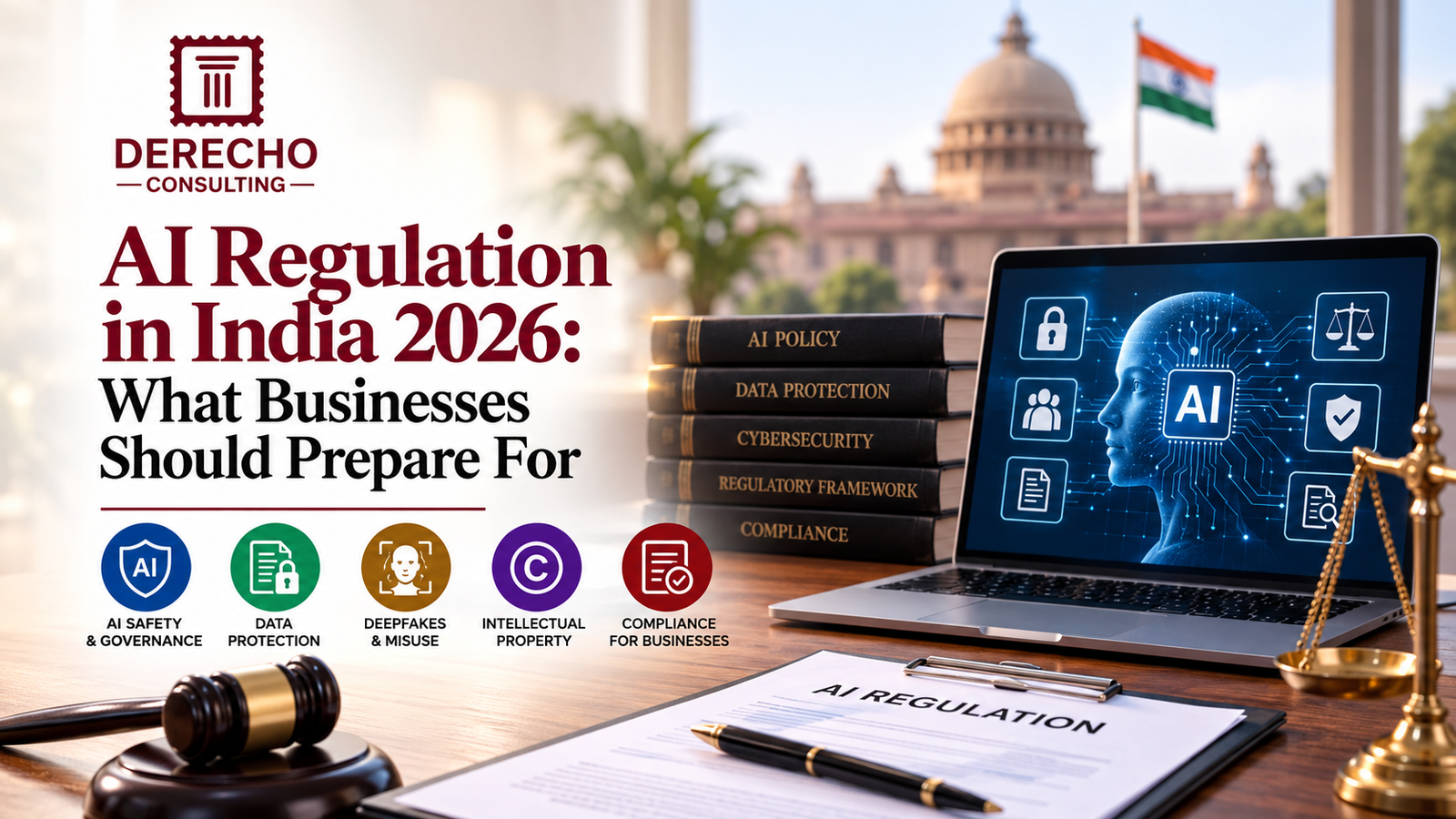
AI Regulation in India 2026 is becoming an important issue for businesses adopting artificial intelligence across their operations. Companies now use AI for customer support, recruitment, marketing, financial analysis, software development and decision-making. While these technologies offer significant opportunities, they also raise legal questions about data protection, cybersecurity, deepfakes, intellectual property and accountability.
On 8 October 2026, Union IT Minister Ashwini Vaishnaw announced that the government plans to release a consultation paper on AI regulation within a month. The proposed consultation is expected to focus on AI safety, deepfakes and a human-first approach. This signals growing attention to responsible AI use in India, although the proposed framework should not be treated as a final regulation.
For businesses, preparing early can help reduce legal risks and improve trust among customers, employees and business partners. This guide explains the current regulatory landscape, major risk areas and practical steps organisations should consider in 2026.
What Is AI Regulation in India?
AI regulation refers to the laws, rules, standards and government policies that influence how artificial intelligence is developed, deployed and used. It can cover issues such as privacy, transparency, cybersecurity, discrimination, harmful content and responsibility for AI-assisted decisions.
India’s approach currently draws on existing legal frameworks, sector-specific requirements and AI governance initiatives. In February 2026, amendments to the Information Technology Rules strengthened requirements addressing harmful synthetically generated information, including certain deepfakes and AI-generated content. These measures include obligations relating to labelling, traceability and platform due diligence.
Businesses should therefore distinguish between requirements already in force and proposals that may emerge from future consultations. Not every organisation will have the same obligations; responsibilities depend on the technology, its purpose, the data involved and the organisation’s role.
Why AI Regulation Matters for Indian Businesses
AI tools can improve productivity and help companies deliver services more efficiently. However, poorly managed systems can expose businesses to legal disputes, financial losses and reputational damage.
For example, an AI recruitment tool could unfairly screen out qualified candidates. A customer-service chatbot could disclose confidential information, while an AI-generated advertisement could make misleading claims. Deepfake audio or video could also be used to impersonate executives or manipulate customers.
Businesses should consider AI governance as part of their wider legal and risk-management strategy. This is particularly important when AI systems process personal data, influence significant decisions or interact directly with customers.
Key AI Regulatory Areas Businesses Should Monitor in 2026
1. AI Safety and Accountability
AI systems can produce inaccurate, misleading or harmful outputs. Businesses should assess how these systems behave before introducing them into important workflows.
Companies should identify who is responsible for selecting, approving, monitoring and updating each AI tool. They should also establish a process for investigating incidents and correcting errors.
Useful safeguards include:
- Testing AI systems before deployment.
- Assigning responsibility for AI-related decisions.
- Reviewing outputs in high-impact situations.
- Keeping records of significant AI-assisted decisions.
- Providing a way to report and resolve AI-related problems.
2. Deepfakes and AI-Generated Content
Deepfakes can imitate a person’s face, voice or actions. They may be used for fraud, impersonation, misleading advertisements, harassment or unauthorised use of someone’s identity.
India has already strengthened its framework for certain forms of AI-generated content through amendments to the IT Rules in February 2026. Applicable requirements can include labelling, traceable metadata and stronger platform due diligence.
Businesses should establish procedures for verifying sensitive communications, reviewing AI-generated marketing material and responding to suspected impersonation. Organisations should also ensure that their use of synthetic content complies with applicable law.
3. Data Protection and Privacy
AI systems may process customer details, employee records, business communications and other personal information. Collecting or using this information without appropriate safeguards can create privacy and compliance risks.
Businesses should examine what information their AI tools collect, why it is needed, where it is stored and whether it is shared with external providers. They should also assess the applicable requirements under India’s Digital Personal Data Protection Act, 2023, and other relevant laws.
Key measures include:
- Mapping personal data used by AI systems.
- Reviewing the purposes and legal basis for processing.
- Limiting access to sensitive information.
- Checking vendor data-handling practices.
- Establishing appropriate retention and deletion procedures.
4. Cybersecurity and Confidential Business Information
AI tools can introduce new security risks when employees upload confidential documents, source code, customer records or financial information to external platforms. AI can also be misused to create convincing phishing messages and impersonation attempts.
Businesses should establish clear rules about which AI tools employees may use and what information they can share. Security reviews should cover access controls, vendor safeguards, incident reporting and the handling of sensitive data.
Staff training is equally important. Employees should know how to identify suspicious AI-generated communications and verify unusual payment requests or changes to business instructions.
5. Copyright and Intellectual Property
AI-generated content can raise questions about the use of copyrighted material, ownership, licensing and possible infringement. These concerns may affect businesses using AI to create articles, images, videos, software or advertising materials.
Before using AI-generated content commercially, companies should review the terms of the tool, check relevant permissions and assess whether the output may reproduce protected material or third-party branding.
Businesses should also protect their own intellectual property by controlling access to confidential material and reviewing contracts with AI vendors. The legal position can depend on the nature of the content, the manner of use and the applicable law.
6. Transparency and Human Oversight
Customers and employees may need clear information about how AI is used in certain business processes. Automated decisions can also require additional scrutiny where errors could have serious consequences.
Organisations should identify where AI materially influences decisions and determine when human review is appropriate. Important decisions should not be accepted automatically merely because an AI system recommends them.
A clear governance policy can explain which uses are permitted, which require approval and which are prohibited. This can help employees use AI consistently and responsibly.
How Businesses Can Prepare for AI Regulation in India
Businesses do not need to wait for a future regulatory framework before reviewing their AI practices. They can begin by assessing existing legal obligations and identifying operational risks.
Practical AI Compliance Checklist
- Create an AI inventory: List the AI tools used across departments and document their purposes.
- Assess legal risks: Identify privacy, cybersecurity, copyright, consumer protection and employment concerns.
- Review vendor contracts: Examine data use, confidentiality, security, ownership and responsibility provisions.
- Introduce an AI policy: Define approved tools, restricted information and employee responsibilities.
- Establish human oversight: Require appropriate review for high-impact or sensitive decisions.
- Train employees: Explain safe AI use, deepfake detection, confidentiality and incident reporting.
- Document key decisions: Maintain records of approvals, testing, risk assessments and corrective actions.
- Monitor regulatory developments: Review official notifications, consultation papers and sector-specific requirements as they are issued.
The checklist should be tailored to the organisation’s size, industry, data practices and use of AI. It is a practical starting point, not a substitute for a legal assessment.
What Should Businesses Expect Next?
The proposed AI regulation consultation paper announced in October 2026 may provide further direction on how India intends to address AI safety and related risks. The consultation process is expected to gather stakeholder views before the government determines its next steps.
Until further requirements are formally issued, businesses should avoid assuming that every proposal will become binding law. Instead, they should monitor official announcements and assess how existing legal obligations apply to their operations.
Companies in regulated industries may also need to consider requirements issued by their relevant regulators. Financial services, healthcare, recruitment and digital platforms can face different risk profiles depending on how AI is used.
How Derecho Consulting Can Help
Derecho Consulting supports businesses in understanding legal, regulatory and compliance considerations that affect their operations. As organisations adopt AI, a structured review can help identify gaps in policies, contracts, data practices and internal controls.
Businesses may benefit from reviewing AI vendor agreements, assessing privacy and intellectual property risks, developing internal AI-use policies and establishing appropriate accountability procedures.
The right approach depends on the organisation’s activities and applicable legal obligations. Professional guidance can help businesses prioritise relevant risks and prepare for regulatory developments without treating proposed measures as final law.
Conclusion
AI Regulation in India 2026 is an important area for businesses to monitor as the government develops its approach to AI safety, deepfakes and responsible technology use. Existing laws and the February 2026 amendments to the IT Rules already address certain AI-related harms, while further regulatory proposals may emerge from the announced consultation process.
Businesses should take practical steps now by reviewing AI tools, protecting personal and confidential data, assessing intellectual property risks, training employees and establishing clear accountability. They should also monitor official announcements to understand which new requirements are formally adopted.
Responsible AI governance can help organisations reduce avoidable risks while continuing to benefit from innovation. Derecho Consulting can help businesses review relevant legal and compliance considerations and prepare for changes in India’s evolving AI regulatory landscape.