
Introduction
The GST Council Reforms 2026 are an important development for Indian businesses seeking to understand changes to GST administration and compliance. The 57th GST Council Meeting brought attention to areas such as input tax credit (ITC), refunds, registration, return filing, dispute resolution and enforcement.
These developments may affect manufacturers, exporters, service providers, e-commerce sellers, MSMEs and other GST-registered businesses. Understanding the recommendations can help organisations identify compliance gaps and prepare for possible changes to their accounting and tax procedures.
However, a Council recommendation does not automatically mean that a new legal requirement has taken effect. Businesses should verify the relevant amendments, notifications and effective dates before changing their existing compliance practices.
What Are the GST Council Reforms 2026?
The GST Council is a constitutional body that recommends changes to India’s Goods and Services Tax framework. Its work covers matters such as tax rates, exemptions, registration procedures, input tax credit, refunds and GST administration.
The 57th meeting focused on measures intended to improve compliance processes and address practical challenges faced by taxpayers. For businesses, these discussions are relevant because changes to tax procedures can affect working capital, documentation, return filing and interactions with tax authorities.
The GST Council Reforms 2026 should therefore be assessed from both a legal and operational perspective.
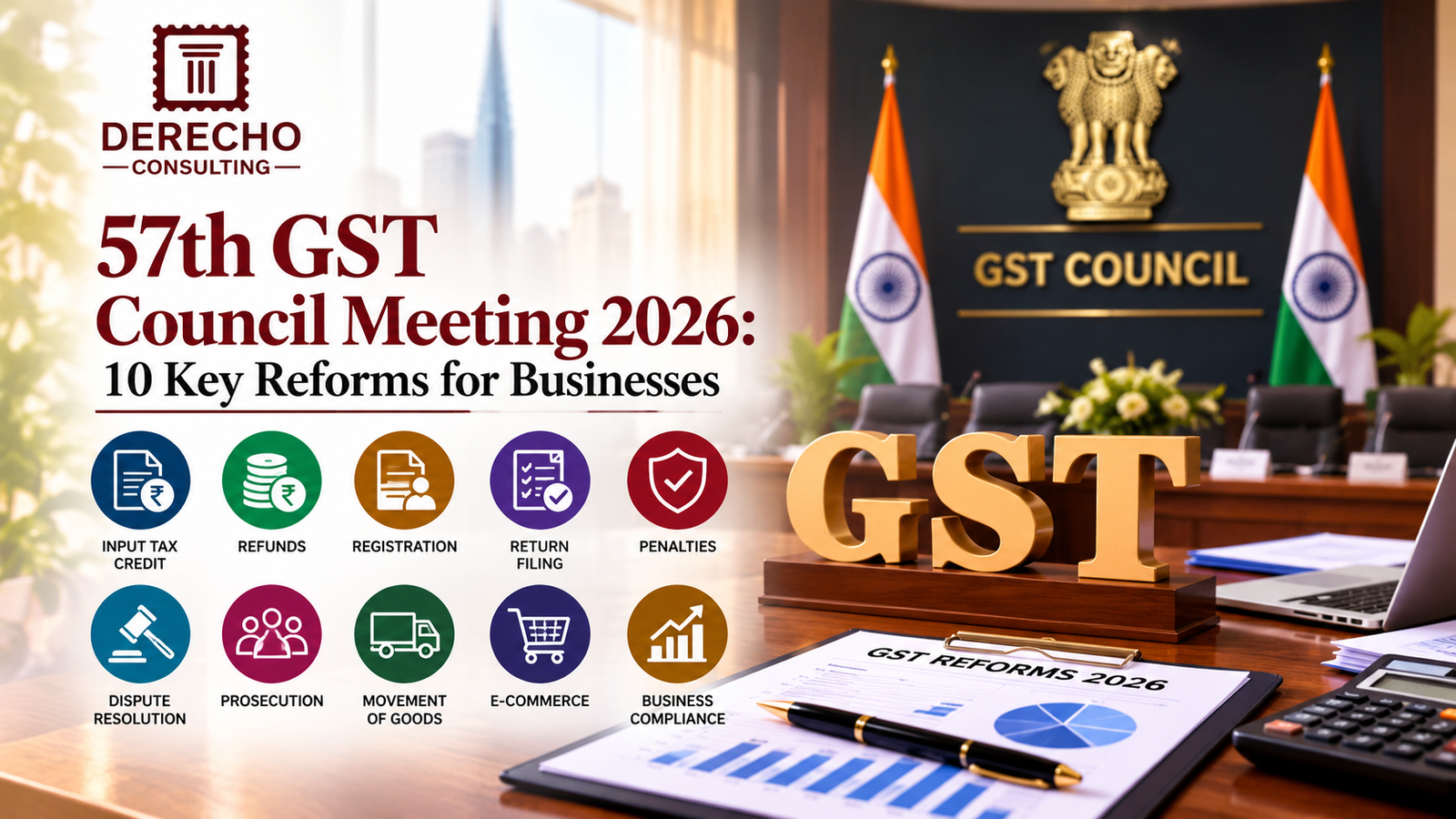
GST Council Reforms 2026: 10 Key Areas Businesses Should Review
1. GST Registration Procedures
Registration procedures are important for businesses starting operations, expanding into new markets or changing their business structure.
Businesses should review their registration details, principal and additional places of business, authorised signatories and supporting documentation. Any new simplified procedure should be followed only after its eligibility conditions and implementation details are confirmed.
2. Registration for Eligible E-commerce Sellers
E-commerce sellers must understand the GST requirements that apply to their transactions, locations and sales channels.
Businesses selling through online marketplaces should review their registration status, platform requirements, invoicing practices and tax records. Any proposed relaxation for eligible sellers should be assessed against the final rules before being applied.
3. GST Refunds and Working Capital
Refund delays can affect cash flow, particularly for exporters and businesses with accumulated eligible input tax credit.
Businesses should reconcile refund claims with their GST returns, invoices and supporting records. They should also monitor applications, deficiency notices and pending claims to identify issues that may delay processing.
4. Input Tax Credit (ITC)
Input Tax Credit can reduce the effective GST burden when the applicable legal conditions are satisfied. However, errors in invoices, vendor records, reconciliations or eligibility assessments can result in disputes and blocked credit.
Businesses should review their purchase registers, GST statements and return data. They should also identify disputed or ineligible credits and retain supporting documents for transactions claimed as ITC.
5. GST Return Filing and Reconciliation
Accurate return filing is essential for managing GST compliance and avoiding unnecessary discrepancies.
Finance teams should reconcile outward supplies, tax liabilities, credit notes and ITC claims across the relevant GST returns and accounting records. They should also monitor any officially notified changes to return formats, correction mechanisms or filing deadlines.
6. GST Notices and Dispute Resolution
GST notices can arise from return mismatches, disputed ITC, classification issues, delayed filings or differences identified during scrutiny.
Businesses should maintain a central register of notices, response deadlines, supporting evidence and appeal requirements. Every notice should be assessed on its facts and the applicable legal provisions rather than answered using a standard response.
7. GST Penalties and Prosecution
Penalty and prosecution provisions are important areas for businesses managing tax-related legal risks.
Organisations should distinguish between procedural errors, genuine disputes and allegations involving deliberate fraud or evasion. Any proposed change to penalties or prosecution thresholds should be verified against the final legislative amendments and their commencement dates.
8. Movement of Goods and Transport Documentation
Businesses involved in manufacturing, distribution and logistics need accurate invoices, transport records and e-way bills wherever applicable.
They should review dispatch procedures, document matching and responsibilities across logistics and finance teams. Clear documentation can help reduce avoidable interruptions and support a business’s position during a GST inspection or inquiry.
9. E-commerce and Export Compliance
E-commerce operators, online sellers and exporters may have additional GST obligations depending on their transaction structure and applicable rules.
Businesses should review export documentation, invoices, payment records, refund eligibility and the GST treatment of their supplies. Any proposed relief or simplified procedure should be checked against the final requirements before implementation.
10. Internal GST Controls and Compliance Monitoring
Effective internal controls help businesses identify errors before they become tax disputes.
Companies should establish clear responsibilities for return filing, ITC reconciliation, refund applications, document retention and notice management. Periodic reviews can also help identify recurring discrepancies and improve coordination between finance, legal and operations teams.
GST Council Reforms 2026: Compliance Checklist
Businesses can use the following checklist to review their current GST processes:
- Verify GST registration details and authorised signatories.
- Reconcile GST returns with accounting records.
- Review ITC eligibility and supporting invoices.
- Check pending GST refunds and related documentation.
- Track outstanding GST notices and response deadlines.
- Verify e-invoice and e-way bill compliance where applicable.
- Review export and e-commerce transactions.
- Maintain records of tax payments and adjustments.
- Monitor official notifications and effective dates.
- Update internal procedures when legal changes take effect.
What Should Businesses Do Next?
Businesses should first identify which recommendations are relevant to their operations. They should then verify whether the corresponding legal amendments, rules or notifications have been issued and determine the applicable effective dates.
A simple regulatory tracking register can record each development, its legal status, the affected business process, the responsible team and the action required. This helps organisations prepare for changes without prematurely applying proposals that are not yet effective.
For additional context, read our earlier article on the 57th GST Council Meeting 2026.
Businesses can also review Derecho Consulting’s legal and compliance services to understand the available support for regulatory and compliance matters.
For official updates, refer to the GST Council website.
How Derecho Consulting Can Help
Derecho Consulting can assist businesses in assessing GST-related compliance risks and preparing for relevant regulatory changes.
Support may include:
- GST compliance and documentation reviews.
- ITC reconciliation and tax-risk assessments.
- Review of GST notices and dispute-related issues.
- Refund and export-compliance assessments.
- Regulatory change tracking.
- Internal compliance process reviews.
The appropriate approach depends on the organisation’s activities, existing compliance processes and the legal provisions applicable to its transactions.
Conclusion
The GST Council Reforms 2026 highlight the importance of monitoring GST administration, compliance procedures and changes affecting taxpayers. Registration, refunds, ITC, return filing, dispute resolution and enforcement are all areas businesses should review carefully.
Businesses should distinguish between recommendations and legally effective changes, verify official implementation details and update their procedures when required. A proactive compliance review can help organisations improve documentation, identify tax risks and prepare for developments in India’s GST framework.