
Introduction
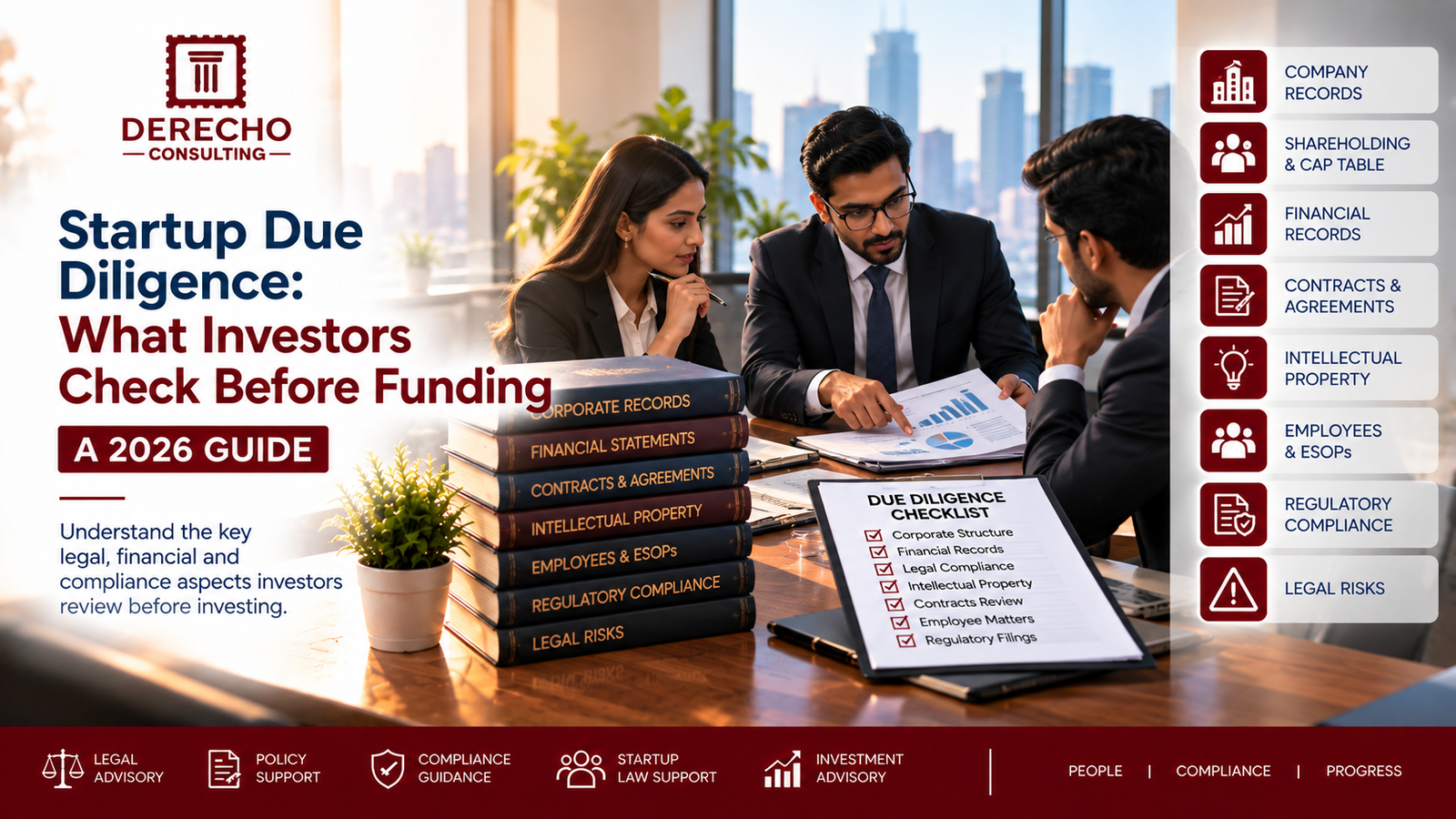
Startup Due Diligence is an important process before investors commit funds to a business. Investors generally review the startup’s corporate structure, financial records, ownership, contracts, intellectual property, employees, regulatory compliance, and potential liabilities. Preparing these areas in advance can help founders organise their records and address issues that may arise during the investment process.
1. Corporate Structure and Company Records
Investors may review the company’s incorporation documents, constitutional records, board and shareholder resolutions, statutory registers, share allotments, and other corporate records. A clear and consistent ownership structure is important when verifying the company’s legal position.
2. Shareholding and Cap Table
The cap table is a key part of Startup Due Diligence. Investors may examine founder holdings, previous funding rounds, share transfers, convertible instruments, ESOP pools, and rights attached to different securities. Any mismatch between agreements and the actual shareholding records can require clarification before funding.
3. Financial and Tax Records
Investors commonly examine financial statements, revenue records, liabilities, outstanding payments, loans, tax filings, and other financial information. They may also assess whether the startup has maintained proper financial and tax documentation and whether there are unresolved financial obligations.
4. Contracts and Commercial Agreements
Customer agreements, vendor contracts, employment agreements, technology licences, leases, loans, and investor agreements can form part of legal due diligence. Investors may pay particular attention to termination rights, exclusivity, assignment restrictions, liability provisions, and change-of-control clauses.
5. Intellectual Property
Intellectual property can represent significant startup value. Due diligence may cover trademarks, copyrights, software, patents, domains, proprietary technology, and confidential information. Investors may also verify whether important intellectual property has been properly assigned to the company by founders, employees, consultants, or vendors.
6. Employees and ESOPs
Investors may review employment contracts, consultant arrangements, employee benefits, confidentiality obligations, and Employee Stock Ownership Plans (ESOPs). The company should maintain accurate records of employee equity grants, vesting arrangements, and outstanding obligations.
7. Regulatory Compliance and Legal Risks
Investors may examine applicable business licences, regulatory registrations, filings, litigation, notices, disputes, and compliance records. Unresolved legal issues or gaps in mandatory compliance can become an important part of investment discussions.
8. Data, Technology and Security
For technology-driven startups, due diligence may also cover data handling practices, technology infrastructure, cybersecurity controls, third-party software, cloud services, and ownership of internally developed systems. Investors may seek information about how technology and business data are protected.
9. 2026 Due Diligence Considerations
In 2026, founders should maintain organised digital records covering corporate documents, contracts, financial information, intellectual property, employee records, compliance documents, and technology-related information. A structured virtual data room can make the due diligence process more organised and help investors access relevant documents efficiently.
10. How Derecho Consulting Can Help
Startup Due Diligence preparation involves more than collecting documents. Derecho Consulting can assist startups with corporate record reviews, shareholder and investment documentation, contract reviews, intellectual property checks, compliance assessments, employment documentation, legal risk identification, and preparation of due-diligence materials.
Conclusion
Startup Due Diligence gives investors an opportunity to understand the legal, financial, operational, and ownership position of a business before funding. Founders who keep accurate records, maintain clear ownership documentation, protect intellectual property, review contracts, and address compliance issues early can be better prepared for investor scrutiny.