
Introduction
Trademark Risks are becoming increasingly important as businesses and technology startups use artificial intelligence tools to generate new brand names, product names, logos, taglines, and other brand assets. AI can help businesses develop branding ideas quickly, but an AI-generated name or logo is not automatically available for commercial use or eligible for trademark protection.
A brand name or logo generated by AI may be similar to an existing trademark, lack sufficient distinctiveness, conflict with an existing brand, or create problems when a business attempts to register or enforce the mark. Businesses should therefore conduct appropriate trademark searches and legal reviews before adopting AI-generated branding.
Under the Trade Marks Act, 1999, a trademark is intended to distinguish the goods or services of one person from those of others, and the Act contains grounds on which marks may be refused, including certain marks that are non-distinctive or likely to cause confusion.
The Trade Marks Rules, 2017 establish procedures and requirements relating to trademark applications, including the representation of the mark, classification of goods and services, applications for registration, and renewal.
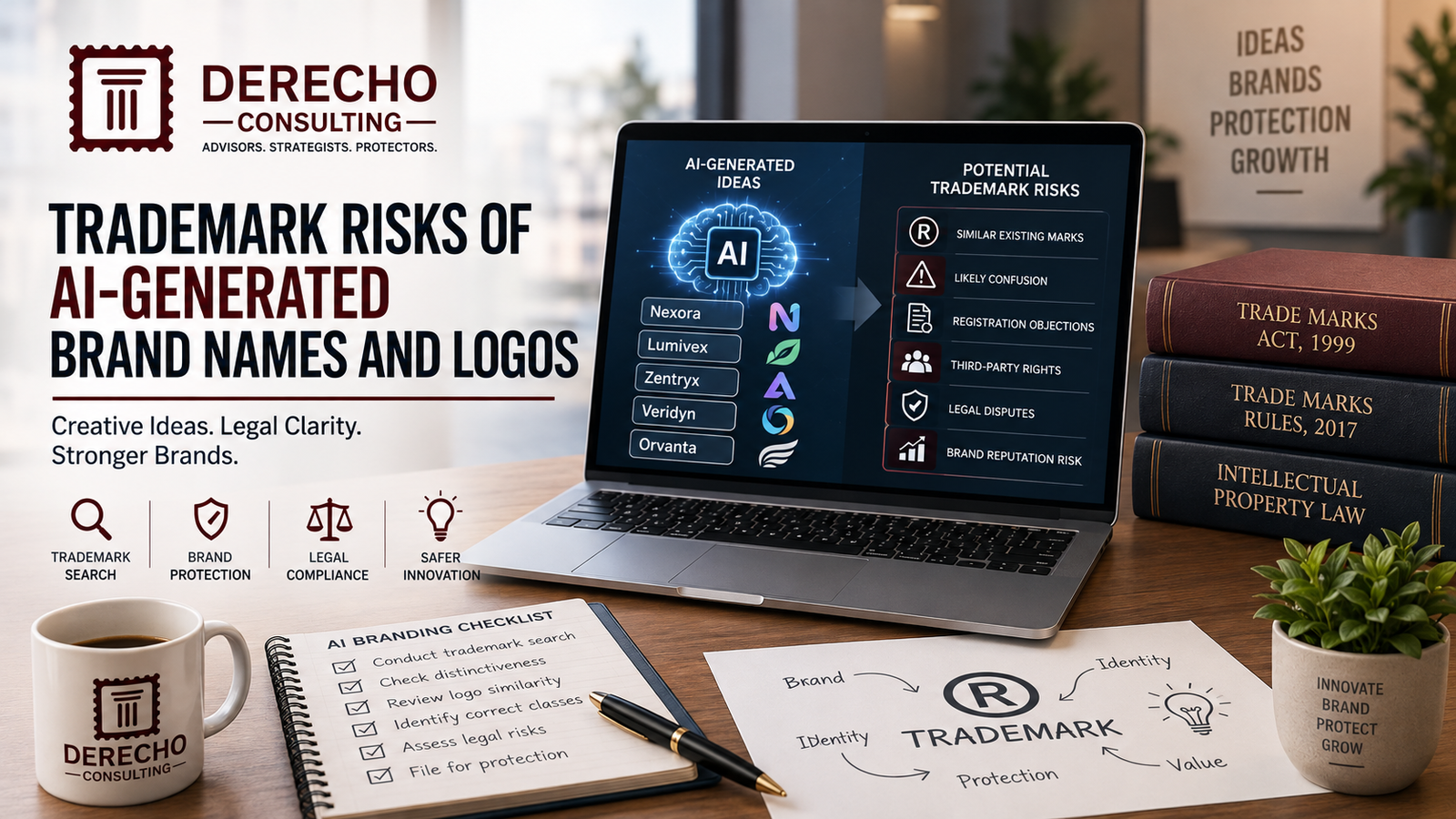
This guide explains Trademark Risks of AI-Generated Brand Names and Logos, including trademark searches, distinctiveness, similarity risks, classification, intellectual property ownership, logo protection, registration, third-party rights, infringement, and practical compliance measures for 2026.
Why Trademark Risks Matter
AI tools can generate thousands of potential brand names and visual concepts within seconds. However, an AI system may generate a name or logo that is already being used by another business or is deceptively similar to an existing mark.
Understanding Trademark Risks can help businesses:
- Identify potentially conflicting trademarks.
- Conduct trademark searches before adopting a brand.
- Evaluate whether an AI-generated name is sufficiently distinctive.
- Reduce the risk of trademark objections and opposition.
- Protect brand names and logos.
- Review relevant goods and service classifications.
- Identify potential third-party rights.
- Maintain evidence supporting trademark use.
- Strengthen brand-protection strategies.
- Reduce the risk of costly rebranding.
A proper trademark review before launching an AI-generated brand can help businesses avoid legal and commercial problems later.
Key Areas of Trademark Risks
1. Trademark Availability Searches
One of the first steps before adopting an AI-generated brand name or logo is to determine whether similar marks already exist.
The review may include:
- Identical trademarks.
- Phonetically similar marks.
- Visually similar logos.
- Similar spellings.
- Similar meanings.
- Related goods and services.
- Existing applications.
- Registered trademarks.
- Pending trademark disputes.
India’s Trade Marks Registry provides an online public-search facility for trademark searches.
Businesses should conduct an appropriate search before investing heavily in a new AI-generated brand identity.
2. Distinctiveness of AI-Generated Brand Names
Not every AI-generated name will be legally strong as a trademark.
Potential concerns may include names that are:
- Generic.
- Descriptive.
- Commonly used in the relevant industry.
- Lacking distinctive character.
- Misleading or deceptive.
- Closely similar to an existing mark.
The Trade Marks Act, 1999 contains grounds relating to marks that are not capable of distinguishing goods or services and other grounds for refusal.
An AI-generated name should therefore be evaluated from a trademark perspective instead of being adopted solely because it sounds creative or unique.
3. Similarity and Brand Confusion
AI systems may generate names that resemble existing brands because they are trained on large amounts of language and other information.
Potential risks may involve:
- Similar word marks.
- Similar logos.
- Similar pronunciation.
- Similar visual elements.
- Similar commercial impressions.
- Similar goods or services.
- Consumer confusion.
A business could face objections, opposition, infringement allegations, or commercial disputes if its new brand is too close to an existing mark.
4. AI-Generated Logos and Existing Brand Designs
AI-generated logos may also create trademark and intellectual-property concerns.
The review may consider:
- Logo similarity.
- Design elements.
- Symbols.
- Shapes.
- Colour combinations.
- Typography.
- Overall visual appearance.
- Existing registered device marks.
- Third-party design rights.
A business should not assume that a logo is safe simply because an AI system generated it.
Before commercial adoption, the logo should be reviewed against existing trademark registrations, applications, and relevant third-party rights.
5. Trademark Classification
Trademark protection is connected to the goods and services for which the mark is used or proposed to be used.
Businesses should identify the appropriate classes for:
- Products.
- Software.
- SaaS services.
- Technology services.
- Consulting services.
- Retail services.
- Financial services.
- Educational services.
- Digital platforms.
- Advertising services.
The Trade Marks Rules, 2017 provide that goods and services are classified according to the current Nice Classification for trademark purposes.
Selecting appropriate classes is therefore an important part of managing Trademark Risks associated with an AI-generated brand.
6. Ownership and Brand-Control Issues
Businesses should clearly determine who owns and controls the AI-generated brand assets.
Relevant issues may include:
- Who requested the AI-generated name or logo.
- Which employee created the final brand.
- Whether an external designer modified the AI output.
- Whether a third-party AI service was used.
- Whether contractual rights are clear.
- Whether the business has rights to use the final logo.
- Whether branding materials are properly documented.
Although AI may be used as a tool in creating branding concepts, the business should maintain clear records concerning its adoption, modification, use, and legal protection of the final trademark.
7. Human Review and AI-Generated Branding
AI-generated brand assets should undergo human and legal review before being adopted commercially.
The review may cover:
- Trademark availability.
- Distinctiveness.
- Similarity.
- Legal restrictions.
- Industry-specific concerns.
- Cultural or language issues.
- Geographic considerations.
- Commercial suitability.
- Intellectual-property risks.
Human review is particularly important because an AI system may not understand the legal significance of an existing trademark or the business context in which a mark will be used.
8. Trademark Registration and Protection
Once a business identifies a suitable brand, it should consider the appropriate trademark-registration strategy.
The process may involve:
- Finalising the trademark.
- Identifying the applicant.
- Selecting appropriate classes.
- Preparing the application.
- Filing the application.
- Responding to examination objections.
- Monitoring opposition proceedings.
- Completing registration.
- Maintaining registration records.
- Renewing the trademark.
The Trade Marks Rules, 2017 provide application procedures, including Form TM-A for trademark registration and requirements relating to representation and classification.
9. Third-Party Rights and Infringement
AI-generated branding can create Trademark Risks when it unintentionally resembles an established third-party brand.
Potential consequences may include:
- Cease-and-desist notices.
- Trademark opposition.
- Infringement claims.
- Passing-off claims.
- Rebranding expenses.
- Marketing losses.
- Product-launch delays.
- Damage to business reputation.
Businesses should therefore conduct appropriate clearance and legal review before launching an AI-generated name or logo.
10. Evidence of Use and Brand Records
Businesses should maintain records supporting the adoption and commercial use of their trademarks.
Documentation may include:
- Branding-development records.
- Final logo files.
- Trademark searches.
- Trademark applications.
- Marketing materials.
- Product packaging.
- Website records.
- Advertising materials.
- Invoices.
- Sales records.
- Licence agreements.
The Trade Marks Rules, 2017 also contain requirements concerning statements of use in trademark applications where prior use is claimed, together with supporting documentation.
Maintaining proper records can help businesses manage trademark ownership and enforcement more effectively.
Common Trademark Risks of AI-Generated Brand Names and Logos
Businesses may face Trademark Risks due to:
- Adopting an AI-generated name that is already in use.
- Selecting a name similar to an existing trademark.
- Using a logo similar to a third-party design.
- Failing to conduct a proper trademark search.
- Selecting inappropriate trademark classes.
- Choosing a descriptive or non-distinctive brand name.
- Using AI-generated branding without legal review.
- Failing to identify third-party rights.
- Delaying trademark registration.
- Inadequate trademark documentation.
- Failing to monitor competing brands.
- Using different versions of the brand without a consistent protection strategy.
- Launching a brand before completing appropriate clearance.
- Assuming AI-generated material is automatically legally safe.
These issues can result in trademark objections, opposition proceedings, infringement disputes, rebranding costs, and loss of brand value.
Best Practices for Managing Trademark Risks
Businesses using AI to develop brand names or logos should consider the following practices:
- Conduct comprehensive trademark searches before adoption.
- Review both word marks and device/logo marks.
- Check phonetic and visual similarities.
- Evaluate distinctiveness.
- Identify relevant goods and service classes.
- Conduct legal clearance before commercial launch.
- Maintain records of AI-generated branding and subsequent modifications.
- Review applicable third-party AI-tool terms.
- Obtain appropriate rights from external designers or consultants.
- File trademark applications strategically.
- Monitor trademark applications and registrations.
- Maintain consistent use of protected branding.
- Track renewals and important deadlines.
- Monitor potential infringement by third parties.
- Conduct periodic brand-protection reviews.
A structured trademark-clearance process can help businesses reduce Trademark Risks before committing significant resources to an AI-generated brand.
2026 Trademark Risks Considerations
Trademark Risks remain particularly important in 2026 as businesses increasingly use AI tools to generate brand names, logos, product identities, marketing concepts, and digital assets.
Businesses should therefore pay particular attention to:
- AI-generated brand-name similarity.
- AI-generated logo similarity.
- Trademark clearance before launch.
- Automated branding workflows.
- Intellectual-property documentation.
- Ownership and licensing arrangements.
- Trademark applications for AI-assisted brands.
- Digital brand protection.
- Cross-border brand expansion.
- Monitoring online use of similar marks.
- AI-assisted trademark searching.
- Human review of AI-generated branding.
IP India’s Trade Marks Registry currently provides an online public-search facility, including an AI-based trademark-search interface, while the official Trade Marks Rules, 2017 continue to provide the procedural framework for trademark applications and related matters.
Businesses should therefore avoid relying solely on AI-generated suggestions or automated searches and should combine technology-assisted research with appropriate legal review before adopting a new brand.
How Derecho Consulting Can Help
Derecho Consulting can help businesses identify and manage Trademark Risks associated with AI-generated brand names and logos through trademark clearance, brand-protection strategy, intellectual-property advisory, trademark searches, application support, legal risk assessment, licensing review, and trademark monitoring.
A proactive approach can help businesses evaluate AI-generated brand assets, identify potentially conflicting marks, assess distinctiveness, select appropriate trademark classes, and develop strategies for protecting valuable brand identities.
Derecho Consulting can also assist businesses in reviewing existing AI-generated branding before commercial launch and identifying potential trademark and intellectual-property concerns.
Conclusion
Trademark Risks of AI-Generated Brand Names and Logos are becoming an important consideration for businesses adopting artificial intelligence for branding and marketing. AI can accelerate the creation of new brand concepts, but it does not guarantee that a name or logo is unique, registrable, or free from third-party rights.
By conducting trademark searches, evaluating distinctiveness, reviewing similar marks, selecting appropriate classes, documenting ownership, and obtaining legal clearance before commercial launch, businesses can reduce unnecessary trademark exposure.
A proactive and well-documented approach to Trademark Risks can help businesses protect their brands, avoid costly rebranding, strengthen intellectual-property rights, and build sustainable brand value in India’s evolving technology and business environment.