
Introduction
Online Education Law is becoming increasingly important as online courses, virtual classrooms, EdTech platforms, and digital learning services continue to expand in India. These platforms handle student information, educational content, payments, assessments, certifications, and customer interactions, creating important legal and regulatory responsibilities for education providers.
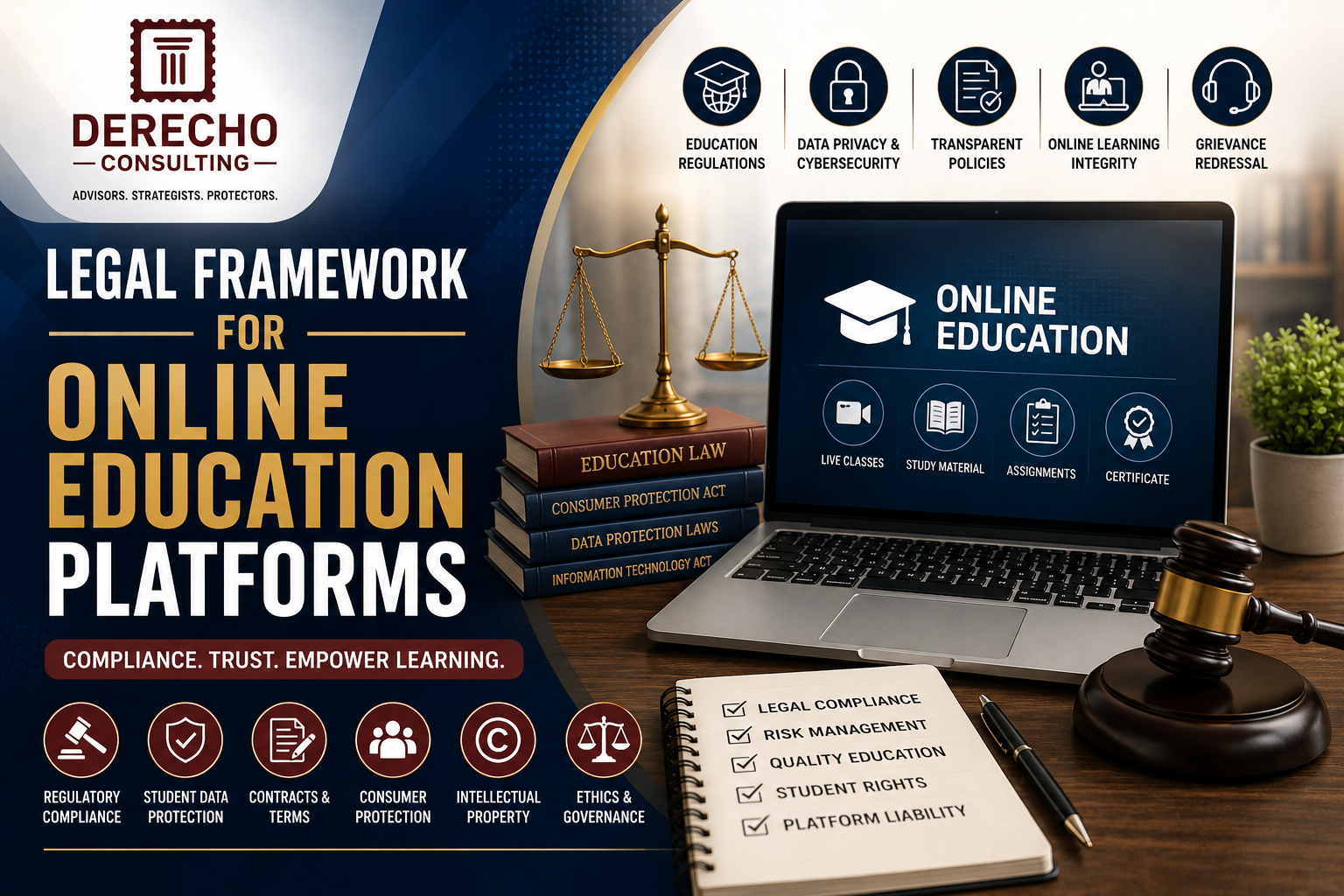
The legal framework for online education platforms can involve education regulations, student rights, consumer protection, data privacy, cybersecurity, intellectual property, contracts, advertising, and grievance redressal. For higher-education programmes, the UGC maintains regulations covering Open and Distance Learning and Online Programmes, including the 2020 regulations and subsequent amendments.
This guide explains the major legal considerations for online education platforms and the compliance measures businesses should consider when operating digital education services in India in 2026.
Why Online Education Law Matters
Online education providers must balance technology, accessibility, business objectives, and legal compliance. A clear legal framework can help platforms protect students, manage regulatory risks, and build greater trust.
Effective compliance can help businesses:
- Protect student information.
- Maintain applicable education requirements.
- Reduce legal and regulatory risks.
- Protect educational content.
- Improve transparency.
- Strengthen student and customer trust.
- Establish effective grievance mechanisms.
Key Legal Requirements for Online Education Platforms
1. Education Regulatory Compliance
Online education providers should determine which education regulations apply to their services. Platforms offering formal higher-education programmes need to consider applicable UGC requirements and recognition conditions.
The UGC currently lists the University Grants Commission (Open and Distance Learning Programmes and Online Programmes) Third Amendment Regulations, 2024, along with earlier amendments and the 2020 regulations.
Platforms should verify applicable recognition, programme requirements, institutional status, and regulatory conditions before making educational or certification claims.
2. Student Data Privacy and Cybersecurity
Online education platforms may collect names, contact details, academic information, assessment records, payment information, and other personal data.
Businesses should establish appropriate privacy policies and security controls covering:
- Data collection.
- Data usage.
- Data storage.
- Access controls.
- Data retention.
- Security measures.
- Incident management.
Protecting student information is an important part of Online Education Law and responsible EdTech operations.
3. Consumer Protection
Online education businesses should provide accurate information about courses, fees, certifications, refunds, affiliations, and services.
Marketing should not create misleading impressions about accreditation, employment outcomes, qualifications, or recognition. Clear information can help protect students and reduce consumer disputes.
4. Intellectual Property Protection
Educational platforms commonly use videos, presentations, books, images, software, research material, and other digital content.
Businesses should establish appropriate ownership and licensing arrangements for content created by instructors, employees, contractors, and third-party providers.
Copyright and licensing controls can help prevent unauthorized use of educational material.
5. Contracts and Platform Terms
Online education platforms should maintain clear terms and conditions covering:
- Course access.
- Fees and payments.
- Refunds.
- Cancellations.
- User accounts.
- Content ownership.
- Acceptable use.
- Certification.
- Dispute resolution.
Well-drafted contracts can establish clear rights and responsibilities between the platform, instructors, institutions, and students.
6. Advertising and Educational Claims
Education platforms should carefully review advertisements and promotional materials.
Claims relating to course recognition, university affiliation, certification, employment opportunities, salary outcomes, or guaranteed results should be accurate and appropriately supported.
7. Online Assessments and Learning Integrity
Platforms conducting online examinations and assessments should consider authentication, examination security, academic integrity, and appropriate handling of assessment records.
Where remote monitoring or proctoring technologies are used, businesses should also consider privacy, transparency, and data-security requirements.
8. Student Grievance Redressal
A proper grievance mechanism allows students to raise complaints and seek appropriate resolution.
Platforms should clearly communicate:
- How students can submit complaints.
- Who handles complaints.
- Response procedures.
- Escalation mechanisms.
- Available remedies.
UGC also maintains student-centric regulations, including regulations concerning student grievance redressal.
Best Practices for Online Education Platforms
Businesses should:
- Review applicable education regulations.
- Verify required approvals and recognition.
- Maintain transparent course information.
- Protect student data.
- Review contracts and platform terms.
- Secure intellectual-property rights.
- Monitor advertising claims.
- Maintain grievance procedures.
- Implement cybersecurity controls.
- Regularly review regulatory changes.
How Derecho Consulting Can Help
Derecho Consulting can assist online education and EdTech businesses with regulatory compliance, education-law advisory, consumer protection, data privacy, intellectual property, contract review, technology law, and legal risk assessment.
A structured compliance approach can help online education providers identify potential legal gaps, protect student interests, strengthen their policies, and operate digital learning services with greater confidence.
Conclusion
The Legal Framework for Online Education Platforms is becoming increasingly important as digital learning continues to grow. Education businesses need to consider applicable education regulations alongside privacy, cybersecurity, consumer protection, intellectual property, contracts, advertising, and grievance redressal requirements.
By implementing appropriate legal policies, protecting student information, using educational content lawfully, maintaining transparent practices, and regularly reviewing regulatory requirements, online education platforms can build safer, more trustworthy, and legally compliant digital learning environments.