
Introduction
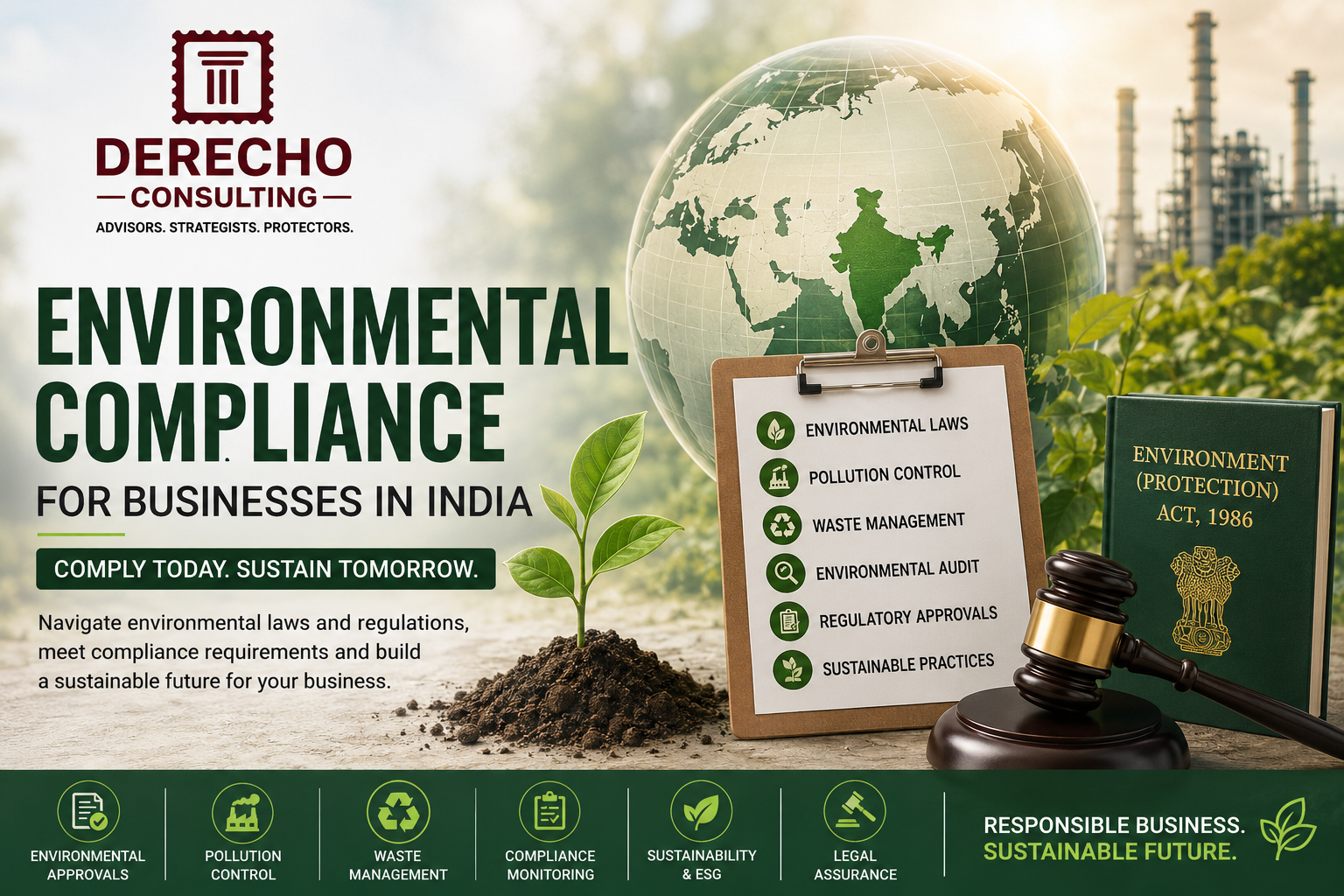
Environmental Compliance in India is becoming increasingly important for businesses as environmental regulations continue to evolve. Companies involved in manufacturing, construction, infrastructure, waste generation, and other activities may need to comply with requirements relating to pollution control, environmental clearances, waste management, emissions, wastewater, and resource management.
India’s environmental framework includes the Environment (Protection) Act, 1986, the Water (Prevention and Control of Pollution) Act, 1974, the Air (Prevention and Control of Pollution) Act, 1981, and various waste-management rules. Depending on the nature and location of a business, additional approvals, authorisations, registrations, and reporting requirements may apply.
This guide explains the key aspects of Environmental Compliance in India, including pollution-control requirements, environmental permissions, waste management, regulatory monitoring, documentation, and practical compliance measures businesses should consider in 2026.
Why Environmental Compliance Matters
Environmental compliance helps businesses operate responsibly while reducing regulatory, financial, and reputational risks.
A structured compliance approach can help businesses:
- Reduce environmental risks.
- Meet applicable regulatory requirements.
- Manage waste responsibly.
- Control air and water pollution.
- Maintain required permissions and authorisations.
- Avoid penalties and enforcement action.
- Strengthen corporate responsibility.
- Build stakeholder and customer trust.
Key Environmental Compliance Requirements
1. Environmental Approvals and Clearances
Businesses should determine whether their proposed activity requires environmental clearance or other regulatory approvals before establishing or expanding a project.
The applicable requirements can depend on the nature, size, location, and environmental impact of the proposed activity.
2. Consent to Establish and Consent to Operate
Certain industries and activities may require Consent to Establish (CTE) before establishing a unit and Consent to Operate (CTO) before commencing operations.
Pollution-control authorities issue these consents under applicable water and air pollution laws, based on the activity and regulatory requirements.
Businesses should monitor the validity of their consents and complete renewals or amendments within the applicable timelines.
3. Air Pollution Compliance
Businesses that generate air emissions may need to comply with prescribed emission standards and pollution-control requirements.
Companies should identify relevant emission sources, maintain appropriate pollution-control systems, conduct required monitoring, and maintain supporting records.
CPCB and State Pollution Control Boards monitor emissions and effluent standards and can take action in cases of non-compliance.
4. Water and Wastewater Management
Businesses generating wastewater or trade effluent should assess the applicable requirements for treatment, discharge, monitoring, and record keeping.
Appropriate wastewater-treatment systems and monitoring procedures may be required depending on the nature of the business and applicable consent conditions.
5. Waste Management
Waste management is an important part of Environmental Compliance in India.
Businesses should identify the types of waste they generate and follow the applicable requirements for collection, segregation, storage, transportation, treatment, recycling, and disposal.
India’s environmental framework includes specific rules covering areas such as hazardous waste, plastic waste, e-waste, battery waste, biomedical waste, and solid waste.
The Solid Waste Management Rules, 2026 were notified on January 27, 2026 and became effective from April 1, 2026, introducing requirements including mandatory source segregation into specified waste streams.
6. Hazardous Waste Compliance
Businesses generating hazardous waste should determine whether specific authorisation and handling requirements apply to their operations.
Appropriate procedures should cover storage, labelling, transportation, treatment, recycling, and disposal through authorised channels.
The applicable hazardous-waste framework is administered through environmental regulators, including State Pollution Control Boards and Pollution Control Committees.
7. Environmental Records and Documentation
Businesses should maintain proper records relating to environmental compliance.
These may include:
- Environmental approvals.
- Consent certificates.
- Waste-management records.
- Emission monitoring reports.
- Effluent monitoring records.
- Waste disposal documents.
- Authorisations.
- Compliance reports.
- Inspection records.
Proper documentation can help businesses demonstrate compliance during regulatory inspections and audits.
8. Environmental Audits and Monitoring
Regular environmental reviews can help businesses identify compliance gaps before they become significant regulatory problems.
The Government notified the Environment Audit Rules, 2025, introducing a framework aimed at strengthening environmental compliance monitoring.
Businesses should periodically review their environmental obligations and update internal compliance procedures when regulations change.
Common Environmental Compliance Risks
Businesses may face environmental risks when they:
- Operate without required permissions.
- Fail to renew environmental consents.
- Improperly dispose of waste.
- Exceed permitted emission or discharge limits.
- Maintain incomplete environmental records.
- Ignore waste-management requirements.
- Fail to implement required pollution-control measures.
- Do not monitor regulatory changes.
Best Practices for Businesses
Organizations should:
- Identify all environmental obligations applicable to their activities.
- Maintain an environmental compliance calendar.
- Obtain required approvals before starting applicable activities.
- Track Consent to Establish and Consent to Operate requirements.
- Maintain proper waste-management procedures.
- Monitor emissions and wastewater where applicable.
- Keep environmental documentation updated.
- Conduct periodic compliance audits.
- Train employees on environmental procedures.
- Monitor changes in environmental regulations.
How Derecho Consulting Can Help
Derecho Consulting can help businesses address Environmental Compliance in India through regulatory compliance advisory, environmental risk assessment, legal documentation, compliance reviews, regulatory monitoring, and corporate advisory services.
A structured environmental compliance programme can help businesses identify regulatory obligations, manage environmental risks, maintain appropriate documentation, and improve their overall compliance framework.
Conclusion
Environmental Compliance in India is an important responsibility for businesses operating across different industries. Companies need to understand the environmental requirements applicable to their activities and maintain appropriate approvals, pollution-control measures, waste-management systems, records, and monitoring procedures.
By regularly reviewing environmental obligations and adapting to regulatory changes, businesses can reduce legal and operational risks while supporting responsible and sustainable growth.