
Introduction
AI Customer Service Law is becoming increasingly important as businesses use chatbots, virtual assistants, and AI-powered tools to interact with customers.
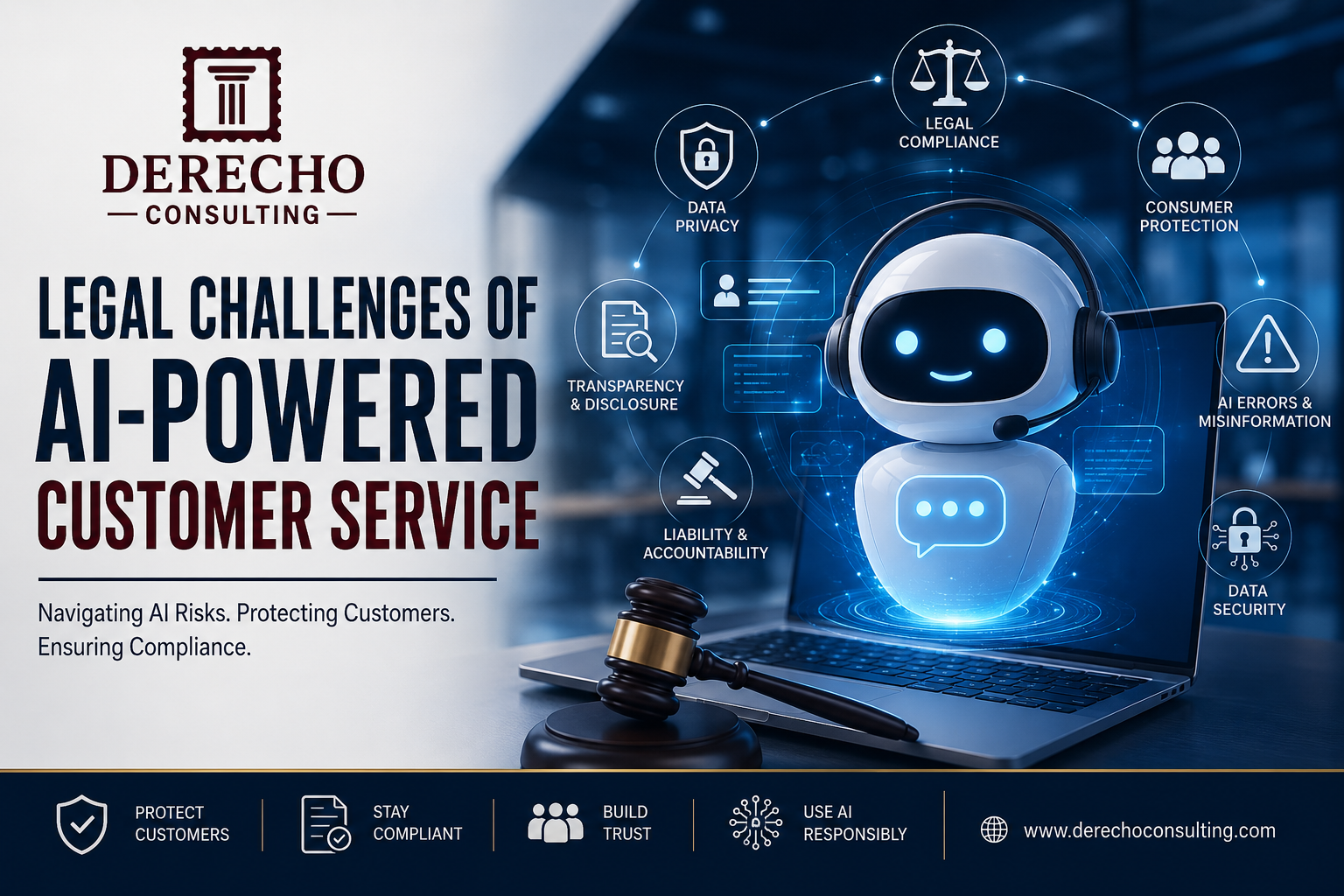
Legal Challenges of AI-Powered Customer Service are becoming increasingly important as businesses use chatbots, virtual assistants, voice bots, and AI-driven support systems to interact with customers. These technologies can improve response times and reduce operational costs, but they also create new legal and compliance risks.
AI-powered customer service may process personal information, make automated decisions, generate responses, and handle customer complaints. Businesses must therefore ensure that these systems operate transparently, protect customer information, and comply with applicable laws and regulations.
This guide explores the legal challenges of AI-powered customer service, including privacy, transparency, consumer protection, liability, data security, and AI governance. It also explains practical steps businesses can take to use AI customer service responsibly in 2026.
Why AI-Powered Customer Service Matters
AI customer service is changing how businesses communicate with customers. Organizations increasingly use AI to answer questions, recommend products, resolve complaints, and provide support around the clock.
However, businesses must balance automation with legal responsibility.
Effective AI governance can help businesses:
- Protect customer rights.
- Improve data security.
- Reduce legal risks.
- Increase transparency.
- Strengthen customer trust.
- Support responsible AI adoption.
AI Customer Service Law: Key Legal Challenges
1. Data Privacy
AI customer service systems may collect names, contact details, purchase history, conversations, and other personal information.
Businesses should clearly explain how customer data is collected, processed, stored, and used. Appropriate security measures should also be implemented to reduce privacy risks.
2. Transparency and Disclosure
Customers should know when they are interacting with an AI system, particularly when the interaction may influence important decisions.
Clear disclosures can improve transparency and help customers understand how automated systems operate.
3. AI-Generated Errors
AI systems can produce inaccurate, misleading, or inappropriate responses. Businesses may face legal and reputational risks when customers rely on incorrect information provided by an automated system.
Human oversight and appropriate escalation procedures can help manage these risks.
4. Consumer Protection
AI-powered systems must not be used to mislead customers, provide deceptive information, or create unfair outcomes.
Businesses should regularly review automated customer interactions to ensure that their AI systems support fair and responsible customer service.
5. Liability for AI Decisions
Determining responsibility when an AI system causes harm or provides incorrect advice can be complex.
Businesses should establish clear accountability frameworks that identify who is responsible for monitoring, reviewing, and correcting AI-generated decisions.
6. Data Security
AI customer service platforms can become targets for cyberattacks and unauthorized access.
Businesses should implement:
- Strong access controls.
- Encryption.
- Security monitoring.
- Regular risk assessments.
- Employee training.
- Incident response procedures.
AI Customer Service Law: Best Practices for Businesses
Organizations using AI-powered customer service should:
- Create clear AI governance policies.
- Inform customers when they interact with AI.
- Protect customer information.
- Monitor AI-generated responses.
- Maintain human escalation options.
- Conduct regular compliance reviews.
- Document AI-related decisions.
- Update systems as regulations evolve.
How Derecho Consulting Can Help
Derecho Consulting can help businesses address legal and regulatory challenges associated with AI-powered customer service through AI governance, data privacy, technology law, regulatory compliance, risk assessment, and corporate advisory services.
A structured compliance approach can help organizations adopt AI while protecting customer rights and reducing legal exposure.
Conclusion
Legal Challenges of AI-Powered Customer Service will become increasingly important as businesses expand their use of artificial intelligence. Organizations must balance automation and efficiency with privacy, transparency, consumer protection, security, and accountability.
By implementing responsible AI governance and regularly reviewing legal requirements, businesses can build customer-service systems that are innovative, secure, transparent, and compliant.