
Introduction
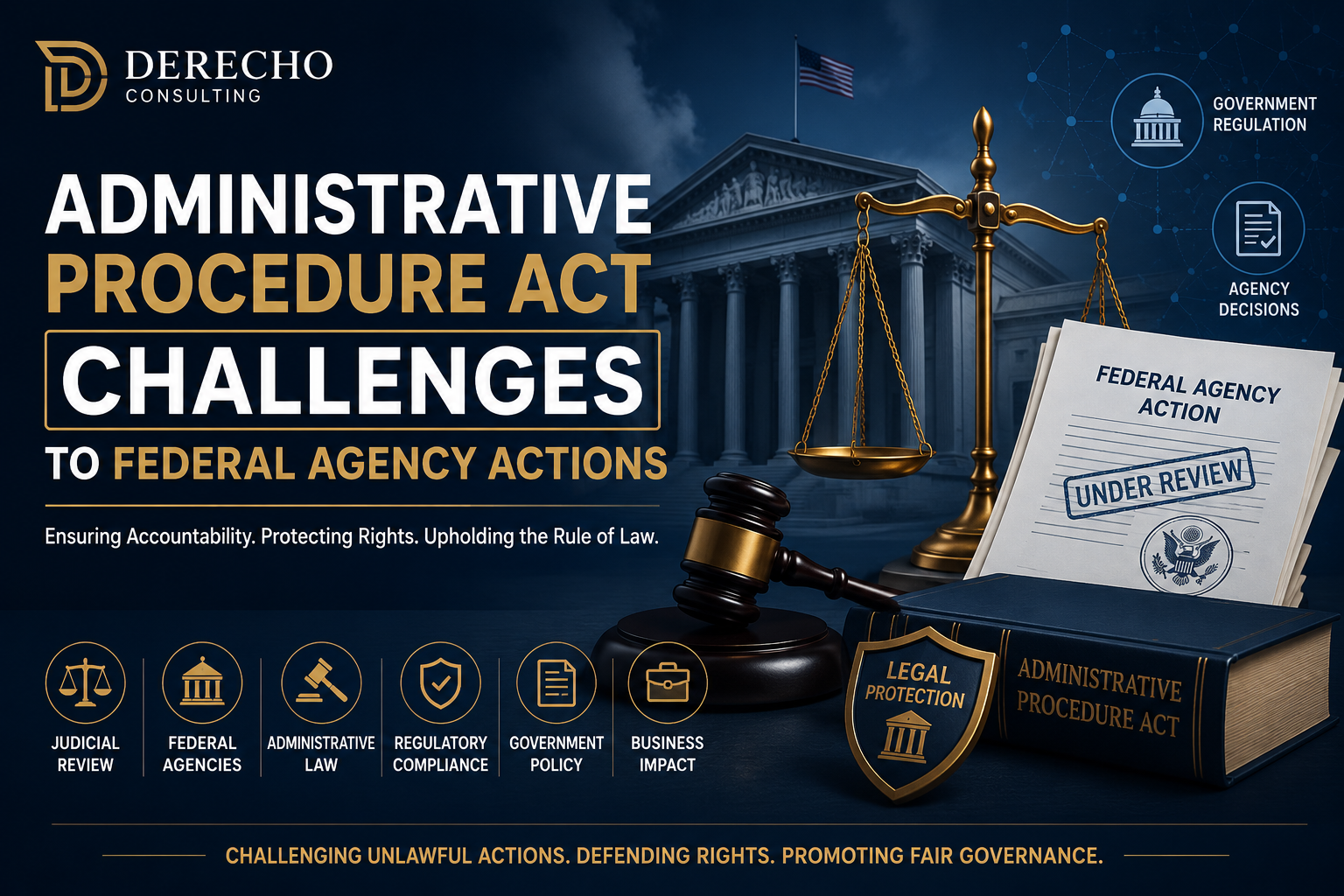
Government agencies play a vital role in creating and enforcing regulations that impact businesses, industries, and individuals. However, these agencies must operate within the limits of the law and follow established procedures when making decisions. Administrative Procedure Act challenges to federal agency actions provide a legal framework for reviewing whether federal agencies have acted lawfully, fairly, and within their statutory authority.
The Administrative Procedure Act (APA) is a cornerstone of U.S. administrative law that governs how federal agencies develop regulations, conduct hearings, and issue decisions. It also allows courts to review agency actions that may be arbitrary, capricious, unlawful, or procedurally improper. As regulations continue to shape modern business operations, understanding APA challenges has become increasingly important for organizations, legal professionals, and compliance teams.
This guide explains the purpose of the Administrative Procedure Act, common grounds for challenging federal agency actions, the judicial review process, and best practices for businesses navigating regulatory decisions.
Why Administrative Procedure Act Challenges Matter
Federal agencies regulate a wide range of industries, including healthcare, environmental protection, finance, labor, telecommunications, and consumer protection. Their decisions can significantly influence business operations, licensing, compliance obligations, and enforcement actions.
Administrative Procedure Act challenges help ensure that agencies:
- Follow statutory authority.
- Comply with legal procedures.
- Base decisions on evidence.
- Maintain transparency and accountability.
- Protect the rights of businesses and individuals.
- Promote fair administrative decision-making.
Moreover, judicial review under the APA strengthens public confidence in government institutions by ensuring that agencies remain accountable for their actions.
Understanding the Administrative Procedure Act
The Administrative Procedure Act establishes the rules that federal agencies must follow when developing regulations, conducting administrative hearings, and making official decisions.
The Act promotes:
- Transparent rulemaking.
- Public participation in regulatory processes.
- Fair administrative hearings.
- Judicial review of agency decisions.
- Accountability in government administration.
Additionally, the APA helps prevent agencies from exercising powers beyond those granted by Congress.
Common Grounds for Challenging Federal Agency Actions
Businesses and individuals may challenge agency decisions when they believe an agency has violated legal requirements.
Common grounds include:
- Acting beyond statutory authority.
- Failing to follow required procedures.
- Making arbitrary or capricious decisions.
- Ignoring relevant evidence.
- Violating constitutional protections.
- Exceeding delegated regulatory powers.
These legal challenges help ensure that agency decisions remain fair, reasonable, and legally justified.
Judicial Review Under the Administrative Procedure Act
One of the most significant features of the APA is the availability of judicial review.
Courts reviewing agency actions may determine whether an agency:
- Acted within its legal authority.
- Properly interpreted applicable laws.
- Followed required procedures.
- Considered all relevant evidence.
- Made reasonable and evidence-based decisions.
If a court finds that an agency violated the APA, it may:
- Set aside the agency action.
- Return the matter for reconsideration.
- Require additional procedural steps.
- Prevent enforcement of unlawful regulations.
Judicial review provides an important safeguard against unlawful administrative actions.
Impact on Businesses and Regulated Industries
Federal agency decisions affect businesses across numerous industries.
Organizations should:
- Monitor regulatory developments.
- Understand industry-specific compliance obligations.
- Maintain accurate regulatory records.
- Participate in public consultation processes.
- Document communications with regulatory agencies.
- Seek legal advice before responding to enforcement actions.
Furthermore, proactive regulatory compliance helps businesses reduce legal risks while improving operational certainty.
Best Practices for Regulatory Compliance
Businesses can strengthen their compliance programs by following these best practices:
- Regularly monitor changes in regulations.
- Conduct internal compliance reviews.
- Maintain detailed documentation.
- Respond promptly to agency notices.
- Train employees on regulatory requirements.
- Consult legal professionals during significant regulatory matters.
- Review compliance policies periodically.
A proactive compliance strategy reduces the likelihood of disputes while improving relationships with regulatory authorities.
Frequently Asked Questions (FAQs)
What is the Administrative Procedure Act?
The Administrative Procedure Act is a U.S. federal law that establishes procedures federal agencies must follow when creating regulations, conducting hearings, and making administrative decisions.
Who can challenge a federal agency action?
Individuals, businesses, organizations, and other parties directly affected by an agency decision may seek judicial review if they believe the agency acted unlawfully or failed to follow required procedures.
Why is judicial review important?
Judicial review ensures that federal agencies operate within the limits of their legal authority, follow proper procedures, and make decisions based on evidence rather than arbitrary actions.
How can businesses prepare for regulatory challenges?
Businesses should maintain accurate compliance records, monitor regulatory developments, consult legal professionals, and establish internal compliance programs to respond effectively to changing regulations.
How Derecho Consulting Can Help
Navigating regulatory frameworks and responding to government agency actions can be complex. Derecho Consulting assists organizations with regulatory compliance, legal risk management, administrative law guidance, policy reviews, and strategic legal support. Our professionals help businesses understand evolving regulatory requirements, strengthen compliance programs, and respond effectively to administrative decisions.
Conclusion
Administrative Procedure Act challenges to federal agency actions play a vital role in ensuring that government agencies remain transparent, accountable, and legally compliant. By allowing courts to review administrative decisions, the APA protects businesses and individuals from unlawful or procedurally improper agency actions.
Organizations operating in highly regulated industries should understand the principles of administrative law, maintain strong compliance practices, and seek legal guidance when responding to regulatory decisions. A proactive approach to regulatory compliance helps reduce legal risks while supporting long-term business success.