
Introduction
Understanding Digital Consent Under India’s DPDP Act is essential for businesses, startups, and digital platforms that collect, process, or store personal data. As India strengthens its data privacy framework, organizations must ensure that they obtain valid digital consent before processing personal information.
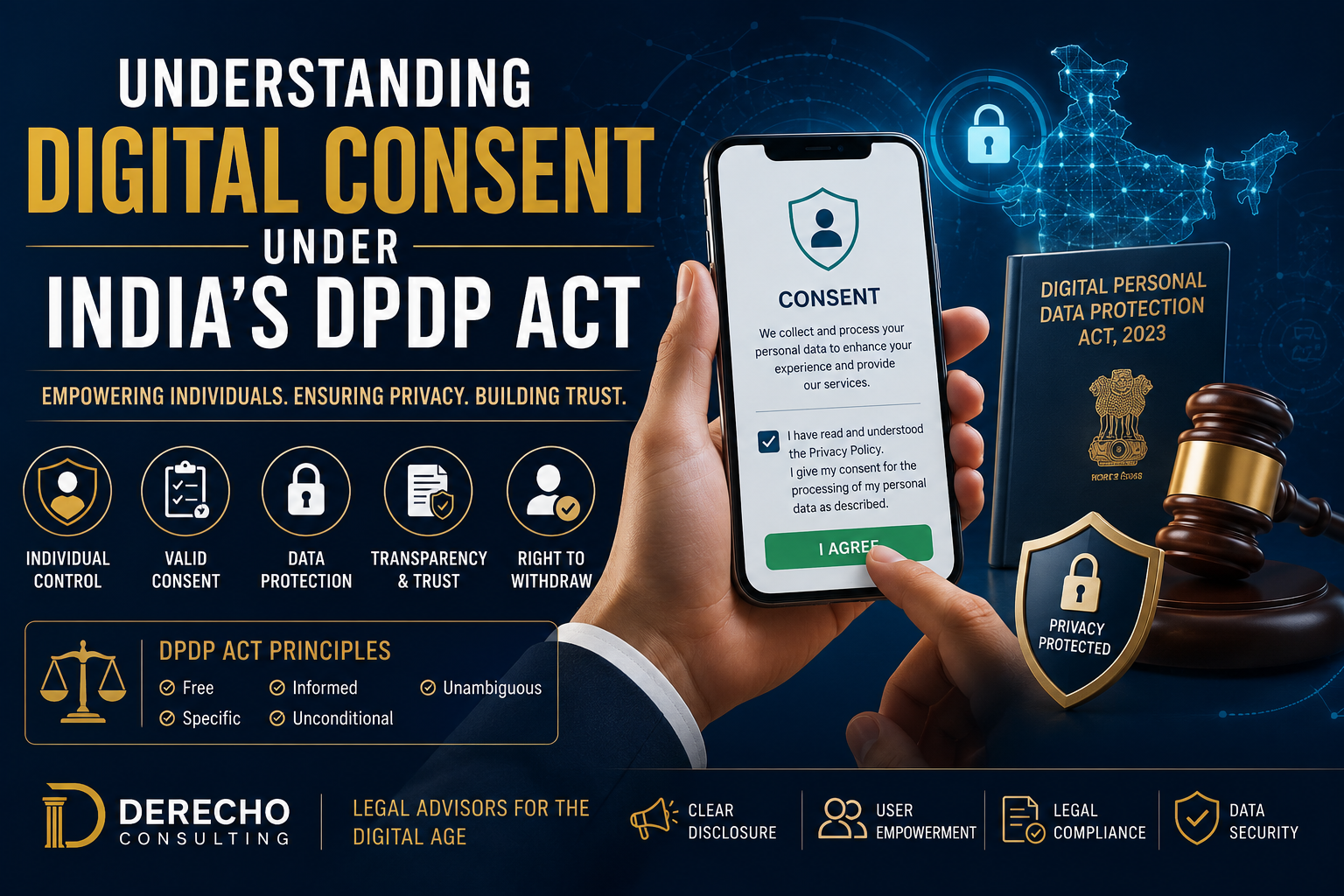
The Digital Personal Data Protection (DPDP) Act establishes a consent-based approach to data protection. Under this law, consent must be free, specific, informed, unconditional, and unambiguous. Businesses must also explain why personal data is collected, how it will be used, and what rights users have regarding their information.
Moreover, understanding digital consent helps organizations improve compliance, strengthen customer trust, and reduce legal risks. It also supports responsible data management in today’s digital economy.
Why Understanding Digital Consent Under India’s DPDP Act Matters
Digital consent allows individuals to control how their personal information is collected and used. At the same time, it creates legal responsibilities for organizations that process personal data.
Therefore, businesses must establish transparent consent practices and maintain accurate records. Doing so not only supports compliance with the DPDP Act but also improves customer confidence and brand reputation.
What Is Valid Digital Consent?
According to the DPDP Act, valid consent must be:
- Free and voluntary
- Specific to a particular purpose
- Informed through a clear privacy notice
- Unconditional
- Unambiguous through a clear affirmative action
For example, businesses should avoid pre-ticked checkboxes or hidden consent clauses because these practices may not meet legal requirements.
Provide Clear Privacy Notices
Organizations should provide privacy notices before collecting personal data. These notices should clearly explain:
- What information is collected
- Why the information is collected
- How it will be processed
- How long it will be retained
- User rights under the DPDP Act
- How consent can be withdrawn
Furthermore, privacy notices should be written in simple language so users can easily understand them.
Respect the Right to Withdraw Consent
The DPDP Act gives individuals the right to withdraw consent whenever they choose.
Therefore, businesses should provide simple and accessible methods for users to update their preferences or withdraw consent. A transparent process helps organizations maintain legal compliance and customer trust.
Manage Digital Consent Across Platforms
Many businesses collect personal data through websites, mobile applications, customer portals, online forms, and marketing campaigns.
Additionally, organizations should maintain centralized consent records across all digital platforms. This approach improves compliance and makes regulatory audits easier.
Protect Children’s Personal Data
Organizations processing children’s personal data must implement additional safeguards.
Furthermore, they should verify consent according to the requirements of the DPDP Act and adopt stronger privacy measures to protect minors from misuse of personal information.
Maintain Accurate Consent Records
Businesses should document every consent request and maintain accurate records.
These records should include:
- Date and time of consent
- Purpose of data collection
- Privacy notice provided
- Consent updates
- Withdrawal history
As a result, organizations can demonstrate compliance during audits and investigations.
Best Practices for Digital Consent Compliance
Businesses should follow these best practices:
- Use clear and simple consent language.
- Collect consent only for specific purposes.
- Avoid misleading consent requests.
- Allow users to withdraw consent easily.
- Maintain secure consent records.
- Review consent practices regularly.
- Train employees on data privacy compliance.
In addition, businesses should regularly review their privacy policies to ensure they remain aligned with changes to the DPDP Act.
Conclusion
Understanding Digital Consent Under India’s DPDP Act is essential for organizations that collect and process personal data. By obtaining valid consent, providing transparent privacy notices, respecting user rights, and maintaining accurate consent records, businesses can reduce legal risks and improve customer trust.
Ultimately, organizations that prioritize digital consent and responsible data management will be better prepared to comply with India’s evolving data protection laws. As digital privacy expectations continue to grow, a strong consent management framework will become an important part of long-term business success.