
Introduction
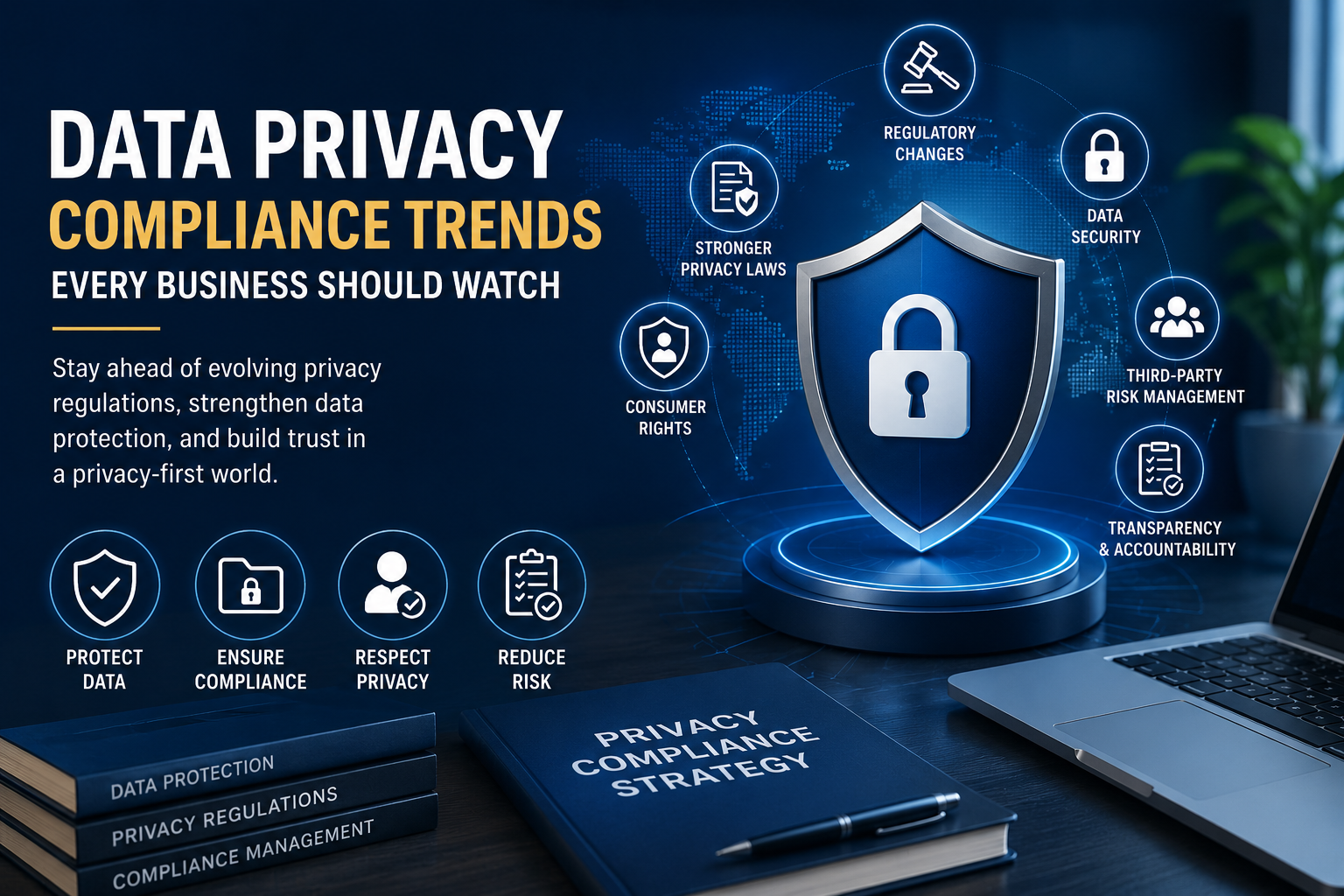
Data Privacy Compliance Trends Every Business Should Watch are becoming increasingly important as organizations face evolving privacy regulations and growing consumer expectations in 2026. Businesses collect and process large volumes of personal information through websites, mobile applications, cloud platforms, digital services, and connected technologies. As a result, governments worldwide continue to strengthen data privacy laws and introduce stricter compliance requirements to protect consumer rights and promote responsible data management.
Organizations that fail to keep pace with these changing privacy regulations may face regulatory investigations, financial penalties, reputational damage, and loss of customer trust. Businesses must adopt proactive privacy governance strategies, strengthen cybersecurity, improve data transparency, and regularly review compliance programs to remain competitive in today’s digital economy.
This guide explores the Data Privacy Compliance Trends Every Business Should Watch, highlights the latest developments shaping privacy compliance in 2026, and outlines practical steps organizations can take to strengthen data protection, reduce legal risks, and maintain regulatory compliance.
Why Data Privacy Compliance Matters
Data privacy has become a core business responsibility rather than simply a legal obligation. Customers expect organizations to protect their personal information, provide transparency regarding data collection practices, and respect their privacy rights.
Businesses that invest in strong privacy compliance not only reduce regulatory risks but also build customer trust, improve brand reputation, and support long-term business growth.
1. Stronger Consumer Privacy Rights
Privacy laws continue to expand consumer rights, including access to personal data, correction requests, deletion rights, and data portability. Businesses should establish clear procedures for responding to consumer privacy requests efficiently and within legal deadlines.
2. Increased Focus on Data Governance
Organizations are placing greater emphasis on data governance by maintaining accurate data inventories, improving data quality, and implementing clear policies for collecting, storing, and processing personal information.
Effective data governance supports regulatory compliance and operational efficiency.
3. Greater Transparency in Data Collection
Businesses should clearly explain what personal information they collect, why they collect it, how it is used, and whether it is shared with third parties.
Transparent privacy practices strengthen customer confidence and demonstrate accountability.
4. Enhanced Cybersecurity Measures
Privacy compliance depends on strong cybersecurity controls. Organizations should implement encryption, access controls, regular security assessments, employee training, and incident response plans to protect sensitive information.
Strong cybersecurity helps reduce the risk of data breaches and regulatory penalties.
5. Third-Party Vendor Risk Management
Businesses increasingly rely on vendors and cloud service providers that process personal information. Organizations should evaluate vendor privacy practices, establish appropriate contractual protections, and regularly monitor third-party compliance.
Managing vendor risks supports overall privacy compliance.
6. Regular Privacy Compliance Audits
Businesses should periodically review privacy policies, internal procedures, data processing activities, and compliance programs to identify potential gaps and improve regulatory readiness.
Routine audits help organizations stay prepared for changing legal requirements.
7. Ongoing Employee Privacy Training
Employees play an important role in protecting personal information. Regular privacy awareness training helps staff understand legal responsibilities, data handling procedures, cybersecurity practices, and incident reporting requirements.
Well-trained employees reduce compliance risks caused by human error.
Best Practices for Data Privacy Compliance
Organizations should maintain updated privacy policies, strengthen cybersecurity controls, conduct privacy impact assessments, monitor regulatory developments, review vendor agreements, document compliance activities, and promote a culture of privacy throughout the organization.
A proactive approach to privacy compliance helps businesses protect customer information while supporting sustainable growth.
Conclusion
Understanding the Data Privacy Compliance Trends Every Business Should Watch is essential for organizations operating in today’s digital environment. Businesses that strengthen privacy governance, improve transparency, enhance cybersecurity, monitor regulatory changes, and respect consumer rights will be better positioned to maintain compliance and build lasting customer trust.
By making data privacy a strategic business priority, organizations can reduce legal risks, improve operational resilience, and confidently adapt to the evolving regulatory landscape in 2026.