
Introduction
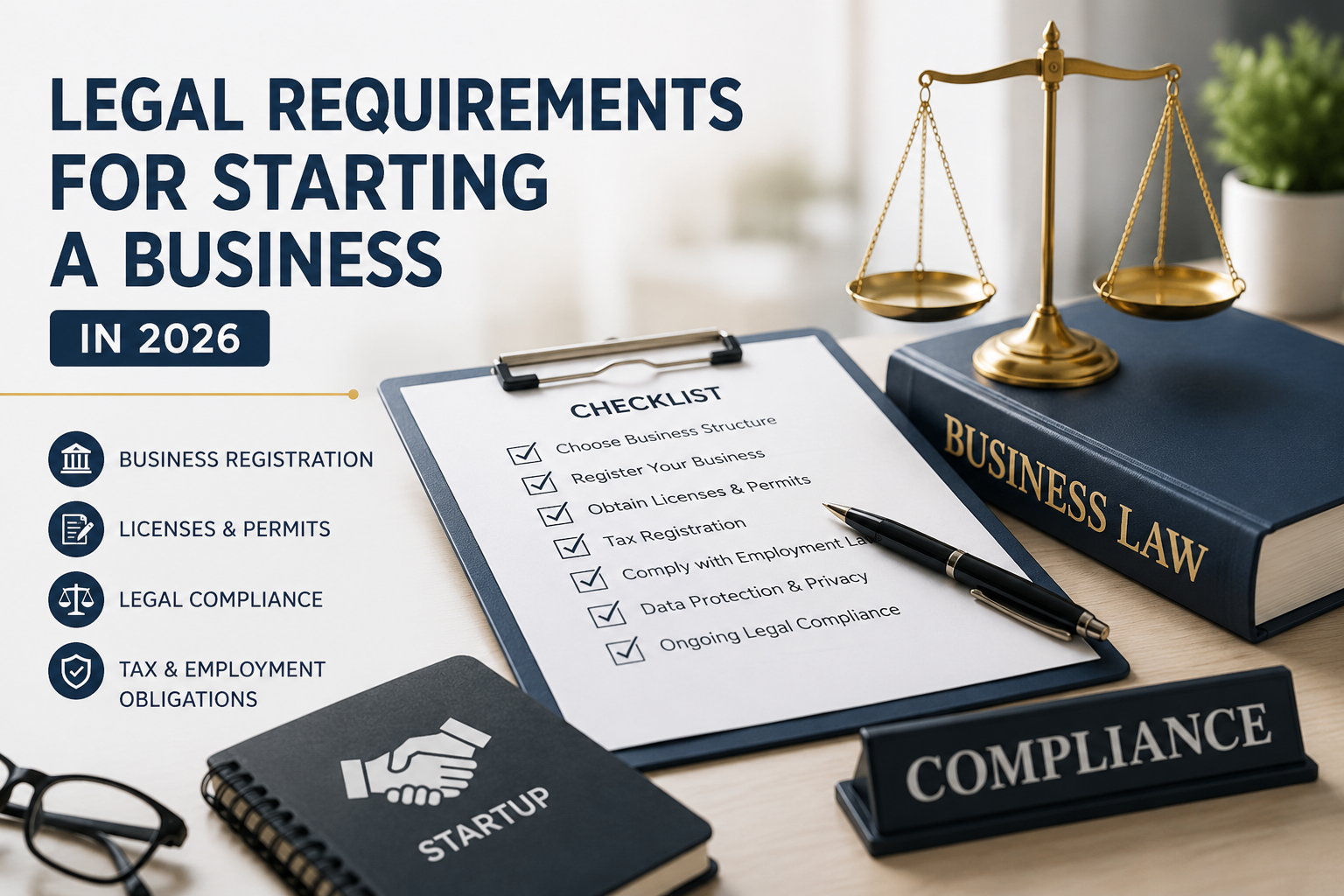
Legal Requirements for Starting a Business are more important than ever in 2026 as entrepreneurs must meet legal obligations before launching a new business. From choosing the right business structure and registering the company to obtaining licenses, meeting tax obligations, and complying with employment and privacy laws, every step plays a vital role in building a legally compliant business.
Failing to meet these legal requirements can lead to regulatory penalties, financial losses, business interruptions, and unnecessary legal disputes. Whether you are establishing a startup, a small business, or expanding into a new market, understanding the legal framework from the beginning helps protect your business and creates a strong foundation for long-term success.
This guide explains the Legal Requirements for Starting a Business in 2026, outlining the key legal steps every entrepreneur should complete before launching a business. It also provides practical guidance to help organizations remain compliant while reducing legal and operational risks.
Why Understanding Legal Requirements Matters
Every business operates within a legal framework designed to protect business owners, employees, customers, and stakeholders. Understanding these legal requirements helps businesses avoid compliance issues, establish credibility, and operate with confidence.
Taking a proactive approach to legal compliance also makes it easier to attract investors, build customer trust, and support sustainable business growth.
1. Choose the Right Business Structure
One of the first legal decisions is selecting the appropriate business structure. Entrepreneurs should evaluate whether a sole proprietorship, partnership, limited liability company (LLC), or corporation best suits their business goals, ownership structure, tax considerations, and liability protection.
Choosing the right entity provides a solid legal foundation for future growth.
2. Register Your Business
Businesses should complete all required registration procedures with the appropriate government authorities before beginning operations. Registration requirements vary depending on the business structure, industry, and location.
Proper registration establishes the legal identity of the business and supports regulatory compliance.
3. Obtain Required Licenses and Permits
Many businesses require federal, state, or local licenses and permits before offering products or services. Businesses should identify all applicable licensing requirements based on their industry and operating location.
Maintaining valid licenses helps prevent regulatory violations and business disruptions.
4. Understand Tax Registration and Compliance
Businesses must register for applicable tax obligations, including federal, state, and local taxes where required. Proper tax registration supports accurate reporting, timely filings, and ongoing compliance with tax regulations.
Maintaining organized financial records also simplifies future tax obligations.
5. Prepare Essential Legal Documents
Every business should maintain essential legal documents such as operating agreements, shareholder agreements, partnership agreements, contracts, terms and conditions, and privacy policies where applicable.
Well-prepared legal documentation helps reduce disputes while protecting business interests.
6. Comply with Employment Laws
Businesses planning to hire employees should understand employment regulations relating to hiring practices, wages, workplace policies, employee classifications, and labor law compliance.
Establishing compliant employment practices supports both legal obligations and workforce management.
7. Protect Business Data and Privacy
Businesses that collect customer or employee information should implement appropriate privacy policies, data protection procedures, and cybersecurity measures to safeguard personal information.
Strong privacy compliance helps organizations meet legal requirements while building customer trust.
8. Maintain Ongoing Legal Compliance
Starting a business is only the beginning. Organizations should regularly review legal requirements, monitor regulatory changes, renew licenses, update policies, maintain corporate records, and conduct periodic compliance reviews.
Continuous legal compliance helps businesses adapt to changing laws while minimizing operational and legal risks.
Best Practices for Business Legal Compliance
Businesses should establish compliance procedures early, maintain accurate records, review contracts regularly, seek legal guidance when necessary, and monitor changes in applicable laws.
A proactive compliance strategy supports long-term business stability and reduces legal exposure.
Conclusion
Understanding the Legal Requirements for Starting a Business in 2026 is essential for building a strong and legally compliant organization. Businesses that complete the necessary registrations, obtain required licenses, prepare legal documents, meet tax obligations, and maintain ongoing compliance are better positioned for sustainable growth.
By taking the right legal steps from the beginning, entrepreneurs can reduce regulatory risks, protect their business interests, and confidently build a successful business in today’s evolving legal environment.