
Introduction
Consumer data has become one of the most valuable assets for businesses. As a result, data protection has become a top legal and operational priority in 2026.As organizations collect increasing amounts of personal information through websites, mobile applications, online services, and digital transactions, governments continue to strengthen consumer data protection laws to ensure greater transparency, accountability, and privacy. Businesses that fail to comply with these legal requirements may face regulatory investigations, financial penalties, and reputational damage. Recent trends also show growing emphasis on stronger data governance and proactive compliance as organizations navigate expanding privacy obligations.
Understanding consumer data protection laws is essential for every business, regardless of its size or industry. Whether handling customer contact information, payment details, browsing activity, or sensitive personal data, organizations must establish responsible data management practices that comply with applicable legal requirements.
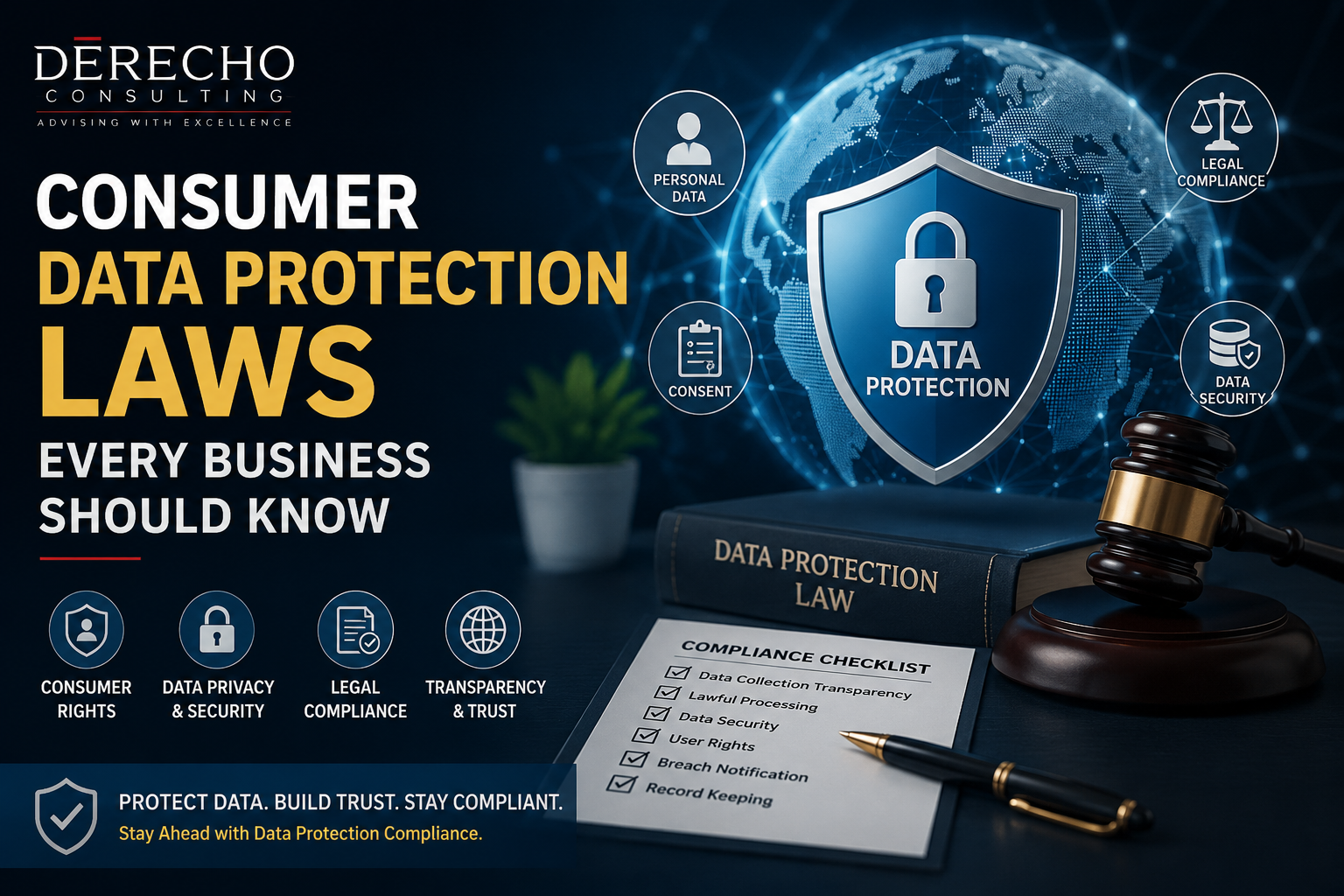
This guide explores the Consumer Data Protection Laws Every Business Should Know, explains why these laws matter in 2026, and outlines practical steps businesses can take to strengthen privacy compliance, protect customer information, and reduce legal risks.
Why Consumer Data Protection Laws Matter in 2026
Consumer expectations regarding privacy continue to grow as new regulations expand individual rights over personal information. Businesses are expected to be transparent about how they collect, use, store, and share consumer data while implementing appropriate safeguards to prevent unauthorized access and misuse.
Strong privacy compliance not only helps businesses meet legal obligations but also builds customer trust and strengthens long-term business relationships.
1. Understand the Consumer Data You Collect
Businesses should identify every category of personal information they collect, including names, email addresses, phone numbers, payment details, IP addresses, device information, location data, and online activity.
Knowing what information is collected is the first step toward effective privacy compliance.
2. Maintain a Clear Privacy Policy
Every business should publish a privacy policy that clearly explains how consumer information is collected, used, shared, stored, and protected.
Privacy policies should be reviewed regularly to reflect changing business practices and legal requirements.
3. Respect Consumer Privacy Rights
Many consumer data protection laws provide individuals with rights to access, correct, delete, or obtain copies of their personal information. Businesses should establish procedures for responding to privacy requests accurately and within legal timeframes.
Respecting consumer rights demonstrates accountability and strengthens customer confidence.
4. Strengthen Data Security Measures
Protecting consumer information requires businesses to implement administrative, technical, and organizational security measures that reduce the risk of unauthorized access, cyberattacks, and data breaches.
Strong cybersecurity supports both legal compliance and business continuity.
5. Review Third-Party Data Sharing
Organizations should carefully evaluate vendors, service providers, and technology partners that process consumer information on their behalf.
Contracts should clearly define privacy responsibilities, security expectations, and compliance obligations.
6. Train Employees on Data Protection
Employees who handle customer information should receive regular training on privacy policies, data handling procedures, cybersecurity awareness, and legal compliance.
Well-trained employees help reduce privacy risks caused by human error.
7. Monitor Changes to Consumer Data Protection Laws
Privacy regulations continue to evolve across different jurisdictions. Businesses should regularly monitor legislative updates, review compliance programs, and update internal policies whenever legal requirements change.
Ongoing compliance helps organizations remain prepared for future regulatory developments.
Best Practices for Consumer Data Protection Compliance
Businesses should perform regular privacy audits, update privacy policies, strengthen cybersecurity controls, review vendor agreements, maintain accurate records, and provide ongoing employee training.
A proactive approach to data protection helps organizations reduce legal risks while building stronger customer relationships.
Conclusion
Understanding the Consumer Data Protection Laws Every Business Should Know is essential for organizations that collect and process personal information. Businesses that implement effective privacy governance, strengthen data security, respect consumer rights, and monitor evolving legal requirements will be better positioned to maintain compliance and protect customer trust.
By making consumer data protection a core part of business operations, organizations can reduce regulatory risks, improve transparency, and confidently navigate the evolving privacy landscape in 2026.