
Introduction
State privacy laws continue to evolve across the United States, making data privacy compliance a growing priority for businesses in 2026. As more states introduce or strengthen consumer privacy legislation, organizations that collect, process, store, or share personal information must understand how these laws affect their daily operations. Businesses that fail to comply with state privacy requirements may face regulatory investigations, financial penalties, and reputational damage.
Unlike federal privacy regulations, state privacy laws often differ in their scope, consumer rights, business obligations, and enforcement requirements. Companies operating across multiple states should regularly review their privacy policies, data management practices, and compliance programs to ensure they meet the legal requirements of every jurisdiction where they conduct business.
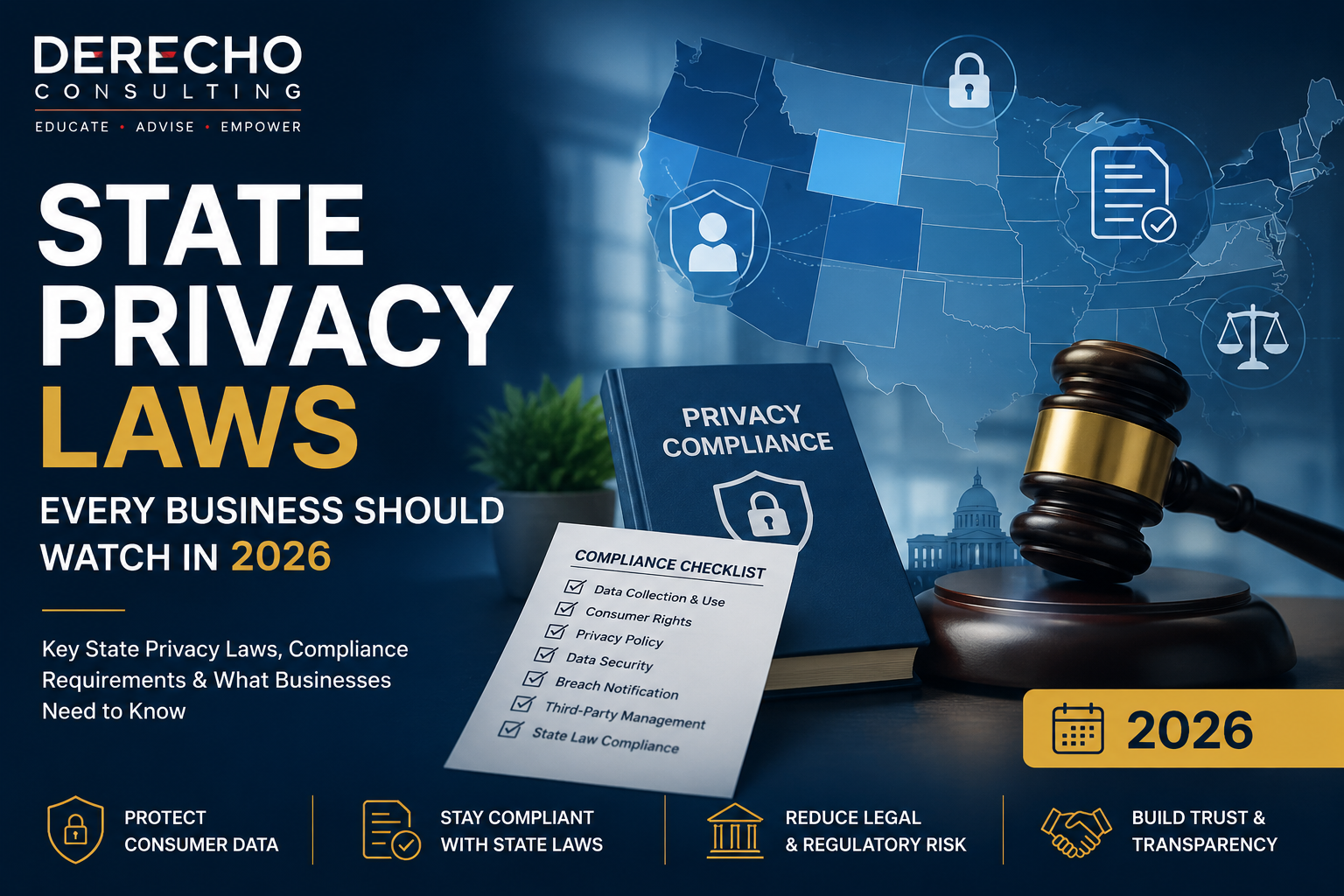
This guide explores the State Privacy Laws Every Business Should Watch in 2026, highlights the key legal developments businesses should monitor, and provides practical steps organizations can take to strengthen privacy compliance, protect consumer data, and reduce regulatory risks.
Why State Privacy Laws Matter in 2026
State privacy laws have become an essential part of business compliance. As consumers become more aware of their privacy rights, lawmakers continue introducing stronger data protection requirements that increase business responsibilities.
Organizations that proactively monitor legal developments and maintain strong privacy programs are better positioned to reduce compliance risks while building customer trust.
1.Understand Which State Privacy Laws Apply to Your Business
Businesses should determine which state privacy laws apply based on where they operate, where their customers are located, and the amount of personal information they collect and process.
Understanding jurisdiction-specific requirements is the foundation of an effective privacy compliance program.
2. Review Your Privacy Policy Under State Privacy Laws
Privacy policies should accurately explain how personal information is collected, used, stored, shared, and protected. Businesses should update privacy notices whenever business practices or legal requirements change.
Transparent privacy disclosures improve customer confidence and support regulatory compliance.
3. Strengthen Consumer Privacy Rights Management
Many state privacy laws provide consumers with rights to access, correct, delete, or obtain copies of their personal information. Businesses should establish procedures for managing privacy requests within applicable legal deadlines.
Efficient request management demonstrates accountability and strengthens compliance.
4.Improve Data Security Practices
Protecting personal information requires businesses to implement appropriate administrative, technical, and organizational safeguards. Regular security assessments help reduce cybersecurity risks while supporting privacy compliance.
Strong data security is a critical component of every privacy program.
5. Review Third-Party Vendor Compliance
Organizations should carefully evaluate vendors, service providers, cloud platforms, and technology partners that process personal information on their behalf.
Vendor agreements should clearly define privacy responsibilities, security requirements, and compliance obligations.
6. Train Employees on Privacy Compliance
Employees who handle customer or business information should receive regular training on privacy laws, internal policies, and secure data handling procedures.
Ongoing training helps reduce compliance risks caused by human error.
7. Monitor Changes to State Privacy Laws
Privacy laws continue to change throughout the year. Businesses should regularly monitor legislative developments, review compliance programs, and update internal policies whenever new legal requirements take effect.
Continuous compliance helps organizations stay prepared for future regulatory changes.
Best Practices for State Privacy Compliance
Businesses should make privacy compliance part of their ongoing governance strategy. Regular compliance audits, policy reviews, employee training, vendor assessments, and cybersecurity improvements help organizations maintain compliance while reducing legal and operational risks.
A proactive privacy program supports both regulatory compliance and long-term business success.
Conclusion
Understanding the State Privacy Laws Every Business Should Watch in 2026 is essential for organizations that collect and process personal information. Businesses that strengthen privacy governance, improve data security, review vendor relationships, and monitor changing regulations will be better positioned to meet compliance requirements while protecting customer trust.
By taking a proactive approach to state privacy compliance, organizations can reduce regulatory risks, improve operational resilience, and confidently navigate the evolving privacy landscape throughout 2026.