
Introduction
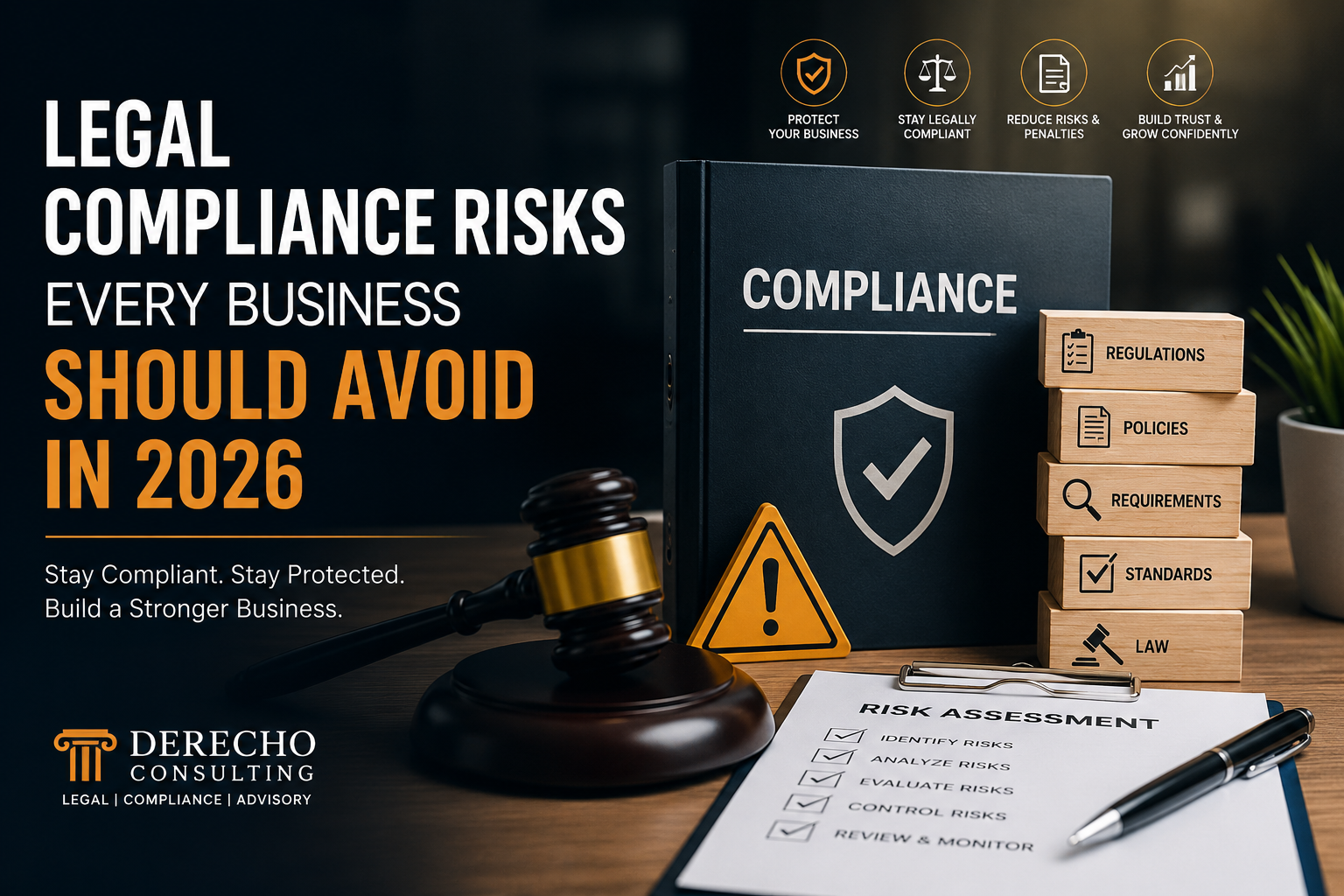
Legal Compliance Risks are one of the biggest challenges businesses face in 2026. As regulations continue to evolve, organizations of every size must comply with changing corporate, employment, tax, and data privacy laws to avoid penalties, legal disputes, and reputational damage.
As regulations continue to change, many organizations unknowingly expose themselves to compliance risks. Outdated policies, missed filing deadlines, inadequate data protection measures, and employment law violations can all result in financial penalties, legal disputes, and reputational damage. A proactive compliance strategy helps businesses identify these risks before they become serious problems.
This guide explores the legal compliance risks every business should avoid in 2026. It highlights the most common compliance challenges affecting organizations today and provides practical guidance to help businesses strengthen governance, reduce legal exposure, and remain compliant with changing regulations.
Why Legal Compliance Risks Matter in 2026
Business regulations continue to evolve across the United States and globally. Governments are introducing stricter rules covering corporate governance, employment practices, tax reporting, data privacy, cybersecurity, and consumer protection.
Failure to comply with these legal requirements can lead to regulatory investigations, financial penalties, operational disruptions, and loss of customer confidence. Businesses that regularly review their compliance programs are better prepared to adapt to regulatory changes while reducing legal and operational risks.
1. Failing to Maintain Corporate Compliance
Every business must maintain accurate corporate records and complete required filings on time. Missing annual reports, failing to update business registrations, or neglecting corporate governance requirements can result in penalties or the loss of good standing with regulatory authorities.
Regular compliance reviews help businesses remain legally compliant and avoid unnecessary administrative issues.
2. Ignoring Employment Law Requirements
Employment laws continue to change across federal, state, and local jurisdictions. Businesses should regularly review employee classifications, wage requirements, workplace policies, leave regulations, and hiring practices.
Failure to comply with employment laws can lead to disputes, regulatory enforcement, and significant financial liability.
3. Weak Data Privacy and Cybersecurity Practices
Protecting customer information has become one of the most important legal responsibilities for modern businesses. Organizations should maintain updated privacy policies, implement appropriate cybersecurity measures, and comply with applicable data privacy laws.
Poor data protection practices can expose businesses to regulatory action, financial loss, and reputational damage following a security incident.
4. Missing Tax and Financial Reporting Obligations
Tax compliance remains a critical part of business operations. Companies should monitor filing deadlines, maintain accurate financial records, and comply with applicable federal, state, and local tax regulations.
Timely reporting reduces the risk of penalties and supports sound financial management.
5. Inadequate Contract Management
Contracts define important legal relationships between businesses, employees, customers, and suppliers. Poorly drafted agreements, outdated contract terms, or missing documentation can create unnecessary legal disputes.
Businesses should regularly review contracts to ensure they remain accurate, enforceable, and aligned with current business operations.
6. Failing to Review Internal Compliance Policies
Compliance should not be treated as a one-time exercise. Internal policies should be reviewed whenever laws change, new technologies are introduced, or business operations expand into new jurisdictions.
Regular policy reviews help organizations respond effectively to changing legal requirements.
7. Poor Risk Management and Compliance Monitoring
Businesses should establish ongoing compliance monitoring rather than relying solely on annual reviews. Internal audits, compliance training, documentation, and risk assessments help identify potential issues before they become legal problems.
A structured compliance program supports long-term business stability and regulatory readiness.
Best Practices to Reduce Compliance Risks
Businesses can reduce legal exposure by maintaining accurate records, updating policies regularly, training employees, monitoring regulatory developments, and seeking professional legal guidance when necessary.
Developing a proactive compliance culture strengthens governance while supporting sustainable business growth.
Conclusion
Legal compliance continues to be one of the most important priorities for businesses in 2026. As regulations become more complex, organizations must regularly review their compliance programs, strengthen internal controls, and stay informed about legal developments that affect their operations.
By understanding the legal compliance risks every business should avoid in 2026, companies can reduce legal exposure, improve operational resilience, and build greater trust with customers, employees, investors, and regulators. Investing in compliance today helps create a stronger, more secure, and more successful business for the future.