

Introduction: The Rise of Organic Farming in India
Agriculture has always been the backbone of Indian society, supporting millions of farmers and contributing significantly to the nation’s economy. However, increasing concerns about soil degradation, chemical residue in food, environmental pollution, and health risks have created a strong demand for sustainable agricultural practices.
Organic farming has emerged as a powerful solution that focuses on maintaining ecological balance, improving soil fertility, protecting biodiversity, and producing safe food without excessive dependence on synthetic chemicals.
But organic farming is not only about avoiding chemical fertilizers and pesticides. In today’s agricultural ecosystem, it is closely connected with legal compliance, certification standards, food safety regulations, and consumer trust.
Farmers, exporters, processors, retailers, and businesses involved in organic agriculture must understand the legal framework governing organic products in India.
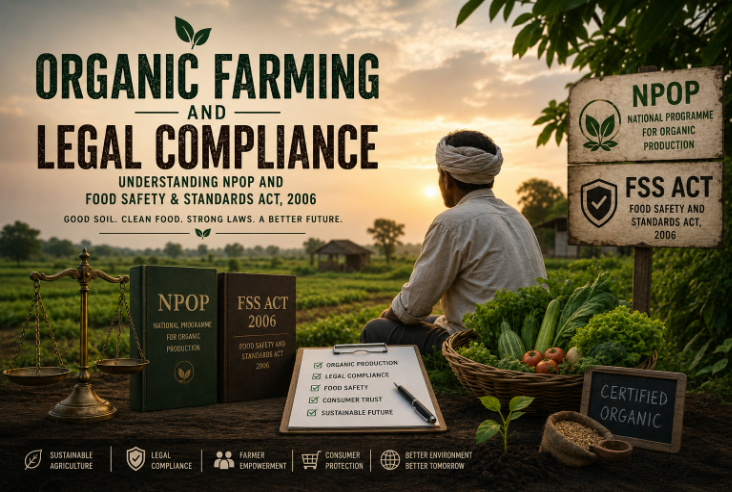
The two major pillars of organic farming compliance are:
- National Programme for Organic Production (NPOP)
- Food Safety and Standards Act, 2006 (FSS Act)
These frameworks ensure that organic products reaching consumers are genuine, safe, traceable, and produced according to approved standards.
1. Understanding Organic Farming: Beyond Chemical-Free Agriculture
Organic farming is an agricultural production system that works with natural processes rather than against them.
It focuses on:
- Maintaining soil health
- Using natural fertilizers
- Encouraging biodiversity
- Avoiding harmful synthetic chemicals
- Conserving water resources
- Supporting sustainable farming communities
Organic farming practices include:
1.1 Natural Soil Management
Healthy soil is the foundation of organic agriculture.
Farmers use:
- Compost
- Vermicompost
- Green manure
- Crop rotation
- Bio-fertilizers
- Organic waste recycling
These methods increase microbial activity and improve long-term productivity.
1.2 Biological Pest Management
Instead of chemical pesticides, organic farming encourages:
- Beneficial insects
- Neem-based products
- Biological control agents
- Natural pest-resistant varieties
This protects ecosystems and reduces chemical contamination.
1.3 Sustainable Crop Production
Organic farmers follow:
- Mixed cropping
- Rotation farming
- Traditional seed preservation
- Natural farming techniques
These practices reduce dependency on external inputs.
2. Why Legal Compliance Matters in Organic Farming
Many consumers purchase organic products because they believe they are healthier and safer.
However, without legal regulations, anyone could label a product as “organic” without following actual organic practices.
Legal compliance ensures:
Authenticity
Only products meeting defined standards can be marketed as certified organic.
Consumer Protection
Consumers receive products that meet food safety requirements.
Market Access
Certified organic farmers can access:
- Domestic markets
- International export opportunities
- Premium pricing
Environmental Protection
Regulations encourage sustainable agricultural practices.
3. National Programme for Organic Production (NPOP)
Overview of NPOP
The National Programme for Organic Production (NPOP) is one of India’s primary regulatory frameworks for organic production.
It was introduced by the Government of India through the:
Ministry of Commerce and Industry
The programme establishes standards for:
- Organic production
- Certification procedures
- Accreditation of certification bodies
- Export quality control
NPOP plays a critical role in ensuring that Indian organic products meet national and international standards.
4. Objectives of NPOP
The major objectives of NPOP include:
4.1 Establishing Organic Standards
NPOP defines clear guidelines for:
- Farming practices
- Processing
- Packaging
- Storage
- Transportation
Farmers and businesses must follow these standards to receive certification.
4.2 Certification System Development
NPOP creates a structured certification system where approved certification agencies inspect organic farms.
The certification process verifies:
- Land history
- Farming methods
- Input usage
- Record maintenance
- Production practices
4.3 Promoting Organic Exports
India exports various organic products including:
- Rice
- Spices
- Tea
- Coffee
- Cotton
- Pulses
- Herbal products
NPOP certification helps Indian organic products gain acceptance in global markets.
5. Organic Certification Process Under NPOP
Organic certification is a legal recognition that a farm or product follows approved organic standards.
The certification process generally includes:
Step 1: Application Submission
Farmers or organizations apply to an accredited certification agency.
The application includes:
- Farm details
- Land information
- Crop details
- Farming practices
Step 2: Farm Inspection
Certification agencies conduct inspections to verify:
- Organic farming practices
- Input usage
- Storage facilities
- Documentation
Step 3: Conversion Period
Land previously using chemical farming methods may require a transition period.
During this period:
- Chemical inputs are restricted
- Soil recovery is monitored
- Organic practices are implemented
Step 4: Certification Approval
After successful verification, the farm receives organic certification.
Certified products can use approved organic labels.
6. Importance of Documentation in Organic Farming
Documentation is a major legal requirement.
Farmers should maintain records related to:
- Seeds used
- Fertilizers applied
- Pest control methods
- Harvest details
- Storage records
- Sales information
Proper documentation creates transparency and improves market credibility.
7. Food Safety and Standards Act, 2006
Introduction
The Food Safety and Standards Act, 2006 is one of India’s most important food regulations.
It established:
Food Safety and Standards Authority of India (FSSAI)
FSSAI regulates:
- Food manufacturing
- Processing
- Distribution
- Storage
- Sale
The objective is to ensure that consumers receive safe and quality food products.
8. Role of FSS Act, 2006 in Organic Products
Organic products are still food products and must comply with food safety regulations.
The FSS Act ensures:
Food Safety
Organic products must not contain harmful contaminants.
Proper Labelling
Consumers must receive accurate information regarding:
- Product identity
- Ingredients
- Certification details
- Manufacturer information
Prevention of Misleading Claims
Businesses cannot falsely advertise products as organic.
9. Organic Product Labelling Requirements
Proper labeling builds consumer confidence.
Organic product labels generally include:
- Organic certification information
- Product name
- Batch number
- Manufacturing date
- Expiry date
- Nutritional information
- Storage instructions
False organic claims can result in regulatory action.
10. Legal Responsibilities of Organic Farmers
Organic farmers must ensure:
10.1 Compliance with Approved Inputs
Farmers cannot use prohibited chemicals or genetically modified materials where restricted.
10.2 Maintaining Farm Integrity
Farmers must prevent contamination from:
- Nearby chemical farms
- Unsafe water sources
- Unauthorized inputs
10.3 Following Certification Conditions
Farmers must cooperate with inspections and maintain required records.
11. Challenges in Organic Farming Compliance
Although organic farming provides many benefits, farmers face several challenges.
11.1 Certification Cost
Small farmers may find certification procedures expensive.
Solutions include:
- Group certification
- Farmer Producer Organizations (FPOs)
- Government support schemes
11.2 Market Awareness
Many farmers struggle to connect with premium organic markets.
Better supply chains and digital platforms can improve access.
11.3 Maintaining Quality Standards
Organic production requires continuous monitoring.
Farmers must maintain consistency in:
- Soil management
- Processing
- Storage
12. Role of Farmer Producer Organizations (FPOs)
FPOs help small farmers collectively manage:
- Certification expenses
- Marketing
- Processing
- Transportation
They create stronger bargaining power and improve profitability.
13. Organic Farming and Consumer Rights
Consumers have the right to receive:
- Safe food
- Accurate information
- Genuine organic products
Food regulations protect consumers from:
- Fake organic claims
- Poor-quality products
- Unsafe food practices
14. Business Opportunities in Organic Agriculture
Organic farming creates opportunities in:
Production
Growing certified organic crops.
Processing
Creating:
- Organic packaged foods
- Natural products
- Health products
Export
Global demand for organic products continues to grow.
Technology
Digital agriculture platforms can improve:
- Traceability
- Certification management
- Supply chain transparency
15. Future of Organic Farming in India
The future of agriculture depends on sustainable practices.
Organic farming can contribute to:
- Climate resilience
- Soil conservation
- Rural employment
- Healthy food systems
Technology combined with legal compliance can transform organic agriculture into a globally competitive sector.
Conclusion: Organic Farming Requires Responsibility, Not Just Production
Organic farming represents a movement toward sustainable agriculture, environmental protection, and healthier food systems.
However, successful organic agriculture requires more than traditional farming knowledge.
Farmers and businesses must understand:
- National Programme for Organic Production (NPOP)
- Food Safety and Standards Act, 2006
- Certification requirements
- Consumer protection laws
- Documentation practices
Legal compliance creates trust between farmers and consumers.
A truly organic future is built when sustainable farming practices are supported by strong laws, transparent certification systems, and responsible agricultural communities.
Organic farming is not only a method of cultivation — it is a commitment toward protecting soil, society, and future generations.
#OrganicFarming #AgricultureLaw #FoodSafety #NPOP #FSSAI #SustainableAgriculture #FarmersRights #LegalCompliance