
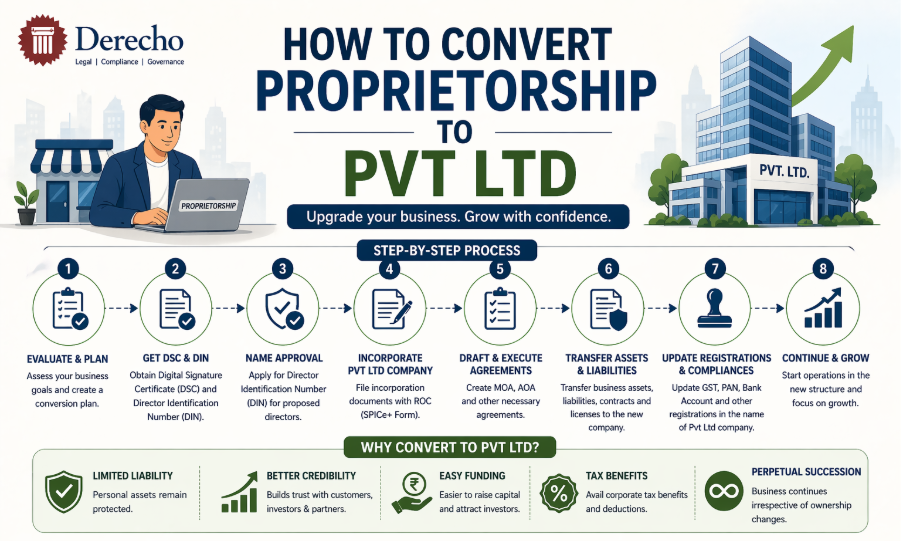
Converting a proprietorship firm into a Private Limited Company is a common step for businesses looking to scale, raise funds, and limit personal liability. Since a proprietorship and a company are legally different entities, the conversion is done through incorporation of a new company and transfer of business.
This process is governed under the Companies Act, 2013 and applicable tax laws.
What is Conversion of Proprietorship?
It means:
- Creating a new Private Limited Company
- Transferring assets, liabilities, and business operations
- Closing or restructuring the proprietorship
Why Convert to Pvt Ltd?
- Limited liability protection
- Better funding opportunities
- Separate legal identity
- Improved credibility
- Easier scalability
Key Requirements
Before conversion:
- Minimum 2 Directors & 2 Shareholders
- Digital Signature Certificates (DSC)
- Director Identification Number (DIN)
- Unique company name approval
Documents Required
- PAN & Aadhaar of owner/directors
- Address proof
- Business registration proof
- Bank statements
- NOC from owner
- MOA & AOA
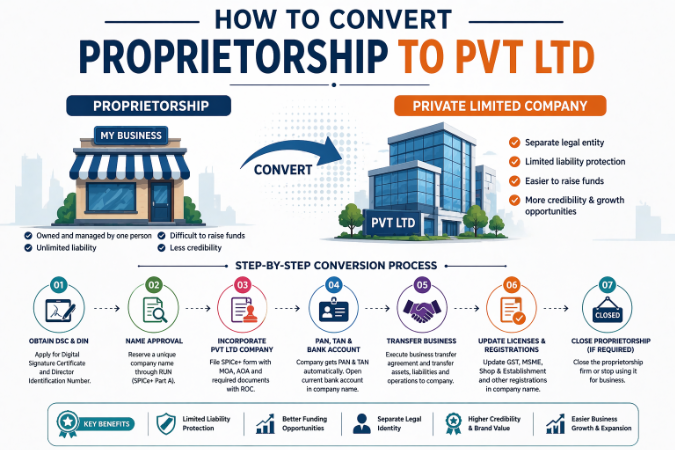
Step-by-Step Conversion Process
Step 1: Obtain DSC & DIN
Apply for Digital Signature and Director Identification Number.
Step 2: Name Approval (RUN/SPICe+)
Reserve company name through MCA portal.
Step 3: Incorporate Pvt Ltd Company
File SPICe+ form with MOA, AOA, and required documents.
Step 4: Apply for PAN, TAN & Bank Account
Company gets PAN & TAN automatically; open bank account.
Step 5: Execute Business Transfer Agreement
Transfer assets, liabilities, and operations from proprietorship.
Step 6: Update Licenses & Registrations
Update GST, MSME, and other registrations in company name.
Step 7: Close Proprietorship (If Required)
Shut down or stop using the proprietorship entity.
Tax Implications
- Capital gains may arise on transfer
- Proper structuring can reduce tax liability
- GST registration needs modification
Benefits of Conversion
- Limited liability
- Better investment opportunities
- Brand credibility
- Structured governance
Challenges
- Compliance requirements increase
- Cost of incorporation
- Regulatory filings
- Accounting complexity
Conclusion
Converting a proprietorship into a Private Limited Company is a strategic move for business growth. While the process involves legal and compliance steps, the long-term benefits such as limited liability, scalability, and funding access make it worthwhile.
Proper planning and professional guidance can ensure a smooth and tax-efficient transition.